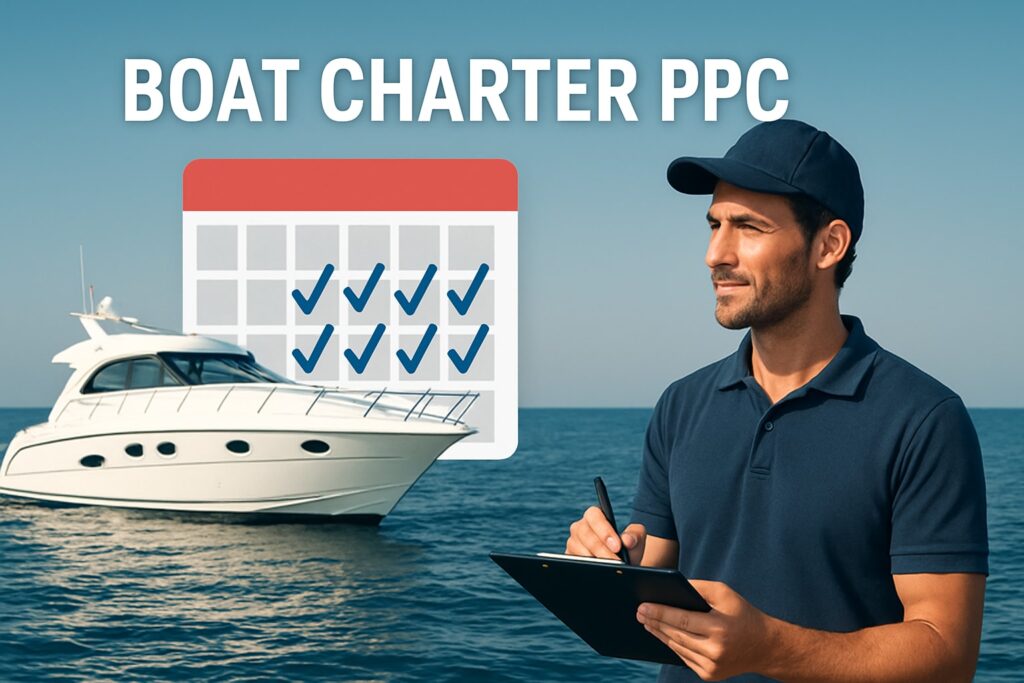
Picture your next season with every slot on your calendar filled, no matter the weather or time of year. For marine business owners, that’s not just a dream—it’s a real possibility with the right boat charter ppc strategy.
This guide is designed to show you how to use boat charter ppc to generate steady, high-value bookings, even when the market feels unpredictable. We know competition is tough, digital advertising costs keep rising, and guest expectations are higher than ever.
But with a focused approach, your PPC campaigns can put you ahead of the pack. You’ll discover step-by-step tactics, industry insights, and real case studies that prove what’s possible. Want to see your business thrive, outmaneuver the competition, and finally take the guesswork out of your marketing? You’re in the right place.
In the pages ahead, we’ll break down the essentials: building a strong PPC foundation, smart keyword research, campaign setup, writing ads that convert, tracking performance, and future-proofing your digital strategy for boat charters.
The Boat Charter PPC Landscape in 2026
The boat charter ppc world is evolving at warp speed as 2026 approaches. Operators are seeing the digital tide rise, but the waters are getting crowded. Understanding the current landscape is the first step to gaining an edge—and keeping your calendar booked, even in the off-season.
Current Trends and Market Shifts
Online activity now dominates the boat charter ppc market. Over 70 percent of charter customers begin their search on the web, making digital visibility absolutely essential. With more local operators and large platforms targeting the same audiences, competition is stiffer than ever.
The cost to get noticed is climbing, too. According to Google Ads Industry Benchmarks, the average cost-per-click for "boat charter" is up 18 percent since 2024. This means every click is more valuable—and more expensive—so efficiency matters.
Seasonality still plays a massive role. Weather, holidays, and major events can cause sudden spikes in demand. Smart operators adjust their boat charter ppc budgets and bids to ride these waves, capturing peak interest without overspending during slow spells.
The customer journey is shifting as well. Research cycles are longer, with guests comparing prices and experiences across multiple sites. Mobile bookings are on the rise, and expectations for seamless, fast interactions are higher than ever.
Ad platforms are changing, too. Updates from Google, Bing, and Meta keep advertisers on their toes, while privacy regulations and new location-targeting rules add layers of complexity. For a deeper look at where the industry is headed, check the Yacht Charter Market Growth Forecast 2034.
Consider a Florida charter operator who, by tailoring boat charter ppc to local events and weather patterns, managed to double off-season bookings in just one year. Adaptation is everything.
Unique PPC Challenges for Marine Businesses
Boat charter ppc is not your average local services play. Operators face tight service radiuses—your customers are rarely flying in from across the country for a sunset cruise. Geographic targeting must be razor-sharp, zeroing in on high-intent prospects within a realistic drive or dock radius.
Filtering out low-value or out-of-area inquiries is another challenge. You want real bookings, not tire-kickers. Negative keywords and careful targeting help keep budgets focused on what matters most.
Managing ad spend is a balancing act. Peak season calls for aggressive bids, while off-peak periods demand restraint. The trick is to allocate resources where they’ll drive the best returns, not just clicks.
Differentiation is also critical. Standing out from aggregators and listing giants means highlighting what’s unique about your fleet, service, or captain. Smart boat charter ppc campaigns focus on value, not just price.
A Charleston-based operator offers a great example: by using geo-fencing, they targeted only local, high-intent customers, slashing wasted spend and boosting qualified leads. Success in boat charter ppc comes from strategic focus, constant adjustment, and a deep understanding of both your market and your audience.
Building a High-Performance PPC Strategy for Boat Charters
To dominate your local market, you need a boat charter ppc strategy that is precise, data-driven, and built for the unique demands of the marine industry. Let’s break it down step by step—no fluff, just actionable results.
Step 1: Laying the Foundation—Goals, Budgets, and Tracking
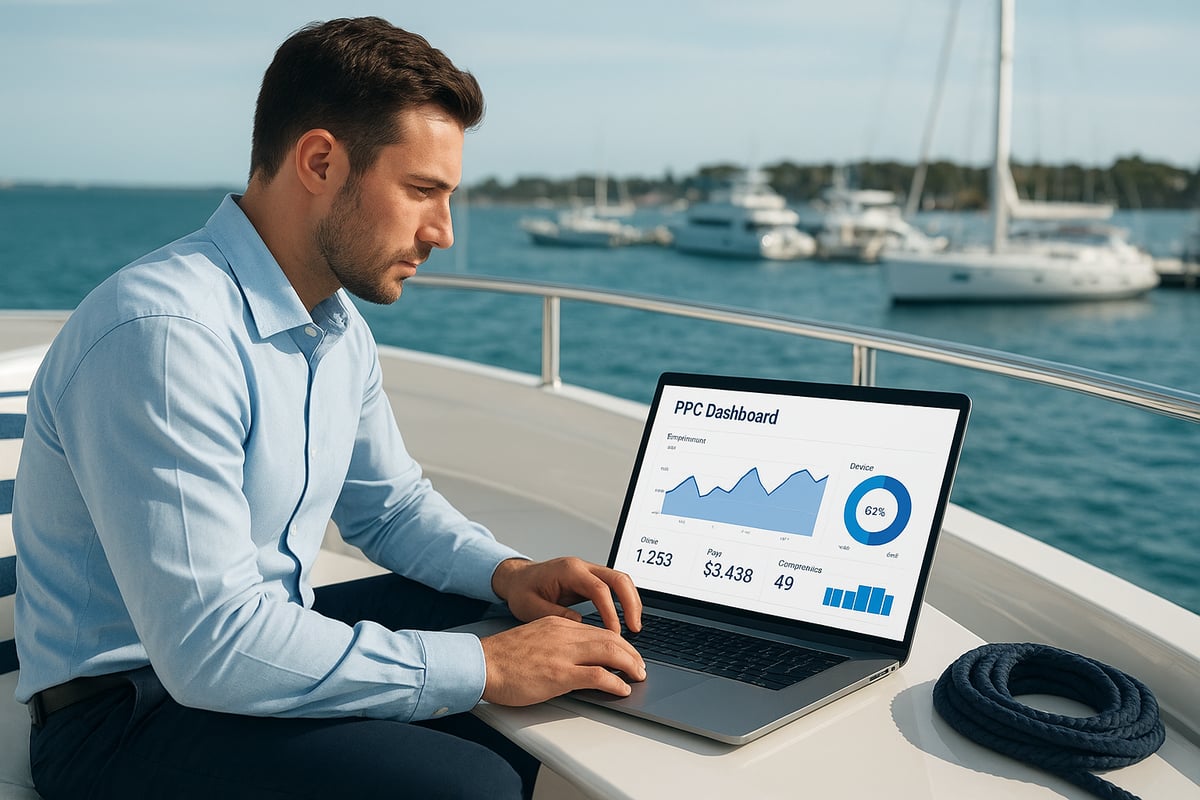
Every successful boat charter ppc campaign starts with crystal-clear business objectives. Are you looking to fill your off-season calendar, boost average charter value, or attract a better mix of bookings? Define these goals first—they’ll shape every decision you make.
Budgeting is next. Calculate your average charter value and factor in the rising cost of clicks. Don’t guess. Instead, analyze local competition and set a budget that can support sustained visibility, not just a brief burst.
Tracking is non-negotiable. Install conversion tracking for calls, booking forms, and live chat. Use call tracking tools with recording features to qualify leads and learn which ads drive real bookings. One operator found their return on investment soared after tracking only high-value inquiry types, not every generic form fill.
Connect your ad data to business outcomes, not vanity metrics. Set up Google Analytics 4 and sync it with your ad platforms. This holistic view lets you see which campaigns actually fill your boats. If you want full-stack execution tailored to marine businesses, consider PPC services for marine businesses to get expert help on every step.
Step 2: Keyword Research—Finding What Charter Customers Really Search
Keyword research is the engine of your boat charter ppc success. Start with the basics: “boat charter [location]”, “yacht rental near me”, and so on. But dig deeper. Long-tail keywords like “family fishing boat charter” or “luxury sunset cruise” attract high-intent searchers ready to book.
Don’t forget negative keywords. Block terms like “boat parts”, “jobs”, or “free” to avoid wasting budget on irrelevant clicks. Study your competitors using tools like SEMrush or Ahrefs. What are they bidding on? Where are the gaps you can exploit?
Seasonality matters. Add event-based keywords such as “holiday boat rental” to capture surges in demand around major dates. Research shows the top converting keywords for charters in 2025 are often hyper-local and intent-driven. Regularly review and refine your keyword list, because the right words mean the difference between steady bookings and empty docks.
Step 3: Campaign Structure—Organizing for Profit and Control
How you organize your boat charter ppc campaigns can make or break your results. Start by dividing campaigns by core services—sailboats, pontoons, luxury yachts—or by location if you serve multiple markets. This ensures your ads are always hyper-relevant.
Within each campaign, build tightly themed ad groups. This boosts Quality Score, lowers costs, and keeps your message focused. Geographic targeting is critical. Use radius, zip code, or city-level settings to reach only those who can actually book with you. One Charleston-based operator used geo-fencing to target high-intent local customers, slashing wasted spend.
Dayparting gives you even more control. Schedule ads during peak booking hours, like mornings and early evenings, to catch decision-makers when they’re most likely to convert. If you run a multi-vessel operation, create separate campaigns for each vessel type. This level of granularity lets you manage budgets, bids, and messaging with surgical precision.
A well-structured boat charter ppc account isn’t just easier to manage—it’s the foundation for long-term profitability and growth.
Crafting Winning Ads and Landing Pages for Boat Charters
Creating high-performing ads and landing pages is the secret sauce of any boat charter ppc strategy. With the right words and visuals, you can transform searchers into enthusiastic charter customers. Let’s break down what works in today’s market.
Writing High-Converting PPC Ads
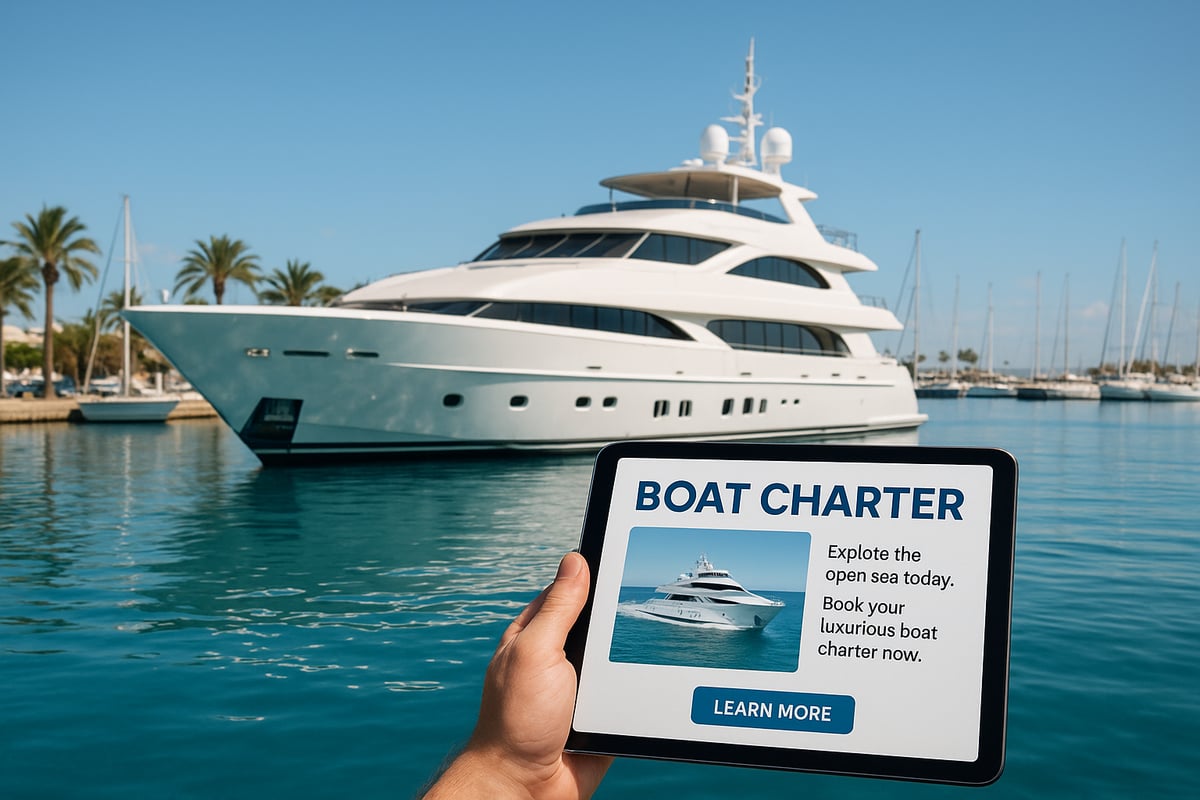
The first impression you make with your boat charter ppc campaign is your ad. It has to stop the scroll and spark curiosity. Start with a headline that highlights what makes your charter different—think vessel type, onboard amenities, or the captain’s expertise. For example, “Private Yacht Charter with Award-Winning Captain” is specific and compelling.
Urgency and scarcity work wonders. Phrases like “Limited Summer Dates, Book Now” or “Only 3 Luxury Charters Left This Month” can drive action. Don’t forget to use callouts and sitelinks to showcase your best reviews, FAQs, or seasonal offers. This not only boosts credibility but also directs users to the info they care about most.
Compliance is critical. Always be upfront about pricing and avoid exaggerated claims. Split-test headlines to find what resonates. For instance, you might compare “Luxury Yacht Charter” with “Private Sunset Cruise” to see which delivers a higher click-through rate. In boat charter ppc, even small tweaks can mean big gains.
- Headline ideas:
- “Sunset Harbor Cruises for Families”
- “Exclusive Fishing Boat Charters Near You”
- “Reserve Your Luxury Yacht Today”
Stay flexible. Test, learn, and keep refining your ads based on real data.
Designing Landing Pages That Convert Clicks to Bookings
Once a prospect clicks your ad, your landing page must do the heavy lifting. Dedicated pages for each vessel type or service make your boat charter ppc efforts laser-focused. Mobile-first design is a must, since over 65% of bookings come from smartphones.
Your call to action should be impossible to miss: “Check Availability” or “Reserve Your Date” both work well. Trust signals like glowing customer reviews, industry awards, and proof of insurance help visitors feel safe booking with you. Fast load times are non-negotiable—slow pages hurt your Quality Score and cost you bookings.
Consider this before-and-after: A Miami charter operator doubled conversions by revamping their landing page with clearer CTAs and a streamlined booking form. If you want to supercharge your pages, explore landing page optimization tools that make testing and improving performance much easier.
Key trust signals to include:
- Verified customer reviews
- Awards and certifications
- Transparent pricing
- Secure booking icons
The right landing page turns every boat charter ppc click into a real opportunity.
Leveraging Visuals and Video
Great visuals are more than just eye candy—they build trust and excitement. High-quality photos of your vessels, both interior and exterior, let customers picture themselves onboard. Video tours and virtual walk-throughs can set your charter apart in a crowded boat charter ppc market.
Video testimonials from happy guests add authenticity. Seeing real people share their charter experience makes your offer more relatable and genuine. In fact, landing pages with video have been shown to convert 34% better, according to Unbounce.
Consider creating a short welcome video from your crew or a quick highlight reel of favorite destinations. It’s a simple way to show what makes your charter unique.
- Must-have visuals:
- Professional photos of each vessel
- 360-degree tours or walk-throughs
- Clips of guests enjoying their day on the water
Incorporating these elements ensures your boat charter ppc campaigns do more than just attract clicks—they inspire bookings.
Launching, Managing, and Optimizing Your PPC Campaigns
Ready to move beyond theory and dive into the real mechanics of boat charter ppc? This is where the rubber meets the road—or, well, the hull meets the water. In this section, you’ll find a practical, step-by-step approach to building, launching, and managing your ppc campaigns so that every dollar works harder for your marine business.

Step 1: Launching Your First Campaign
Launching a successful boat charter ppc campaign begins with a strong foundation. Start by choosing the right ad platforms—Google Ads and Bing Ads are the industry staples, with Google often delivering the highest volume and intent.
Begin campaign setup by defining your goals. Are you aiming for more bookings, targeting higher-value charters, or filling last-minute calendar gaps? Next, create campaigns segmented by vessel type, location, or service. This ensures your ads are highly relevant to each audience segment.
Don’t forget negative keywords. Import terms like “jobs,” “parts,” or “free” to filter out wasteful clicks. Location exclusions are crucial, too. Use radius targeting or zip codes to focus spend only on areas you actually serve. Set your initial bids based on your target cost per acquisition (CPA) or return on ad spend (ROAS).
Testing is non-negotiable. Launch several ad variants and dedicated landing pages, then watch performance closely. Enable call and message extensions to capture high-intent mobile users who want to book now.
For a detailed walkthrough, check out this resource on how to set up a Google Ads campaign. It’s a must-read for anyone serious about mastering boat charter ppc from the ground up.
Step 2: Daily and Weekly Management Tasks
Once your boat charter ppc campaigns are live, ongoing management is where the real value is unlocked. Every day, monitor spend, click-through rates, and conversion volume. Are you getting quality inquiries, or just clicks? Pause underperforming ads and shift budget toward those delivering results.
Weekly, review your search term reports. Identify irrelevant queries slipping through and add them as negatives. Adjust bids for top-performing keywords and locations. This keeps your cost per booking in check and helps you stay competitive, especially during peak season.
Here’s a simple table you can use to track weekly actions:
| Task | Frequency | Outcome |
|---|---|---|
| Review spend & CTR | Daily | Budget control |
| Pause poor performers | Weekly | Higher ROI |
| Update negatives | Weekly | Less wasted spend |
| Adjust bids | Weekly | Optimize cost-per-booking |
A real-world example: a 5-boat fleet operator in Miami uses these routines to keep campaigns tight, reallocating budget in real time based on daily results. This hands-on approach is what separates a good boat charter ppc campaign from a great one.
Step 3: Advanced Optimization Techniques
To get the most out of your boat charter ppc spend, you’ll want to move beyond the basics. Start with conversion rate optimization (CRO): A/B test headlines, booking forms, and vessel images on your landing pages. Even small tweaks can drive big improvements in booking rates.
Audience targeting is next. Retarget website visitors who didn’t book, and build lookalike audiences based on your best customers. Automated rules and scripts can help you adjust bids or pause ads based on performance thresholds—saving you hours each month.
Leverage first-party data from your CRM to personalize ads and offers. For example, target past customers with early-bird specials for the next season. Some operators have cut their cost-per-booking by 22 percent using automation and rule-based optimization. Curious about where PPC is heading? Read up on AI-powered automation in PPC to stay ahead of the curve and integrate the latest tech into your marine strategy.
Step 4: Measuring Success and Reporting
Measuring the impact of your boat charter ppc campaigns comes down to tracking the right metrics. Focus on:
- Cost per inquiry
- Cost per booking
- Booking rate (inquiries to bookings)
- ROAS (return on ad spend)
Connect your ad platform data to actual calendar bookings and revenue. Use transparent dashboards, call recordings, and form tracking for full visibility. Here’s a quick reference for industry benchmarks:
| Metric | Industry Average (2025) |
|---|---|
| Cost-per-booking | $57–$110 |
| Booking Rate | 8%–18% |
| ROAS | 4x–9x |
Regularly review results and adjust your approach for seasonality, local events, or business goals. The best campaigns are never static—they evolve with your market and customers. When your reporting is this tight, you’ll never need to guess if your boat charter ppc is truly working.
Future-Proofing Your Boat Charter PPC in 2026 and Beyond
Staying ahead in the fast-evolving digital world isn’t easy. For marine businesses, future-proofing your boat charter ppc campaigns is more than a smart move—it’s a necessity. The landscape is shifting, and those who adapt quickly will thrive while others lag behind. Let’s break down what you need to keep your campaigns sharp, compliant, and competitive as we move toward 2026.
Adapting to Platform Changes and New Technologies
Digital ad platforms are pushing the boundaries every year. In 2026, boat charter ppc success means embracing automation, AI-driven bidding, and smarter campaign management. Google, Bing, and Meta are rolling out tools that let you target customers more precisely, but only if you know how to use them. Automated bidding can optimize spend in real time, freeing you to focus on strategy instead of manual tweaks.
Privacy-first advertising is here to stay, too. With GA4 and server-side tracking, you’ll need to handle customer data responsibly, balancing personalization with compliance. On top of that, diversifying your ad spend across Google, Bing, Meta, TikTok, and even marine-specific platforms helps you reach travelers wherever they are searching or scrolling.
Voice search and conversational ads are gaining traction. Customers are asking their phones for “boat charters near Key West” or “luxury yacht rentals this Saturday,” so your ads and landing pages should match natural speech patterns. If you want a deeper dive into these shifts, check out Emerging PPC Trends in 2026—it’s packed with actionable insights on what’s next for the industry.
Navigating Market Disruptions and Opportunities
The marine industry faces its share of surprises—fuel costs, travel booms, or sudden dips in demand. The secret to resilient boat charter ppc is blending paid and organic tactics. When you combine PPC with robust SEO, you’re not just buying clicks, you’re building lasting authority. For more on this, explore these yacht charter SEO strategies that pair perfectly with your paid campaigns.
First-party data is becoming your most valuable asset. Integrate your CRM to retarget past guests or upsell new experiences. Working hand-in-hand with local businesses and tourism boards can open doors to co-branded campaigns and shared audiences. In fact, operators using multi-channel marketing are seeing booking rates triple compared to single-channel approaches, according to HubSpot.
Here’s a quick table summarizing resilient tactics:
| Strategy | Impact |
|---|---|
| Blended SEO + PPC | Consistent bookings |
| First-party data | Higher lifetime value |
| Multi-channel campaigns | 3x higher booking rates |
| Local partnerships | Expanded reach |
Staying Ahead of Competitors
In boat charter ppc, standing still means falling behind. Commit to continuous learning—Google Skillshop, marine marketing webinars, and industry groups are gold mines for new tactics. Regularly benchmark your campaigns against both local and national competitors to spot opportunities and gaps.
Creative assets are your secret weapon. Invest in professional photos, video walk-throughs, and customer testimonials. These not only boost your ad performance but also build trust with potential guests. One Charleston operator saw a major lift in bookings after showcasing video reviews, outshining even larger aggregator sites.
Finally, never underestimate the power of an exceptional customer experience. Happy guests leave glowing feedback, which feeds directly into your marketing, helping your boat charter ppc campaigns perform better year after year.
You’ve just explored how targeted PPC strategies can transform your charter business, ensuring steady bookings even as competition and digital ad trends shift. If you’re ready to take the guesswork out of your marketing and want expert guidance tailored to the unique needs of the marine industry, let’s talk about next steps. We can help you connect PPC performance directly to real bookings and revenue, just like the operators highlighted in this guide. Take the opportunity to clarify your goals, get actionable insights, and see how a proven, data-driven approach can keep your calendar full year round—Schedule a Free Strategy Call today.