
Ever wondered why some marine businesses crush it with Google Ads while others sink fast? In 2026, your ability to master google ad score is the difference between a steady stream of bookings and watching your competitors sail ahead.
Here’s the reality: google ad score directly shapes your ad’s visibility, cost per click, and overall ROI. For yacht charters, marinas, boat rentals, and marine service providers, getting this right means every marketing dollar works harder.
This guide is packed with proven, marine-industry strategies to help you unlock the full power of google ad score. Dive in, learn the latest tactics, and future-proof your campaigns for 2026 success.
Understanding Google Ad Score in 2026
Ever feel like you’re pouring budget into Google Ads but just not seeing your marine business at the top? That’s where google ad score comes in—a hidden lever that makes or breaks campaign results. Let’s unpack exactly what it is, why it matters, and how it’s evolving in 2026.

What is Google Ad Score?
Google ad score is an estimate, scored from 1 to 10, of how relevant and useful your ad, keywords, and landing page are to users. You’ll spot it right in your Google Ads dashboard, sitting next to each keyword.
A higher google ad score means your ad is more likely to appear in top spots, and you’ll actually pay less per click. For example, a yacht charter targeting “luxury boat rental Miami” with a score of 8 will outshine a competitor’s ad with a 4, even if both bid the same.
The industry average sits around 5, but marine businesses often see a wider spread—especially for niche or high-ticket terms. For a deeper dive, check out Google Ads Quality Score Importance for marine marketing specifics.
Why Google Ad Score Exists
Google ad score isn’t just a technicality—it’s Google’s way of keeping search results relevant for users and fair for advertisers. Instead of simply rewarding the biggest budget, it prioritizes ads that truly match what people are searching for.
Think about two marine services: one runs an ad for “boat engine repair Charleston” that links to a detailed repair page, while another pushes a generic “marine services” ad. The first gets a better google ad score, shows up higher, and pays less per click.
This system ensures users find what they want, and marine businesses that invest in relevance, not just dollars, win the prime spots.
Key Changes for 2026
In 2026, google ad score is smarter than ever. AI-driven algorithms now evaluate not only keywords and landing pages, but also how well your ad matches user intent, device, and even demographic details.
Expect greater scoring granularity—mobile searches for “yacht charter near me” might earn a different google ad score than desktop searches for the same term, depending on user behavior and experience. Competitor insights from the past years show a clear shift: those adapting quickly to AI updates and prioritizing mobile see higher scores and lower costs.
The Impact on Marine Businesses
For marine businesses, the stakes are high. Seasonal demand, niche keywords, and high-ticket services mean every click matters. Optimizing your google ad score isn’t just a best practice, it’s mission-critical.
Picture a boat rental company that boosted its google ad score from 4 to 7 for “fishing boat rental Charleston.” Not only did their ad jump to the top, but cost per click dropped by 30 percent. Competitors who continually refine their scores see more bookings and steady growth, even in crowded markets.
Common Misconceptions Debunked
There are plenty of myths about google ad score. Some believe it’s all about keywords—wrong. Others worry that pausing ads or keywords will hurt their score—also not true. And you don’t need a massive budget to win top positions.
Here’s the reality: a perfect 10 score can get you up to a 50 percent discount on CPC, while a score of 1 can mean paying up to 400 percent more. Imagine a marine service provider with a low score paying way more for the same clicks as a competitor who’s dialed in their relevance and landing pages. Smart optimization always wins over big spend.
Core Components of Google Ad Score
Understanding the core components of google ad score is essential if you want to outpace other marine businesses in paid search. Each element plays a unique part in determining your visibility, cost, and return on ad spend. Let's break down what really matters—and how you can leverage these factors for maximum impact.

Expected Click-Through Rate (CTR)
Expected CTR is Google's prediction of how likely your ad is to get clicked when shown for a specific keyword. For marine businesses, this means your ad for "yacht charter Bahamas" must stand out and earn trust quickly. Google ad score factors in your historical CTR, relevance of your ad copy, and even device performance.
Consider a seasonal charter ad: If previous campaigns for "summer yacht rental" saw a 6% CTR (well above the 2% average), your google ad score benefits. High CTR signals to Google that your ad is valuable for users searching those marine keywords. In competitive marine markets, even a 1% CTR boost can shift your ad position dramatically.
- "Above average": 6%+
- "Average": 2-6%
- "Below average": <2%
For marine companies, prioritizing compelling headlines and clear calls to action can make all the difference in CTR and overall google ad score.
Ad Relevance
Ad relevance measures how closely your ad copy matches the keywords and intent of the searcher. Google ad score rewards ads that are tightly aligned with what users want. For example, if someone searches "boat rental Miami," and your ad headline is "Miami Boat Rentals – Reserve Your Ride Today," that's a perfect match.
Marine businesses should avoid generic ads like "Best Boat Rentals," which lack location or service focus. Instead, group keywords into tightly themed ad groups: "sailing lessons Charleston" in one, "yacht charter Charleston" in another. Avoid keyword stuffing—Google ad score penalizes ads that try to cram too many terms without focus.
Recent competitor data shows ad relevance carries about 30% weight in the overall google ad score formula. Focused, relevant ads not only improve score but also drive higher engagement and conversions.
Landing Page Experience
Landing page experience is more than just where your ad sends users—it's about fulfilling the promise made in your ad. When someone clicks "luxury yacht charter Bahamas," they expect a dedicated page with clear info, stunning images, and easy booking options. Google ad score looks at content relevance, load speed, mobile optimization, and transparency.
If you send "yacht charter" traffic to a generic homepage, expect a lower score. High bounce rates or slow load times drag your google ad score down. For marine businesses, optimizing for fast mobile experience and clear calls to action is crucial.
Mistakes in landing page setup are common. If you want to avoid pitfalls that can sabotage your google ad score, check out this guide on PPC Mistakes to Avoid.
Other Influencing Factors
Several behind-the-scenes elements also affect your google ad score. Historical account performance matters—a track record of high scores can help new keywords start off strong. Geography is key, too. A campaign for "boat tours US" may score differently than "boat tours Bahamas" based on regional competition and user behavior.
Device performance is another factor. For example, mobile users searching "marine electronics near me" might convert better, boosting your google ad score for those keywords. Competitor experiments show that splitting campaigns by device or region often reveals hidden performance gaps.
Regularly reviewing these factors and adjusting your marine campaigns accordingly is vital for sustained growth and high google ad score.
The Ad Score Formula Unpacked
So, how is google ad score actually calculated? The basic formula is: 1 plus the sum of landing page experience, ad relevance, and expected CTR. But not all components are equal. Landing page and CTR carry more weight than ad relevance.
Here's a simple breakdown:
| Component | Weight (%) |
|---|---|
| Landing Page Experience | 40 |
| Expected CTR | 40 |
| Ad Relevance | 20 |
Suppose your marine ad has an above-average landing page and CTR, but only average relevance. Your google ad score could land around 8, positioning you for lower CPC and higher visibility. According to AdAlysis research, focusing your efforts on landing page improvements and boosting CTR delivers the biggest gains.
Knowing where to put your energy means every dollar spent on Google Ads works harder for your marine business.
Step-by-Step: Optimizing Your Google Ad Score for Marine Businesses
Getting the most out of your google ad score is not about guesswork or luck. It’s about applying proven optimization steps, tailored for the marine industry, to boost your ad visibility, cut costs, and win more bookings. Here’s exactly how to do it—step by step.
1. Audit Your Current Ad Score Performance
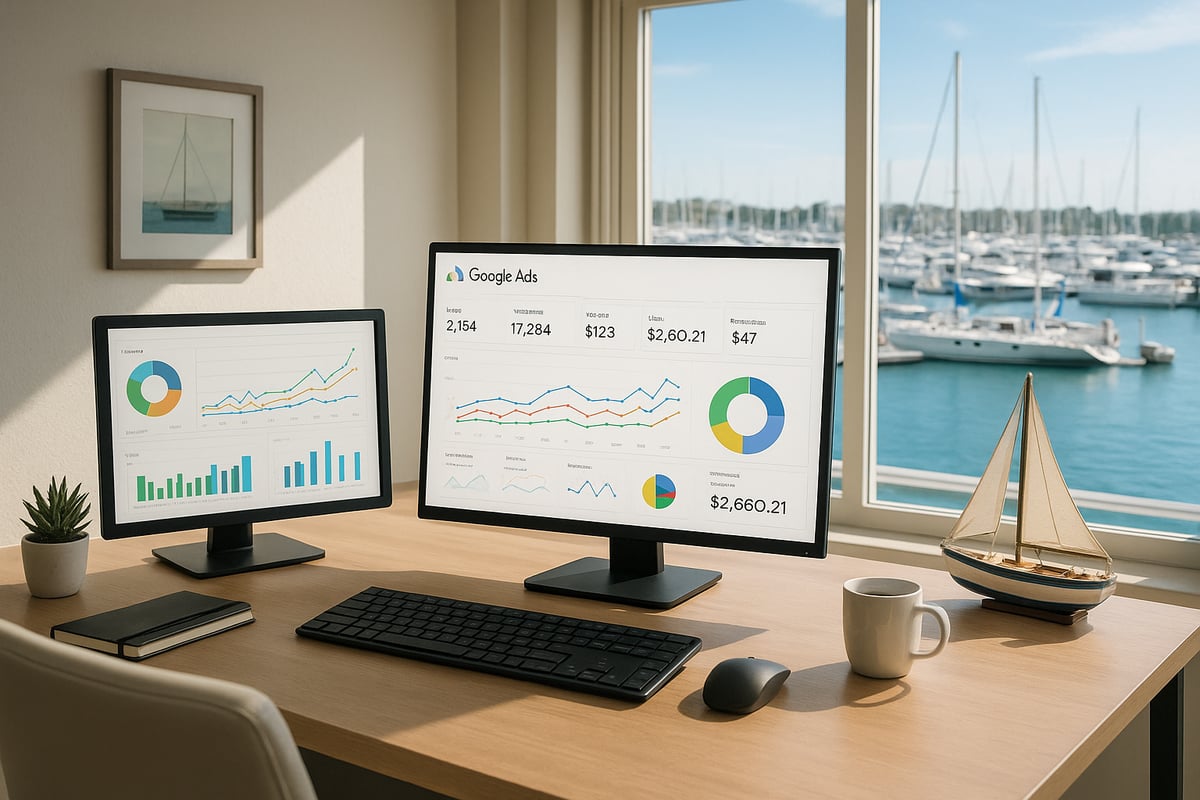
First up, you need to know where you stand. Log in to your Google Ads dashboard and locate the google ad score column at the keyword level. Drill down to see scores for each ad group and campaign.
Flag any keywords with a score below 5. These low performers can drag down your entire account. For marine businesses, this might show up as “rarely shown (low Quality Score)” warnings, especially if you’re targeting competitive terms like “yacht rental” or “boat charter.”
Regular audits reveal which services, locations, or offers need attention. A marina running both boat rentals and repairs, for example, might see higher scores for rentals but lower for repair-related keywords. Use these insights to prioritize fixes and maximize every advertising dollar.
2. Refine Keyword Targeting and Match Types
Next, sharpen your keyword strategy. The google ad score rewards tightly themed, intent-driven keywords. Focus on what your ideal marine customer is searching for, like “luxury yacht charter Key West,” instead of vague terms like “boat.”
Mix in long-tail keywords for specific services or locations—they often deliver better results for marine businesses. Adjust match types as needed: Broad match can expand reach, while phrase or exact match zeroes in on buyer intent.
If your impressions are low, experiment with loosening match types for niche marine terms. But remember, going too narrow risks missing active searchers. Review search terms regularly to ensure you’re not targeting keywords so specific that nobody is searching.
3. Enhance Ad Copy Relevance and Structure
Your ad copy should echo the exact intent behind your keywords. The google ad score is heavily influenced by how well your ad messaging matches what users are searching for.
For marine businesses, split your ad groups by service type—like “sunset cruise” or “fishing charter”—so each ad can speak directly to the searcher’s need. Use Dynamic Keyword Insertion (DKI) sparingly and only if it makes sense for marine-specific queries.
Tightly themed ad groups allow you to test headlines, descriptions, and calls to action that resonate with each audience. Over time, this boosts relevance and gives your ad score a noticeable lift. Need more tips? Check out Optimizing Google Ads for Marine Businesses for industry-specific examples.
4. Improve Landing Page Experience
Once someone clicks your ad, the landing page experience is everything. Google ad score takes into account how closely your page content matches the ad promise, plus technical factors like speed and mobile usability.
Always send traffic to the most relevant page. For example, direct “boat engine repair near me” searches to a dedicated repair page, not your homepage. Make sure your site loads quickly, is easy to navigate, and looks great on all devices.
Bounce rate and engagement metrics feed into your ad score. If visitors leave right away, it signals a mismatch. Add clear calls to action, transparent pricing, and customer reviews to build trust and keep users engaged.
5. Add Negative Keywords and Exclusions
Protect your budget and your google ad score by excluding irrelevant searches. Negative keywords prevent your ads from showing for terms that don’t fit your business, like “free boat plans” if you offer luxury charters.
Regular audits help you catch seasonal or service-related shifts. For instance, add negatives like “DIY” or “cheap” for high-end yacht offerings. This keeps your click-through rate healthy and stops wasted spend.
Competitors in the marine industry often update their negative keyword lists monthly, ensuring their ads only reach qualified leads. The result is a cleaner account, better CTR, and higher ad scores across the board.
6. Optimize Campaign Structure for Marine Industry
Structure matters. Google ad score favors accounts with small, tightly themed ad groups. Segment your campaigns by service—charters, rentals, repairs—as well as by location and device.
For example, run separate campaigns for “yacht charter Charleston” and “fishing boat rental Hilton Head.” This allows tailored messaging and more granular control over budget and performance.
After restructuring, many marine businesses see average ad scores climb by one or two points. Plus, you’ll find it much easier to track conversions and double down on what’s working.
7. Track, Test, and Iterate for Continuous Improvement
Finally, don’t set it and forget it. Use scripts or automated tools to monitor google ad score trends daily or weekly. Set up A/B tests for your ad copy, landing pages, and keyword sets.
Tie every optimization back to real results—bookings, leads, or sales. For instance, a marine e-commerce brand might test different landing pages for “marine electronics” and see which drives the highest ad score and ROI.
Case studies show that even a small bump in ad score can slash your cost-per-click and boost your return. The key is ongoing, data-driven improvement.
Advanced Strategies for Dominating Google Ad Score in 2026
Staying ahead in the marine industry means embracing the latest strategies for maximizing your google ad score. As 2026 approaches, those who adapt quickly to advanced tactics will outpace competitors, secure prime ad spots, and make every marketing dollar work harder. Let’s break down the most effective ways to dominate.
Leveraging AI and Automation
AI is transforming how marine businesses manage their google ad score. In 2026, Google’s algorithms are smarter than ever, using machine learning to analyze patterns, predict outcomes, and offer real-time recommendations.
Marine marketers can tap into these advances by enabling automated bidding and following Google’s AI-driven suggestions. For example, set up rules that automatically pause keywords with persistently low scores, freeing up budget for high performers. According to Scalable Machine Learning Training Infrastructure, these AI systems are designed to optimize ad relevance and placement at scale, giving you a real edge.
The key is to balance automation with regular human oversight. Let the machines crunch the data, but keep your finger on the pulse for seasonal trends and unique marine service angles.
Device and Location Customization
Customizing campaigns by device and location is now essential for a high google ad score. User intent varies between mobile and desktop, especially for marine bookings—think last-minute rentals on mobile versus detailed research on desktop.
Adjust your bids to favor devices that convert best for your business. Geo-targeting is just as important. Focus on regions where your ads consistently score higher and drive more bookings, like targeting tourists in coastal cities during peak season.
A quick tip: Segment your campaigns by both device and location. This allows you to identify winning combinations and double down on what works, boosting both visibility and ROI.
Optimizing for Google’s New Ad Formats
Google continues rolling out new ad formats, and each now factors uniquely into your google ad score. For marine businesses, leveraging Performance Max, Shopping, Display, and even YouTube campaigns can open up new audiences.
To maximize results, use high-quality visuals—think crisp marina photos or engaging video tours for yacht listings. Make sure product feeds are updated and match your ad messaging to each format’s strengths.
Performance Max, for instance, uses automation to place ads across multiple Google channels, optimizing for conversions and score. Stay flexible and keep testing new formats to stay ahead of the curve.
Monitoring Competitor Ad Scores and Market Trends
Winning with google ad score isn’t just about your own numbers—it’s about understanding the competitive landscape. Use tools to benchmark your performance against other marine businesses. Look for gaps, like keywords where competitors have lower scores, and seize those opportunities.
Regularly review industry averages so you know what “good” looks like in marine PPC. If you spot a sudden drop in your score, check if a competitor is outbidding or if there’s a shift in user behavior.
Staying proactive means you’ll catch trends early, adapt campaigns fast, and avoid costly surprises.
Budget Allocation and Scaling with Ad Score
Your budget is a powerful lever for improving google ad score. Allocate more spend to campaigns and keywords with high scores and proven ROI. If you spot underperformers, don’t hesitate to scale back or pause them.
A marine service provider, for example, might shift budget from a lagging keyword to a high-scoring, high-converting ad group targeting yacht maintenance. This targeted approach can drive better results without increasing overall spend.
For marine business owners who want expert guidance, PPC Services for Marine Businesses can help you maximize your ad score and ROI through tailored, data-driven strategies.
Troubleshooting: Why Your Ad Score Tanks & How to Fix It
Even the best marine Google Ads campaigns can hit rough waters when google ad score suddenly drops. When this happens, visibility vanishes, costs skyrocket, and bookings dry up. The good news? Most issues are fixable with a methodical approach, a bit of industry know-how, and a commitment to regular upkeep.
Diagnosing Low Ad Score Issues
If your google ad score plummets, start with a technical audit. Often, broken URLs, slow-loading pages, or landing pages that do not match ad promises are to blame. Check for:
- Recent landing page changes
- URL errors (look for commas, ampersands, or special symbols that break links)
- Mobile experience hiccups
A sudden site redesign can tank scores overnight. For example, a charter company switched to a new homepage and saw their google ad score drop. Why? Their booking page was now hidden behind two extra clicks. Regularly reviewing these basics can prevent bigger headaches.
Fixing Poor Keyword and Ad Relevance
Low google ad score often traces back to mismatched keywords and ad copy. Here is how to tackle it:
- Identify underperforming keywords and ad groups
- Rewrite ad copy to closely match keyword intent
- Split large ad groups into smaller, more relevant sets
- Remove irrelevant keywords that dilute focus
Let us say a marine retailer had “kayak for sale” in a campaign meant for yacht services. Removing this mismatch improved their google ad score within weeks. Decide whether to pause or delete low performers based on their history and potential.
Landing Page and Technical Improvements
Landing page experience weighs heavily on google ad score. Focus on:
- Load speed (aim for under 3 seconds)
- Mobile usability (responsive layouts, easy navigation)
- Content relevance (deliver exactly what the ad promises)
- Transparency (clear pricing, visible reviews)
A marina improved google ad score by adding upfront pricing and recent customer reviews, which reduced bounce rates. Use Google’s PageSpeed Insights and Search Console for diagnostics. Align content updates with seasonal marine trends to keep user engagement high.
Ongoing Maintenance and Monitoring
Staying on top of google ad score means setting up alerts for sudden drops and scheduling monthly reviews of keywords, ads, and landing pages. Many savvy marine businesses automate daily checks with scripts or third-party tools.
For a comprehensive approach, consult the Google Ads Optimization Checklist 2025 to ensure nothing slips through the cracks. Proactive management builds resilience and keeps your campaigns sailing smoothly, no matter what algorithm updates roll in.
Now that you know how a strong Google Ad Score can make or break your marine business’s online success in 2026, it’s time to put these insights into action. Whether you’re aiming for more bookings, lower ad costs, or a clear advantage over local competitors, optimizing every part of your digital presence is key. If you’re ready to see where your campaigns stand and discover proven strategies tailored to the marine industry, let’s chart the course together.
Schedule a Free Strategy Call
and get expert guidance on turning your advertising challenges into measurable growth.