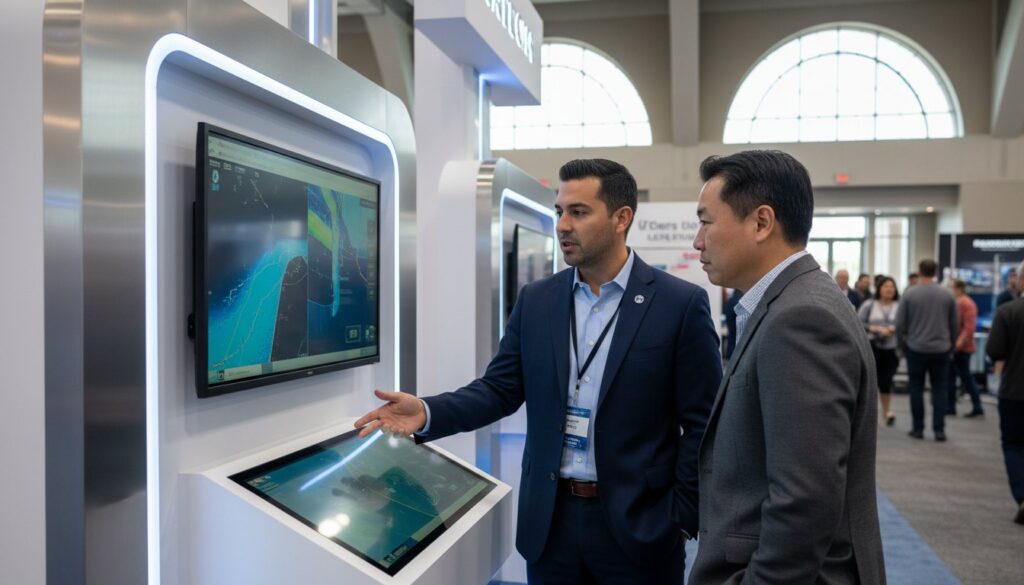
Houston Fishing Show 2025: A Marine Exhibitor’s Game Plan
That familiar invoice for your booth space has landed. You know the routine for the Houston Fishing Show 2025: spend thousands on the spot, days on your feet, and walk away with a list of ‘tire-kickers’ and low-margin leads. For most marine businesses, the event feels more like a costly obligation than a predictable source of high-value work.
This year, that stops. A trade show is not a marketing expense to be endured; it is a strategic asset to be controlled. It’s your single best opportunity to fill your pipeline with qualified, high-margin clients for the next six months, but only if you reject the old “hope and pray” approach and install a system.
This no-BS guide provides that exact system. We’re giving you the step-by-step operational playbook for pre-show promotion, at-show lead filtering, and post-show follow-up that turns your investment into measurable, predictable revenue. Forget the fishbowl; it’s time to build a pipeline.
Key Takeaways
- Stop treating trade shows as a marketing expense and learn to operate them as a strategic investment in your sales pipeline.
- Arrive at the Houston Fishing Show 2025 with a schedule of pre-booked appointments by executing a specific 60-day digital demand campaign.
- Implement a filtering system at your booth to ensure your staff spends their time with high-margin buyers, not just window shoppers.
- Master the critical 48-hour post-show window with a systematic follow-up process that turns booth traffic into billable work.
Stop Gambling on Shows: Re-framing Your Houston Fishing Show Investment
For most marine businesses, trade shows are a gamble. You write a huge check for booth space, commit your best people for a long weekend, and hope the expense pays off. This treats the show as a marketing cost with an uncertain return. It’s time to stop gambling.
We propose a new model: view the show as a strategic operational investment. The goal isn’t just to “get your name out there.” The goal is to fill your sales pipeline with high-margin work. Success at the houston fishing show 2025 won’t come from having the flashiest booth; it will come from having the most effective system for capturing and converting qualified buyers.
Calculating the True Cost of Exhibiting
Before you can measure success, you must understand your total investment. The booth fee is just the start. Calculate the real costs:
- Staff wages and commissions for the entire event.
- Travel, lodging, and food expenses.
- Booth design, shipping, and marketing materials.
- Lost Operational Time: The revenue your key people are NOT generating while they are at the show.
This total figure is your break-even target. It establishes the exact number of qualified jobs you must land to make the show profitable. This number justifies the need for a disciplined, system-driven approach, not wishful thinking.
Defining Your ‘Qualified Lead’
A system needs a filter. Without one, you’re just collecting a stack of business cards from tire-kickers. Before the show, you must define your ideal customer with absolute clarity. The show attracts thousands of people passionate about recreational fishing, but only a tiny fraction are your target.
A qualified lead is not just anyone who stops by. They must meet specific, non-negotiable criteria:
- Budget: Do they have the financial capacity for your high-margin services?
- Service Need: Do they require the exact work you are best at and want more of?
- Timeline: Are they looking to make a purchase decision in the next 30-90 days?
- Geography: Are they located within your operational service area?
This definition becomes the core of your at-show process. It empowers your team to spend their time on conversations that directly impact your bottom line and politely disengage from those that don’t.
The Pre-Show Game Plan: Building Demand Before Day One
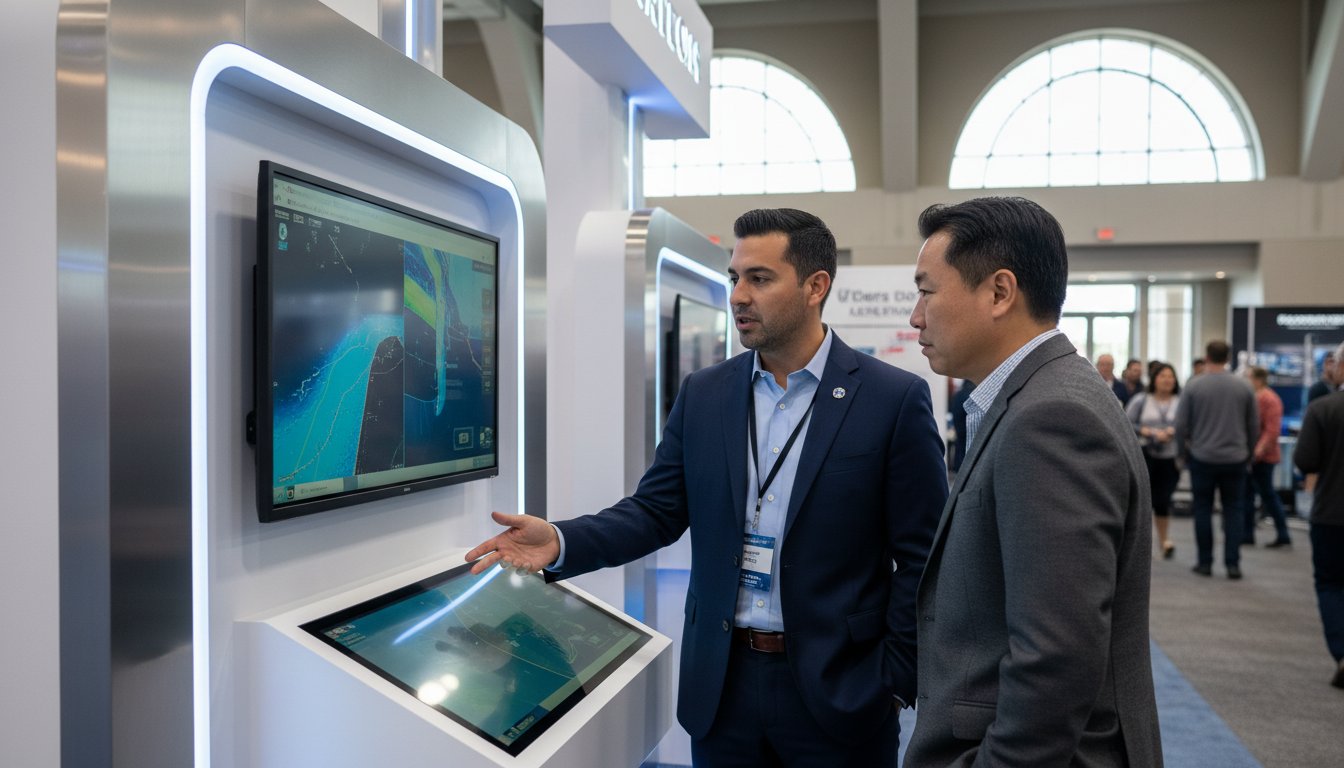
Most marine businesses treat trade shows as an exercise in hope. They buy a booth, show up, and wait for foot traffic, leaving their ROI entirely to chance. This is an operational failure. Your goal is to arrive at the George R. Brown Convention Center with a schedule of pre-booked appointments, not an empty calendar waiting to be filled.
Success at the show is determined weeks in advance. The difference between a massive expense and a high-value investment is a systematic pre-show campaign. Effective trade show marketing strategies are not about luck; they are about control. Your show starts now, online.
Step 1: Your Digital Pre-Show Campaign (60 Days Out)
Two months out, your objective is to activate your existing audience and capture new, local prospects. You will build an asset that centralizes all your show-related marketing efforts and directs qualified interest into a measurable funnel. This isn’t about vague brand awareness; it’s about initiating contact.
- Build a Dedicated Landing Page: Create a simple, high-impact page on your website. It must feature your booth number, a clear value proposition for visiting, and a single call to action: book a meeting.
- Launch an Email Campaign: Announce your presence to your list of past clients and current leads. Segment your list to send targeted messages. Offer an exclusive, show-specific incentive for them to book a time with you.
- Run Geo-Targeted Social Ads: Target Houston-area boaters, anglers, and past attendees of events like the Houston Fishing Show 2025. Drive this traffic directly to your new landing page, not your homepage.
Step 2: Securing Pre-Booked Meetings (30 Days Out)
One month out, the mission shifts from broadcasting your presence to actively filling your calendar. The goal is to convert interest into firm commitments. You must eliminate any friction in the booking process and personally engage your highest-value prospects to ensure they connect with you at the show.
- Present a Compelling Offer: Give prospects a tangible business reason to pre-book a meeting. This could be a free operational audit, an exclusive discount only available to those who book, or a first look at a new product.
- Use a Scheduling Tool: Integrate a tool like Calendly directly onto your landing page. This removes the back-and-forth of email and allows a qualified prospect to book a meeting in seconds.
- Execute Personal Outreach: Identify your top 10-15 prospects or past clients. Do not rely on automated emails for this group. Call them or send a personal message to schedule a specific time to connect.
Section 3: Systemize Your Booth for Qualified Lead Capture
Most marine businesses treat trade shows like a social event. They collect a fishbowl full of business cards and hope for the best. This is not a strategy; it’s a gamble. A pile of unqualified contacts creates administrative work, not stable revenue.
Your goal is not to collect the most business cards. It is to capture the highest number of qualified inquiries. This requires a system to capture, filter, and convert prospects directly at your booth. Implementing this system will put you far ahead of competitors still using outdated tactics at the Houston Fishing Show 2025.
Ditch the Fishbowl for a Digital Capture System
Stop collecting paper. A business card tells you nothing about intent, budget, or timeline. Instead, use a tablet with a simple lead capture form. Use fields for name, email, phone, and one or two qualifying questions. This data feeds directly into your CRM, eliminating manual entry and allowing for immediate, automated follow-up. It is the difference between a messy pile of leads and a clean, controlled pipeline.
Filter Leads On the Spot with a 3-Question Script
Your time at the show is your most valuable asset. Do not waste it on tire-kickers. Develop a simple, three-question script to quickly identify if a visitor is a potential high-value client. The goal is to filter for operational fit and buying intent.
For a boat service yard, your script might be:
- “What’s the biggest maintenance headache with your current boat?” (Identifies a specific pain point you can solve).
- “Are you planning any major refits or upgrades in the next six months?” (Qualifies their timeline and budget).
- “Do you keep your boat locally or trailer it?” (Determines logistical fit for your yard).
This is not an interrogation. It is a professional process to ensure you invest your energy in conversations that protect your margins.
Arm Qualified Leads with a Specific Offer
A generic brochure is trash. It has no urgency and does not separate you from the dozens of other vendors. Create a one-sheet document with a show-specific offer. This is a tactical tool, not an information dump.
Your one-sheet should clearly state a compelling, time-sensitive offer exclusive to the event. For example: “Book Your Spring Service by Feb 28th and Receive a Complimentary Haul-Out.” Hand this only to the prospects you have qualified with your script. This focuses your best offer on your best prospects, a core principle for any business serious about growth after the Houston Fishing Show 2025.
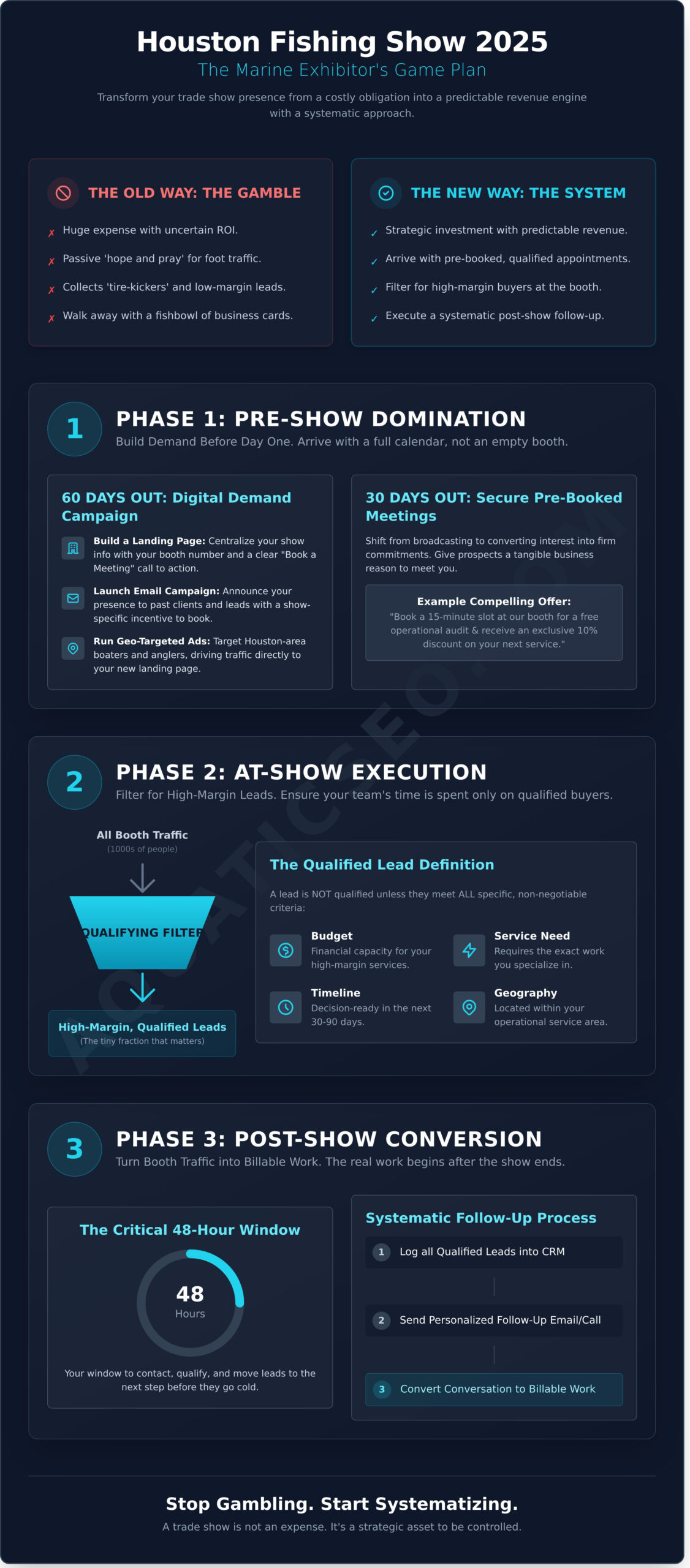
The At-Show System: How to Filter for High-Margin Leads
The floor of a trade show is chaos. Your objective is to ignore it. The goal is not to talk to everyone, but to spend 80% of your time with the 20% of visitors who are qualified, high-margin buyers. At a high-traffic event like the houston fishing show 2025, your booth must operate as a lead qualification hub, not a social lounge for tire-kickers.
This requires a system. Train your staff to be consultants, not salespeople. Their primary job is to diagnose problems and filter prospects using the “Qualified Lead” definition you already built. This transforms your booth from a cost center into a predictable pipeline generator.
Executing the 3-Question Script
Your team needs a simple, repeatable script to quickly sort prospects. This isn’t a sales pitch; it’s a diagnostic tool. Every conversation should start with these three questions to establish pain, urgency, and authority.
- Question 1: “What’s the biggest challenge you’re facing with your [charter bookings/boat inventory/service schedule] right now?” This cuts straight to their operational pain point.
- Question 2: “What’s your timeline for getting that sorted?” This question gauges their intent. “Now” or “this quarter” is a buying signal; “next year” is not.
- Question 3: “Are you the person who makes the final decision on this?” This confirms you are speaking with a decision-maker, not just an employee gathering information.
Segmenting Leads in Real-Time
As you qualify prospects, you must segment them on the spot. Use a simple A-B-C system on your lead capture form or app. This discipline ensures your post-show follow-up is focused entirely on revenue-generating activities.
- ‘A’ Leads (Hot): The prospect has a clear pain, an urgent timeline, and decision-making authority. Schedule the next call or meeting directly on your calendar before they leave the booth.
- ‘B’ Leads (Warm): They have a real need but the timeline or authority is less certain. Promise them a specific, personalized email the following week and make a note of it.
- ‘C’ Leads (Cold): Everyone else. Thank them for their time and add them to your standard email newsletter. No further personalization is required.
This methodical process is what separates a profitable houston fishing show 2025 from an expensive one. You leave with a small list of actionable, high-value opportunities, not a large stack of useless business cards.
Post-Show Execution: Turning Booth Traffic into Billable Work
The handshakes and conversations on the show floor are just the start. The real work-and the entire ROI of your investment-is won or lost in the 48 hours after you pack up the booth. Most marine businesses let promising leads go cold, losing momentum and handing opportunities to competitors. The connections you made at the Houston Fishing Show 2025 are worthless without a disciplined execution plan.
Your follow-up cannot be random. It must be as systematic as your pre-show preparation. The objective is simple: convert every qualified conversation into a controlled, scheduled next step in your sales process. This starts by immediately actioning the ‘A’ and ‘B’ leads you identified and separated at the show.
Day 1 Post-Show: The First 24 Hours
Speed is your primary advantage. While other vendors are recovering, you are executing. Send a personalized email to every single ‘A’ and ‘B’ lead within 24 hours. This is non-negotiable.
- Reference a specific detail. Do not use a generic template. Mention the specific boat they own, the service they inquired about, or a problem they shared. This proves you were listening.
- Confirm the next step. Your email must state the action you agreed upon. For example, “As discussed, I will call you Thursday at 10 AM to review the quote for the new Simrad electronics package.”
This single action separates you from 90% of your competition and moves the conversation from a casual chat to a scheduled business appointment.
Week 1 Post-Show: Nurturing and Closing
With initial contact re-established, you now segment your follow-up to match the lead’s quality and intent. Your time is your most valuable asset; allocate it to the leads most likely to generate revenue.
- ‘A’ Leads: Initiate the follow-up calls you scheduled. The goal is to move them directly to a formal proposal or contract. These are high-priority, high-intent prospects who discussed a specific need at the Houston Fishing Show 2025.
- ‘B’ Leads: These prospects are interested but not ready to buy. Send them a single piece of high-value content-a case study, a buyer’s guide, or a video that addresses their stated interest. You are building authority and staying top-of-mind.
- ‘C’ Leads: Add everyone else to your long-term email nurture sequence. They will receive your regular newsletter or content, keeping your brand visible for when their needs change in the future.
This structured process ensures no lead is wasted and your effort is focused where it produces the highest return: turning booth traffic into stable, predictable, billable work. It’s not about marketing; it’s about installing a system for demand control.
Beyond the Booth: Integrating the Show into Your Demand Control System
The Houston Fishing Show is over. You’ve packed up the banners, collected a stack of business cards, and your team is exhausted. For most businesses, this is the end. For operators focused on real growth, this is just the beginning.
Treating the show as a one-off event guarantees you’ll leave 90% of its value on the table. The real ROI isn’t just in the sales you close on the floor; it’s in using the event as a powerful input into a year-round system. The leads, conversations, and market intelligence you gathered must feed your ongoing marketing operations. This is how you turn a three-day sprint into a compounding asset for your business.
From Event Leads to Evergreen Content
Think about the questions you answered over and over at your booth. What were the most common objections? What features did prospects get most excited about? This isn’t just feedback; it’s your content plan for the next six months.
Each question is a topic for a blog post, a short video, or an email. By answering these questions publicly, you transform face-to-face conversations into powerful SEO assets. These assets will attract and qualify leads all year long, capturing demand from people who couldn’t even make it to the houston fishing show 2025.
Why a System Beats One-Off Tactics
A successful show provides a temporary spike in business. A system provides stability. The feast-or-famine cycle of lurching from a busy week to a dead one is a symptom of tactical marketing, not a strategic operation.
Our Marine Demand Control System is built to solve this. It captures and filters qualified inquiries from every source-your website’s SEO, digital ads, and even the leads from the houston fishing show 2025. It gives you a single, controllable pipeline so you can manage workflow, protect your margins, and build a predictable business.
Stop guessing and start controlling your demand. Request a No-BS Analysis of your current marketing and see how a system can deliver control.
From Booth Traffic to Billable Work: Your 2025 Show System
Your booth at the houston fishing show 2025 doesn’t have to be a roll of the dice. The difference between a crippling expense and a high-margin revenue stream is a system. You now have the framework: build demand before the doors open and deploy a filtering process at the booth to isolate truly qualified buyers from the tire-kickers.
This game plan isn’t a one-off tactic; it’s a small piece of a larger operational strategy. Integrating your show presence into a year-round Demand Control System is how you end the feast-or-famine cycle for good. It’s about building operational stability, not just chasing vanity traffic from a single event.
If you’re done with marketing that delivers noise instead of high-margin work, it’s time for a different conversation. We only work with marine businesses, and we build systems, not just campaigns. We focus on delivering qualified leads that protect your margins and bring stability to your schedule.
Stop guessing. Take control. Request a No-BS Marketing Analysis and let’s build the system that puts you in command of your growth.
Frequently Asked Questions About Exhibiting at the Houston Fishing Show
Is it worth it for a small marine business to exhibit at the Houston Fishing Show?
Exhibiting is only worth the investment if you have a system to capture and convert qualified leads. Simply showing up for “brand awareness” is a drain on capital. The goal is not presence; it’s generating profitable, high-margin sales.
If you cannot track the path from a show conversation to a closed deal, your marketing budget is better deployed in channels with auditable ROI. An event like the houston fishing show 2025 demands a clear operational plan.
How do I measure the ROI from exhibiting at a fishing show?
ROI is a direct calculation: (Gross Profit from Show Leads – Total Show Cost) / Total Show Cost. The critical component is rigorous tracking. Use a dedicated landing page or unique CRM tag for every lead from the event.
Vague lead counts are a vanity metric. You must track which specific inquiries convert into actual sales. Without this data, you are operating blind and cannot justify the expense of future shows.
What are the biggest mistakes exhibitors make at the Houston Fishing Show?
The most common failure is having no system for lead capture and follow-up. Exhibitors spend thousands on their booth but have no process to filter qualified buyers from casual browsers. They leave with a fishbowl of business cards and no plan.
Another mistake is the lack of a specific, compelling offer to drive immediate action. Handing out brochures and hoping for a callback is not a strategy. It is a predictable path to zero return on your investment.
How much should I budget for marketing around the Houston Fishing Show?
Your budget is more than just the exhibitor fee. A functional budget allocates an additional 50-100% of the booth cost for promotion and follow-up systems. This covers pre-show ads to attract qualified buyers and post-show automation to convert them.
Investing in a booth without allocating funds to activate the leads it generates is a fundamental business error. Your marketing budget must support the entire sales process, not just the initial handshake.
How can I attract media or press attention at the show?
Media and press ignore sales pitches; they need a story. Give them something genuinely newsworthy, such as a disruptive new product launch or exclusive data on local fishing trends. Do not waste their time with company fluff.
Prepare a concise press kit with a one-page summary and high-resolution photos. Make their job easy by providing a compelling angle that serves their audience. This is how you earn coverage, not by asking for it.
What’s the best way to follow up with leads after the show is over?
The best follow-up is immediate, automated, and persistent. Your system must contact every lead within 24 hours via a multi-channel sequence of emails and texts. This communication must provide value, not just a sales message.
Your objective is to quickly move qualified inquiries toward a sale and disqualify those who are not a fit. A slow, manual follow-up process guarantees that your investment in the houston fishing show 2025 will be wasted.