
2026 is a turning point for the marine industry. With digital transformation accelerating and competition fiercer than ever, traditional marketing just does not cut it anymore. Marine businesses need a smarter approach—one built on marine seo expertise—to rise above the noise and win more bookings.
This article reveals seven proven marine seo strategies that help marine brands dominate search rankings, attract high-quality leads, and secure steady growth. You will learn how to master keywords, fix technical issues, own your local market, build authority, earn valuable links, create seamless user experiences, and leverage the latest in search technology. Ready to set your business apart? Let us dive in.
Why Marine SEO Requires a Specialized Approach in 2026
The marine industry is facing a digital tidal wave in 2026. Competition is fiercer than ever, with new players entering the market and customer expectations rising fast. Traditional marketing no longer cuts it. That’s why marine seo is now the anchor for any serious marine business aiming to grow.
Unique Challenges in Marine SEO
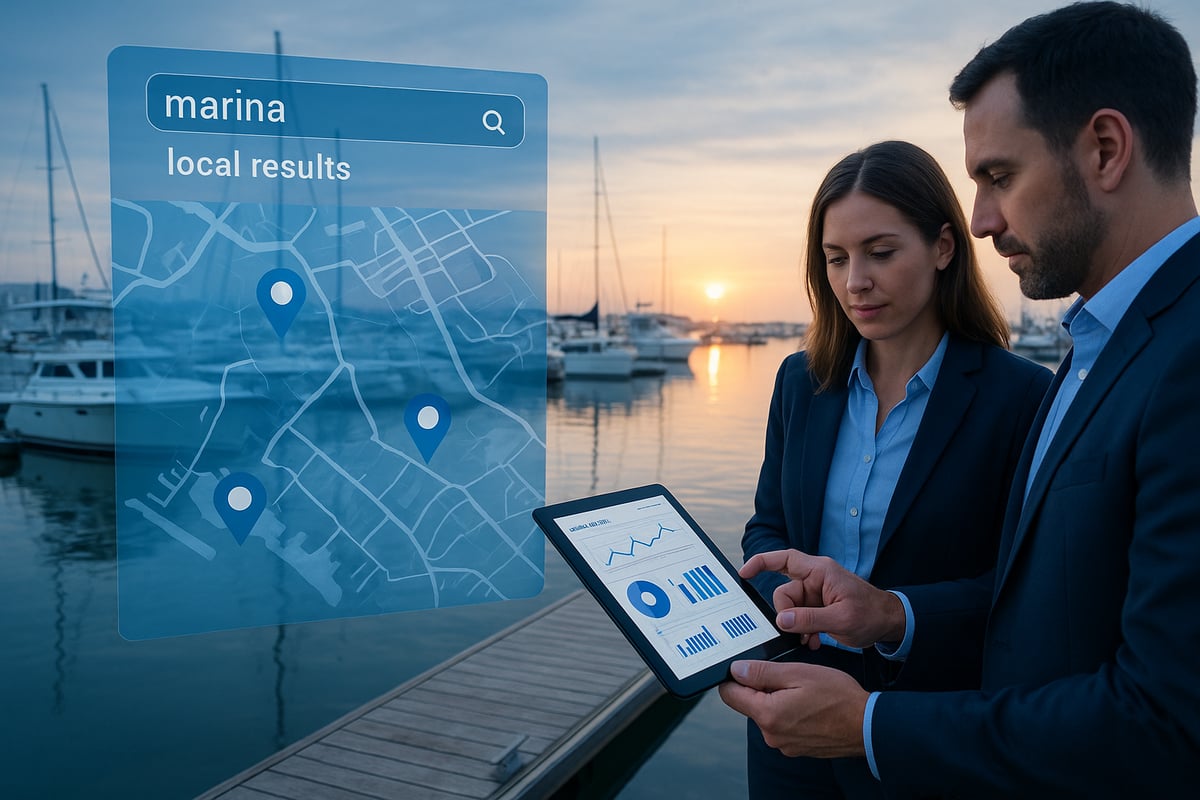
Marine businesses don’t operate like typical retail or service brands. Seasonality drives peaks and troughs—one month you’re swamped with bookings, the next it’s quiet. Plus, services are niche: yacht charters, boat repairs, marina slips, and even marine electronics each have unique buyer journeys.
Geographic targeting is another hurdle. A boat dealer in Miami competes with both local shops and massive national chains. Meanwhile, marinas often rely on local foot traffic and need to stand out in Google’s local pack. On top of that, high-ticket offerings mean every lead matters. Here, generic tactics just won’t move the needle for marine seo.
How Google and AI Are Shaping Marine SEO
Google’s constant algorithm updates and the explosive growth of AI-driven search are rewriting the rulebook. Voice assistants and semantic search mean marine seo must adapt to how real people ask questions—think “best boat repair near me” or “book a fishing charter this weekend.”
Recent statistics highlight the shift: marine businesses investing in targeted seo strategies see up to 52% more bookings compared to those relying on traditional marketing. If you’re curious about how these changes impact your business, the Marine SEO industry guide offers a deep dive into current best practices and what works now.
Why Generic SEO Agencies Miss the Mark
Most generic seo agencies lack the marine industry’s nuance. They might chase high-traffic keywords, missing the intent-driven, service-specific phrases that actually convert. Without hands-on marine experience, they overlook crucial local ranking factors and often ignore the cyclical nature of marine demand. The result? Missed opportunities, poor conversion rates, and wasted budget for marine seo.
The Case for a Holistic, Industry-Specific Approach
Outdated tactics like keyword stuffing or neglecting mobile optimization can sink your rankings fast. In a market moving as quickly as marine seo, you need a strategy that blends organic, paid, and local efforts—plus real conversion tracking.
The most successful marine businesses create a holistic plan: optimizing for every step of the customer journey, from awareness to booking. They focus on what truly matters—visibility, authority, and measurable results. In 2026, a one-size-fits-all approach simply won’t float.
The 7 Essential Marine SEO Strategies to Boost Rankings in 2026
The marine industry in 2026 is a battleground. Competition is fierce, and digital transformation is the new tide. Only those with a strategic edge will rise above the surface. Here are the seven marine seo strategies every forward-thinking marine brand needs, explained step by step.
1. Deep-Dive Keyword Research & Intent Mapping
Marine seo starts with understanding exactly how your customers search. Generic keywords just will not cut it. Instead, marine buyers use highly specific, intent-driven search phrases. Think about the difference between “boat repair” and “emergency marine diesel mechanic in Miami.” The latter brings in a ready-to-convert customer.
Map your keywords to the buyer journey. For example, informational searches like “best marina in Fort Lauderdale” attract early-stage prospects. Transactional queries such as “book yacht charter Charleston” capture buyers ready to commit. Navigational searches like “marine electrician near me” target those seeking a specific provider.
Leverage tools like Google Search Console, SEMrush, and competitor research. Dive into the “People Also Ask” section for marine-specific queries. Look for goldmines in long-tail keywords such as “boat lift installation cost,” “yacht charter reviews,” or “marine diesel mechanic emergency service.”
Pay close attention to seasonality and local demand. Search volume for “fishing charters” spikes in spring and summer, while “boat winterization” peaks in fall. Adjust your marine seo targeting to align with these rhythms.
Zero-click and voice searches are growing fast. Optimize for questions and conversational phrases, especially with AI and voice assistants on the rise. Businesses that invest in intent mapping have seen up to 63 percent more qualified inquiries.
Finally, prioritize your keywords by aligning them with your highest-margin services. The right keyword strategy is the anchor for every successful marine seo campaign.
2. Technical SEO Overhaul for Marine Websites
Technical health is the engine room of marine seo. Too many marine websites suffer from slow load times, outdated plugins, broken links, and mobile issues. These technical pitfalls can quietly sink your rankings.
Core Web Vitals and mobile-first indexing are now non-negotiable in 2026. Your site must load fast, look sharp on every device, and deliver a seamless experience. Start with a speed audit: compress large boat images, update plugins, and streamline code. SSL security is a must for trust and ranking.
Structured data and schema markup help Google understand your services, locations, and offerings. Implement schema for marinas, boat rentals, and service areas to boost your chances of appearing in rich snippets or the local pack.
Here is a technical seo checklist for marine businesses:
| Task | Why It Matters |
|---|---|
| Site speed optimization | Improves rankings and user retention |
| SSL/HTTPS | Builds trust and security |
| Structured data/schema | Enhances search appearance |
| XML sitemap | Aids crawling and indexing |
| 404 error fixes | Reduces bounce rates |
| Mobile optimization | Essential for all users |
Sites with optimized technical marine seo often see up to 40 percent more organic traffic. For step-by-step implementation, refer to the Marine SEO checklist designed for the marine industry.
Run quarterly technical audits to stay ahead. The difference between being found and being overlooked often comes down to technical details.
3. Local SEO Domination for Marine Businesses
Local visibility is the lifeblood of marine seo for operators serving specific regions. Google Business Profile (GBP) is your digital storefront. Optimizing it can mean the difference between a full booking calendar and empty docks.
Step one is NAP consistency: your Name, Address, and Phone number must match across every directory and listing. Next, select the right categories and define your service areas. Upload high-quality images of your marina, boats, and team.
Reviews are gold. Marine businesses with 50 or more reviews receive 30 percent more calls. Encourage happy clients to leave feedback and always respond—good or bad.
Build local citations on marine directories, boating associations, and regional tourism sites. Partnerships with yacht clubs, marine suppliers, and local businesses create valuable local backlinks.
Geo-targeted content is another game changer. Articles like “best fishing charters in Fort Lauderdale” or “boat repair near Savannah” draw in targeted traffic.
For a deep dive into practical steps, check out this Local SEO for marine businesses resource. One boat rental company tripled bookings after a focused local seo revamp.
Create individual landing pages for each service area. The more specific and locally relevant your marine seo, the higher you will rank and the more local business you will secure.
4. Authority-Building Content & Thought Leadership
In marine seo, content is your strongest vessel. High-quality, expert-driven content attracts, educates, and converts. The goal is to become the go-to resource in your niche.
Start with in-depth guides, FAQs, how-to articles, and maintenance tips tailored for marine customers. Case studies are powerful: show how a dock renovation led to a 40 percent revenue boost for a local marina. Real-world results build trust.
Interactive tools—like boat comparison calculators—plus video walkthroughs and drone tours boost engagement. Thought leadership pieces, such as interviews with captains or safety checklists, position your brand as an industry authority.
A content calendar aligned with boating seasons and events keeps your marine seo efforts consistent. Use data and customer questions to guide topics.
Aim for featured snippets and optimize for voice search. For example, structure answers clearly and use FAQ schema.
Data shows that marine businesses publishing monthly expert content see three times more organic leads. Consistency and authority are the compass points for marine seo success.
5. High-Authority Link Building & Digital PR
Backlinks from reputable marine and boating websites are the backbone of marine seo authority. Google values quality over quantity, so focus on earning links from industry-relevant sources.
Outreach is key. Guest post on marine blogs, partner with industry organizations, or sponsor local boating events. Digital PR matters, too: issue press releases for new services, community involvement, or awards.
Get listed in high-value marine directories and association websites. For example, a marine contractor who earned a backlink from a national boating safety organization saw a 50 percent jump in rankings.
Steer clear of low-quality link schemes. Focus on links that are relevant, authoritative, and earned through real relationships.
Statistics show that authoritative backlinks can increase organic rankings by up to 35 percent. Track your backlinks, monitor competitors, and adjust your strategy as needed.
High-authority link building is a long-term investment in your marine seo foundation.
Aquatic SEO: Blended Customer Generation for Marine Businesses
Aquatic SEO is not your average digital agency. This team is built by marine professionals, for marine professionals. Their exclusive focus on marine seo means they understand the unique challenges and opportunities of this industry inside and out.
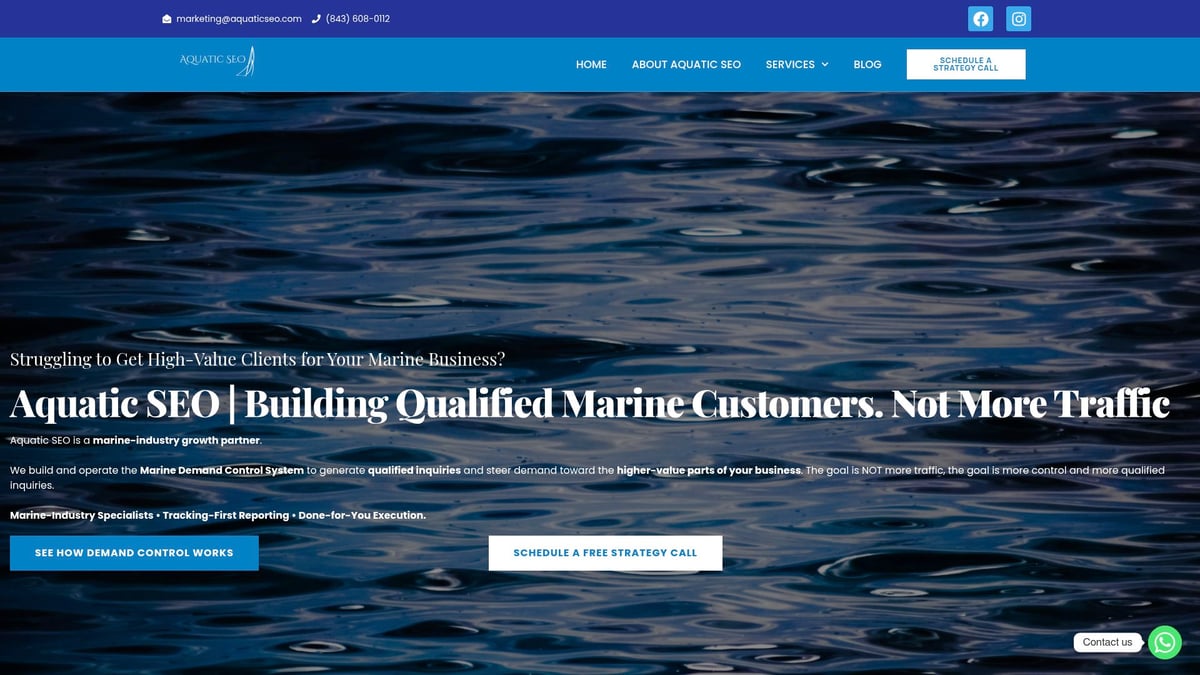
What sets Aquatic SEO apart is their proprietary Blended Customer Generation Strategy. This approach integrates marine seo, PPC, conversion optimization, and local dominance to deliver full-funnel growth.
The Five Sprint Execution Model—Baseline, Foundational, Growth, Local, and Promotional Sprints—delivers measurable results fast. Real-world stories prove it: yacht charter bookings up by 63 percent, marine surveyor calls up 500 percent, and marine e-commerce sales up 52 percent.
Clients benefit from demand control, transparent tracking, and a results guarantee—40 qualified inquiries in 90 days. Ideal clients include yacht charters, marinas, service providers, dealers, brokers, and marine e-commerce brands.
What really makes Aquatic SEO different is their full-stack, outcome-driven approach. No generic tactics, just proven industry-specific growth engines. If you want to dominate search and keep your calendar full, schedule a free discovery call and see what marine seo mastery looks like.
6. User Experience (UX) & Conversion Rate Optimization (CRO)
A seamless user experience is essential for turning website visitors into bookings. In marine seo, every extra click or confusing form can mean a lost customer.
Start with intuitive navigation. Make it easy for users to find services, locations, and booking forms. Mobile responsiveness is a must—most marine customers are searching from their phones dockside or on the move.
Fast, simple booking forms and clear calls-to-action drive conversions. Test different landing pages with A/B testing to see what works best. Trust signals—like industry certifications, customer reviews, and guarantees—build confidence.
Integrate live chat, click-to-call buttons, and instant quote tools for real-time engagement. Use analytics tools like heatmaps and session recordings to spot friction points and continuously improve.
Marine sites with optimized UX see conversion rates rise by 27 percent. Schedule ongoing CRO audits to keep pace with changing customer behaviors and new search trends.
A user-focused approach is a vital part of any marine seo strategy.
7. Leveraging AI, Voice Search & Next-Gen Search Trends
Search is evolving fast. AI-powered engines, voice assistants, and semantic search are changing how marine customers find businesses. Staying ahead means optimizing marine seo for these next-gen trends.
Focus on conversational, natural-language content. Most voice searches are questions or commands, like “find a marina near me” or “book a last-minute fishing charter.” Use FAQ schema and answer common questions directly.
AI tools can help you analyze search trends and generate new content ideas. Keep an eye on emerging platforms like Google SGE, Bing Copilot, and marine-specific voice apps.
Voice search now accounts for 30 percent of marine-related queries. That figure will keep growing. Optimize your marine seo for “near me” and “how to” phrases, and make sure your business info is accurate everywhere.
Future-proof your strategy by embracing new technologies early. Marine seo is not static—adaptation is your best anchor.
Measuring, Tracking, and Adapting Your Marine SEO Strategy
In the fast-changing world of marine seo, what gets measured truly gets improved. Data-driven decision-making is no longer optional for marine businesses looking to stay competitive. With the digital landscape evolving every quarter, tracking your progress is the only way to know if your marine seo strategy is delivering real results or just treading water.

Core Metrics Every Marine Business Should Track
To measure the true impact of marine seo, focus on metrics that tie directly to business growth, not just vanity numbers. Here’s a quick table to help summarize what matters most:
| Metric | What It Tells You | Why It Matters |
|---|---|---|
| Search Rankings | Where you appear for target keywords | Visibility drives inquiries |
| Organic Traffic | Visits from non-paid search | Indicates reach and interest |
| Conversion Rate | % of visitors taking desired actions | Measures lead quality & UX |
| Call Tracking | Calls generated by seo efforts | Direct link to bookings |
| Qualified Inquiries | High-potential leads from your site | Shows sales pipeline health |
If you’re not tracking these, it’s easy to miss hidden opportunities or warning signs. Tools like Google Analytics, Search Console, and CallRail are your best friends here.
Attribution and Performance Reviews
Attribution tracking helps you see exactly where your leads and bookings originated—be it marine seo, PPC, or social campaigns. This holistic view of ROI is essential for marine operators juggling multiple channels. Set up monthly dashboards for real-time visibility and conduct quarterly audits to spot trends or sudden ranking drops before they impact revenue.
For example, a marina might discover that 60% of its off-season bookings come from organic search, while paid ads drive most summer inquiries. Insights like this inform smarter budget allocation and campaign tweaks.
On top of that, regular performance reviews make it easier to justify investment in marine seo. For those weighing costs, it’s worth checking out this Marine SEO services cost breakdown to understand what goes into a results-driven strategy.
Setting KPIs and Reporting Frameworks
Every marine business should define clear KPIs for marine seo—think bookings, service requests, or e-commerce sales, not just clicks or impressions. Align these KPIs with your business goals to keep your team focused on what truly matters.
A sample reporting framework for a marine service provider might include:
- Keyword rankings for top local phrases
- Monthly organic traffic growth
- Number of qualified inquiries
- Conversion rates by traffic source
- ROI by channel
Share these reports with your marketing, sales, and operations teams. This builds accountability and helps everyone row in the same direction.
Adapting and Collaborating for Continuous Growth
The best marine seo strategies aren’t static. Markets shift, boating seasons change, and Google’s algorithms evolve. That’s why ongoing adaptation is critical. Refresh your keyword list, update content for new search trends, and experiment with emerging channels like voice or AI-powered search.
Here’s a quick checklist for quarterly marine seo reviews:
- Audit rankings and traffic for priority keywords
- Analyze conversion paths and call tracking data
- Review content performance and update outdated resources
- Monitor local listings and review profiles
- Benchmark against industry stats, like those found in Marine Industry Marketing Statistics 2025
Finally, remember that the most successful marine seo programs are team efforts. Foster collaboration between marketing, sales, and ops to catch blind spots, share wins, and fuel continuous improvement.
Ready to put these strategies into action and see real results for your marine business? If you want to move beyond generic advice and get a tailored plan that addresses your unique challenges—like inconsistent bookings, high competition, and shifting digital trends—let’s talk. At Aquatic SEO, we combine proven marine SEO tactics, cutting-edge technology, and years of industry experience to help you dominate rankings and stay fully booked year round. You deserve a strategy built for your business, not a one size fits all approach. Take the next step and Schedule a Free Strategy Call today.