Water sports are booming worldwide, and digital transformation is rapidly changing how the marine industry operates. More people are hitting the water, and businesses are scrambling to keep up.
Managing bookings, engaging customers, and running effective marketing campaigns has never been more complex. Competition is fierce, and expectations for instant, seamless service are sky-high.
That’s where water sports marketing automation comes in. This expert guide will give you actionable strategies, real-world examples, and step-by-step tactics to help you master the tools, trends, and future-proof solutions shaping the industry in 2026.
Water Sports Marketing in 2026: Trends & Challenges
The water sports industry is charging into 2026 with unprecedented momentum. Across the globe, more people are diving into aquatic adventures, while operators race to keep up with demand and shifting digital trends. As water sports marketing automation becomes essential, understanding the new landscape is the first step to staying ahead.
Rising Demand & Market Expansion
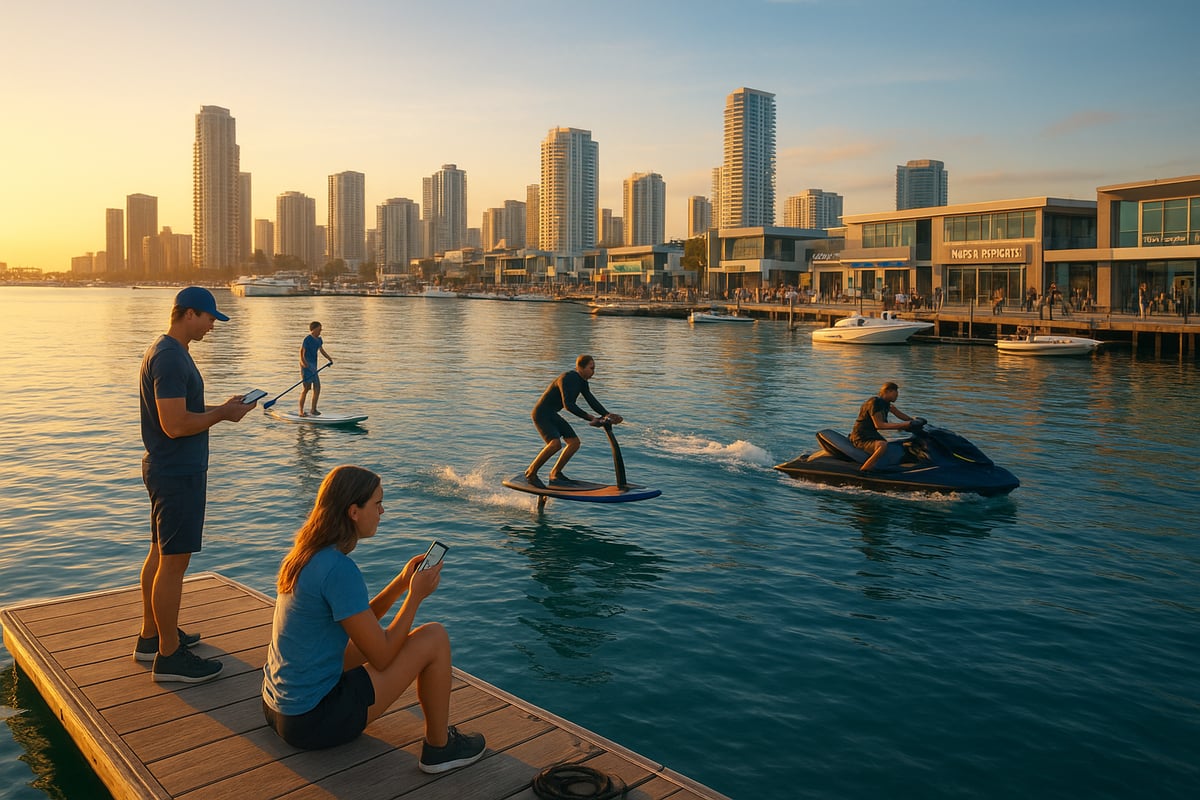
Since 2023, the global water sports market has surged, fueled by post-pandemic travel and renewed interest in outdoor experiences. It's not just about kayaking or jet skiing anymore—new niches like e-foiling, SUP yoga, and adventure charters are drawing in fresh crowds. In fact, coastal cities have reported a 40% uptick in new water sports businesses, making competition fiercer than ever.
Market experts project total industry value to hit $55 billion by 2026, with operators expanding both locally and internationally. If you're looking for detailed market data, the Water Sports Market Analysis & Trends Report 2033 offers a comprehensive look at growth forecasts and consumer preferences.
To stand out, marine business owners are increasingly turning to water sports marketing automation, helping them reach new customers and manage rising demand with efficiency.
Evolving Customer Expectations
Today's water sports customers expect more than just fun on the water. They want instant booking, mobile-first experiences, and offers that feel handpicked for them. According to recent industry data, 70% of customers now demand real-time availability and immediate confirmation when booking their next adventure.
Social proof is also vital. User-generated content, peer reviews, and shared experiences on social media can make or break a booking decision. Operators who integrate these elements into their water sports marketing automation are seeing stronger engagement and more loyal guests.
In this hyper-connected era, personalization isn't just a perk—it's the new standard for customer satisfaction.
Marketing Complexity & Fragmentation
The path from a customer's first online search to final booking is more tangled than ever. Water sports operators juggle campaigns across search engines, social platforms, OTAs, direct websites, email, and SMS. Add in cross-device browsing—laptops at lunch, smartphones at the beach—and the customer journey quickly fragments.
This complexity creates real headaches. Managing campaigns and tracking data across platforms eats up valuable time. Water sports marketing automation, when set up right, can unify these efforts, syncing messaging and data so operators can focus on delivering memorable experiences, not wrangling spreadsheets.
Regulatory & Safety Considerations
Regulations are evolving alongside the market. New rules around data privacy, online payments, and customer consent are now standard in marine tourism. Plus, safety messaging and visible certifications have become a core part of marketing.
Operators must ensure their water sports marketing automation tools comply with GDPR, CCPA, and PCI standards. Automating safety reminders, waivers, and certification displays not only builds trust but also keeps businesses protected and up to date.
Key Challenges Facing Operators
Despite all the growth, operators face some tough challenges. Booking volumes swing wildly between seasons, making revenue unpredictable. Digital ad costs are climbing, while organic reach on social and search keeps shrinking.
Tracking ROI across so many channels is tricky. Without robust water sports marketing automation, it's easy to lose sight of what's working and what needs to change. The businesses that thrive in 2026 will be those that turn these challenges into opportunities, leveraging automation to maximize bookings, improve retention, and adapt to the ever-changing tides of the marine industry.
The Power of Marketing Automation for Water Sports Businesses
Water sports marketing automation is transforming the way marine businesses operate in today’s digital-first environment. With more bookings happening online and customer expectations soaring, every marine operator needs a smarter way to handle marketing. Automation is no longer a luxury—it’s the backbone of efficient, scalable growth. Let’s break down why this matters, what tools are involved, and how you can use automation to get ahead.

What Is Marketing Automation?
At its core, water sports marketing automation means using specialized software to streamline repetitive marketing tasks. Think of it like having an extra set of hands that never gets tired.
Automation can handle:
- Sending booking confirmations and reminders
- Managing email or SMS campaigns
- Nurturing leads with targeted offers
- Scheduling social posts and ads
The big win? Consistency. Instead of worrying about missed messages or manual errors, automation keeps your brand front and center—every single time. This helps marine operators focus more on guest experiences and less on admin work.
Why Automation Matters in Water Sports
The marine industry is unique. Operators juggle high volumes of inquiries, especially during peak season. Customers expect instant replies, mobile-friendly booking, and real-time updates.
Water sports marketing automation bridges these gaps by:
- Responding to leads 24/7, even after hours
- Providing instant confirmations that boost trust
- Freeing up staff to focus on safety and service
Plus, studies show that 60% of bookings go to the first responder. If your system replies instantly, you win more business. In a market where timing is everything, automation is your competitive edge.
Key Automation Use Cases
Marine businesses can harness water sports marketing automation in practical ways that drive revenue and loyalty.
Popular use cases include:
- Automated booking confirmations and pre-trip reminders via SMS or email
- Dynamic pricing that adjusts to demand or weather
- Abandoned booking recovery, nudging guests to complete reservations
- Post-experience review requests and loyalty offers
These workflows ensure customers feel cared for at every stage. They also help you maximize bookings, encourage repeat visits, and build a strong reputation online.
Impact on Revenue & Efficiency
When implemented well, water sports marketing automation delivers measurable results. Businesses using automation routinely report up to 30% more bookings and 25% higher customer retention.
Here’s a real-world example: A Florida jet ski rental used automation to cut admin time in half and boost booking rates. For a deeper dive into how streamlined workflows make a difference, check out this Jet ski rental business automation case study. The bottom line? Efficiency drives revenue, especially when every minute counts.
Overcoming Common Objections
Some marine operators worry that water sports marketing automation feels impersonal or too complex. In reality, automation lets you personalize messages at scale, responding faster and with more relevance.
Common myths include:
- “Automation is cold.” Actually, it enables more timely, tailored communication.
- “It’s hard to set up.” Modern tools are designed for ease of use.
- “It’s expensive.” The return on investment often far outweighs the cost.
The right system actually makes customer interactions warmer, not colder, by ensuring no one falls through the cracks.
Wrapping Up: The Future of Water Sports Marketing Automation
In 2026 and beyond, water sports marketing automation will be the standard for forward-thinking marine businesses. It’s the secret to handling high volume, delivering instant engagement, and keeping up with evolving customer demands.
By integrating automation into your daily marketing, you set your business up for more bookings, better retention, and less stress. The key is to start with clear goals, pick the right tools, and keep optimizing. The future belongs to operators who embrace automation—and stay ahead of the wave.
Building Your Water Sports Marketing Automation Stack
Building a robust water sports marketing automation stack is no longer optional for marine businesses in 2026—it is the backbone of growth, customer satisfaction, and operational efficiency. The right stack brings together all your platforms, automates repetitive work, and gives you the tools to compete in a crowded digital marketplace.
Core Components of a 2026-Ready Stack
The foundation of water sports marketing automation lies in choosing the right set of interconnected tools. In 2026, your stack should include:
- A booking and reservation platform with built-in automation (e.g., Checkfront, FareHarbor)
- CRM tailored for marine and activity operators
- Email marketing automation platforms (Mailchimp, ActiveCampaign)
- SMS and WhatsApp automation for confirmations and reminders
- Social media scheduling and chatbot tools for engagement
These components work together to capture leads, automate communication, and manage every step of the customer journey. With water sports marketing automation, you can streamline bookings, reduce manual errors, and ensure every guest receives timely information.
A quick comparison:
| Component | Function | Example Providers |
|---|---|---|
| Booking Platform | Reservations, payments, reminders | FareHarbor, Checkfront |
| CRM | Customer data, segmentation, follow-up | HubSpot, Zoho |
| Email Automation | Nurturing, confirmations, promotions | Mailchimp, ActiveCampaign |
| SMS/WhatsApp | Real-time notifications, reminders | Twilio, WhatsApp |
| Social/Chatbot | Engagement, lead capture, support | Buffer, ManyChat |
Choosing modular, marine-specific solutions ensures your water sports marketing automation stack is built for the unique needs of your industry.
Integration & Data Flow
Integration is the secret sauce that makes water sports marketing automation truly powerful. All your systems—website, booking engine, CRM, marketing tools—must talk to each other, with data flowing seamlessly in real time.
APIs and middleware solutions like Zapier or Make are essential for connecting platforms. For example, you can set up an automated workflow where leads from social ads are instantly added to your CRM and trigger an SMS confirmation.
Why does this matter? Without integration, you risk data silos, missed opportunities, and inconsistent customer experiences. Plus, a connected stack helps you track every touchpoint, so you know exactly what is working.
For a deeper dive into how integration supports automation and search visibility, check out this SEO checklist for marine industry. It is a practical guide for ensuring your stack supports both marketing automation and organic growth.
Choosing the Right Tools
Selecting tools for your water sports marketing automation stack is about more than features—it is about fit. Look for:
- Industry-specific design (marine, activity, or tourism focus)
- Ease of use for your team
- Responsive customer support
- Integration capabilities (APIs, plugins)
- Cost-effectiveness for your business size
You will often face a choice between all-in-one platforms and best-of-breed solutions. All-in-one stacks are simpler to manage, but best-of-breed lets you pick top performers for each function. Prioritize features like real-time availability, mobile optimization, and multi-language support.
Create a shortlist, test with real workflows, and involve your team in the decision. The perfect water sports marketing automation stack is one your staff will actually use.
Security, Compliance, and Reliability
With automation comes responsibility. Your stack must be secure, reliable, and compliant with all relevant regulations. In 2026, GDPR, CCPA, and PCI standards are more important than ever for marine businesses.
- Ensure all platforms encrypt customer data in transit and at rest
- Confirm providers offer regular backups and high uptime SLAs
- Review compliance certifications before integrating payment or data tools
Choose vendors with a track record in the marine or travel sector. Downtime or data breaches can cost bookings and hurt your reputation. Regularly audit your stack to keep up with new regulations and best practices.
Security is not just a checkbox—it is a core pillar of trust in water sports marketing automation.
Budgeting & ROI Expectations
Investing in water sports marketing automation pays off, but you need to budget wisely. In 2026, most businesses spend between $200 and $1,000 per month on their stack.
Factor in software subscriptions, integration costs, and occasional consulting. The best part? Industry surveys show a typical ROI of 5 to 10 times your spend, thanks to increased bookings, higher retention, and reduced manual workload.
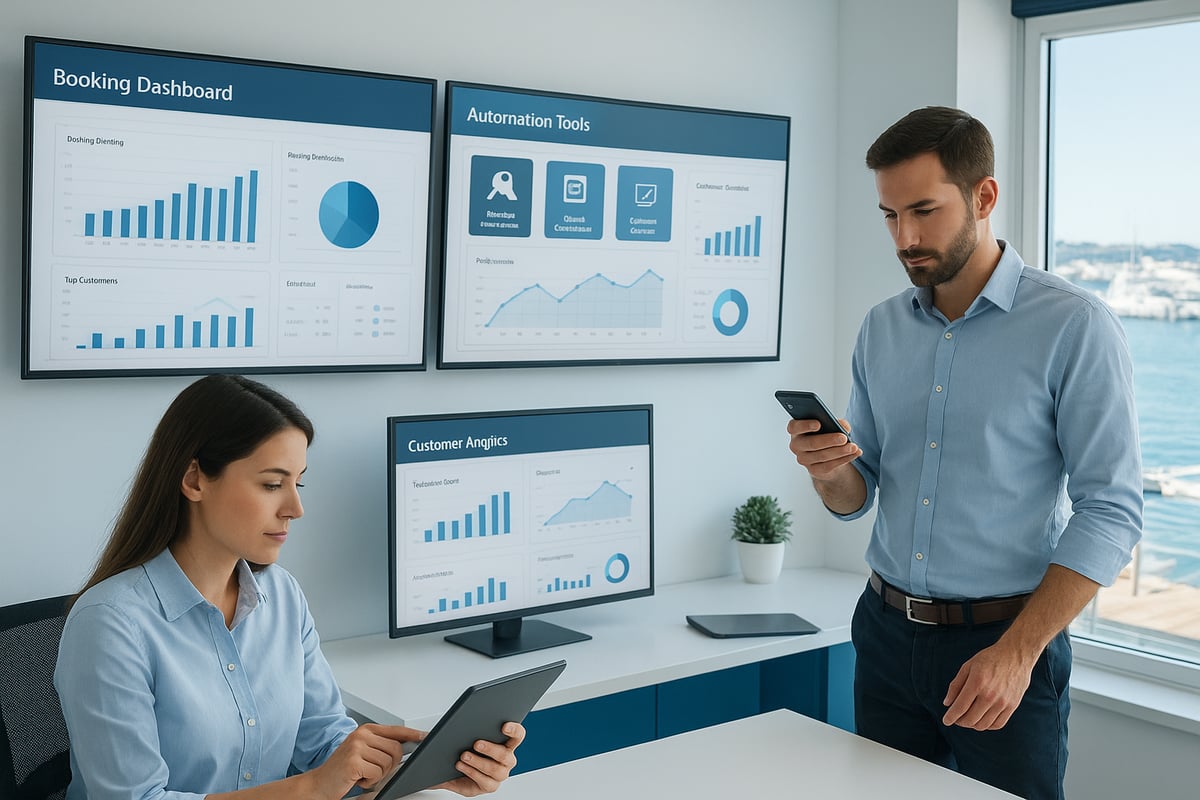
Track your results closely. Use dashboards to monitor conversion rates, customer lifetime value, and campaign performance. With the right stack, water sports marketing automation is not just a cost—it is a measurable driver of growth.
Step-by-Step: Automating Your Water Sports Marketing in 2026
Embarking on water sports marketing automation in 2026 might feel overwhelming at first, but breaking it down into clear steps makes the process manageable. With the right approach, you can turn complexity into streamlined growth. Below, you’ll find a practical, step-by-step guide designed specifically for marine and water sports businesses aiming to compete at the highest level.

Step 1: Audit Current Marketing & Booking Processes
Start with a thorough audit of your current marketing and booking processes. Map every customer touchpoint, from the first website visit to post-experience feedback. Identify where manual tasks slow things down or lead to errors. Is your team spending hours sending booking confirmations or chasing missed inquiries? Use simple charts or flow diagrams to visualize bottlenecks.
- Common bottlenecks:
- Delayed responses to inquiries
- Missed follow-ups
- Manual data entry mistakes
Analytics can reveal where customers drop off in the booking journey. This step is the foundation for effective water sports marketing automation.
Step 2: Define Automation Goals & KPIs
With your audit in hand, set clear objectives for your automation efforts. Are you aiming for more bookings, higher retention, or increased upsell revenue? Define measurable KPIs such as booking conversion rate, average response time, and repeat customer rate.
A focused approach helps you track what matters most. For example, if your goal is to boost bookings by 20 percent, automation should target lead capture, nurture, and conversion. Well-defined goals ensure your water sports marketing automation delivers real results.
Step 3: Select & Integrate Automation Tools
Choosing the right tools is crucial. Consider platforms built for marine operators, like automated booking engines, marine-specific CRMs, and multi-channel marketing suites. Think about integration—your website, booking engine, CRM, email, and SMS tools should work together seamlessly.
Use APIs or middleware to connect systems and avoid manual data transfer. Prioritize features like real-time availability, mobile optimization, and multi-language support. The right stack is the backbone of successful water sports marketing automation.
Step 4: Build Automated Campaigns
Now, it’s time to create your first automated campaigns. Focus on high-impact workflows:
- Welcome sequences for new leads
- Abandoned booking recovery via email or SMS
- Pre-trip reminders and upsell offers
- Post-trip review requests and loyalty incentives
For more ideas, check out Lead generation for marine businesses, which covers proven strategies to fuel your campaigns. Each automated workflow should align with your customer’s journey and business goals. That’s how water sports marketing automation turns leads into loyal guests.
Step 5: Test, Optimize, and Monitor
Don’t set campaigns and forget them. Regularly test different messages, timing, and channels. Use A/B testing for subject lines, SMS timing, and call-to-action buttons. Monitor key metrics—open rates, click-throughs, booking conversions—to identify what’s working.
For example, a kayak rental operator increased review rates by 40 percent simply by tweaking follow-up timing. Continuous optimization keeps your water sports marketing automation sharp and effective.
Step 6: Train Your Team & Customers
Even the best automation tools need human champions. Train staff to use, trust, and troubleshoot your new systems. Walk through each workflow, so everyone understands the benefits and can spot issues early.
Educate your customers, too. Highlight self-service options and instant support features in your communications. Empowered staff and informed customers make water sports marketing automation run smoothly.
Step 7: Scale & Personalize
Once the basics are humming, scale your automation with advanced personalization. Segment your audience—families, adventure seekers, corporate groups—and tailor offers. Use AI-driven content for emails and SMS to boost relevance and engagement.
Adjust campaigns for seasonality, like launching special winter deals or summer loyalty programs. As your business grows, water sports marketing automation should evolve with it, always delivering a seamless, personalized experience.
Advanced Strategies: Personalization, AI, and Omnichannel Automation
The marine industry is moving fast, and water sports marketing automation is no exception. If you want to stand out in 2026, you have to go beyond the basics. Advanced strategies like hyper-personalization, artificial intelligence, and true omnichannel automation are now essential, not optional. Let’s break down how these tactics can transform your business and set you apart from competitors.
Hyper-Personalization in Water Sports Marketing
Hyper-personalization is the new standard in water sports marketing automation. By leveraging data on customer preferences, booking history, and even real-time behavior, operators can tailor offers that feel one-to-one, not one-to-many. Dynamic email content, on-site popups, and segmented promotions all work together to create a journey that feels custom-built for each guest.
For example, a surf school can use water sports marketing automation to send personalized lesson packages based on a customer’s skill level and favorite beach. This approach doesn’t just boost engagement, it builds long-term loyalty. Customers notice when you remember their last adventure, and they’re more likely to return.
AI-Powered Automation
Artificial intelligence is rapidly changing the landscape of water sports marketing automation. AI chatbots now manage first-touch inquiries around the clock, responding instantly to booking questions or cancellation requests. Predictive analytics help forecast demand and optimize dynamic pricing, making sure you never leave revenue on the table.
On top of that, AI-driven ad campaigns target the highest-value customer segments with pinpoint accuracy. There’s clear evidence that integrating AI can lead to measurable gains in customer engagement and ROI, as explored in the Impact of AI on Key Metrics in Tourism Marketing. The key is to start small, test, and scale what works.
Omnichannel Engagement
Customers expect a seamless experience, no matter where they interact with your brand. That’s why omnichannel automation is a core pillar of water sports marketing automation. Coordinating campaigns across email, SMS, social media, and push notifications ensures every customer touchpoint is consistent and timely.
Imagine a guest clicks an ad, receives an instant SMS with a booking link, and later gets a personalized email reminder. This is possible through integrated systems and smart workflows. For practical steps on building these capabilities, check out Digital marketing and e-commerce tips. It’s about meeting customers where they are, every step of the way.
User-Generated Content & Social Proof Automation
Social proof remains a powerful motivator in water sports marketing automation. Automating review requests and photo submissions after each trip makes it easy for happy guests to share their stories. These authentic testimonials can be showcased on your website, social channels, and even in follow-up emails.
Set up workflows that trigger a review request or a photo contest entry right after a guest’s experience. Over time, this builds a library of real-world content that inspires new bookings and reassures hesitant customers.
Loyalty, Upsell, and Retention Programs
Keeping past guests engaged is just as important as attracting new ones. Automated loyalty programs and upsell offers are vital tools in water sports marketing automation. Enroll customers in rewards programs automatically after their first booking, and send tailored offers based on their previous activities.
Triggered upsell campaigns, like offering a private lesson to a returning paddleboarder, can increase both revenue and customer satisfaction. These programs run quietly in the background, driving repeat business with minimal manual effort.
Measuring & Optimizing Advanced Campaigns
The magic of water sports marketing automation lies in its measurability. Use attribution modeling to pinpoint which channels and campaigns actually drive bookings. Real-time dashboards let you monitor key metrics, from conversion rates to customer lifetime value.
Commit to regular reviews and iterative testing. Even small tweaks to messaging or timing can lead to big improvements. The most successful operators don’t “set and forget”—they use data to refine and evolve their automation strategies, staying ahead of the curve.
Measuring Success: Analytics, Reporting & Continuous Improvement
When it comes to measuring the impact of water sports marketing automation, precision and consistency are everything. Analytics turn raw numbers into actionable insights, letting marine operators cut through the noise and focus on what really drives bookings and growth.
Key Metrics for Water Sports Marketing Automation
Success with water sports marketing automation starts with tracking the right metrics. Booking conversion rate is the obvious one, but don’t stop there. Look at cost per acquisition, lifetime customer value, and average response time. Channel-specific metrics like email open rates, SMS response rates, and ad ROAS round out the picture.
Here’s a quick table to summarize essential KPIs:
| Metric | Benchmark Range |
|---|---|
| Booking Conversion Rate | 3–7% |
| Email Open Rate | 30–50% |
| Response Time | <2 hours |
| Repeat Customer Rate | 20–35% |
If you’re not measuring these, it’s tough to prove the return on your water sports marketing automation investment.
Setting Up Tracking & Analytics
To get a clear view, integrate tools like Google Analytics, booking engine analytics, and your CRM dashboard. UTM parameters are a must for tracking campaign performance across channels. Make sure your booking platform and CRM are synced so every inquiry, booking, and follow-up is captured.
Automated reporting can save hours each week. Create dashboards that display real-time performance, not just monthly summaries. If you’re serious about water sports marketing automation, set up regular reporting intervals and review sessions.
Benchmarking Against Industry Standards
How do you know if you’re ahead of the game? Compare your numbers to industry averages. For example, top marine operators often achieve booking conversion rates above 5% and email open rates near 50%. If you want to see how the broader market is expanding, Water Sports Products Market to hit USD 58.5 billion by 2032 offers some valuable perspective on the sector’s potential.
Regular benchmarking keeps your water sports marketing automation efforts sharp and competitive.
Continuous Improvement Process
Continuous improvement means never letting your water sports marketing automation run on autopilot. Schedule regular reviews of your automation workflows. Gather feedback from your team and customers. Use A/B testing to tweak messaging, timing, or incentives.
Stay alert for new trends or tech. For instance, integrating new analytics tools or automation features can help you keep pace with the evolving marine industry. The best operators treat optimization as an ongoing habit, not a one-off task.
Overcoming Common Pitfalls
It’s easy to fall into the “set and forget” trap. Automation can create silos if your systems aren’t connected. Attribution gaps can also muddy the waters, making it hard to see what’s working.
To avoid these pitfalls:
- Regularly audit your automation workflows.
- Ensure all tools are integrated and sharing data.
- Address any inconsistencies in how you track and report results.
A proactive approach to water sports marketing automation reduces errors and maximizes ROI.
Real-World Examples & Case Studies
Consider a SUP rental operator who doubled repeat bookings after adding loyalty automation. Or a kayak business that boosted review rates by 40% through automated post-trip requests. Peer benchmarks from top-performing water sports businesses show that the right automation strategies consistently drive measurable growth.
Real-world results prove that water sports marketing automation isn’t just a trend—it’s a competitive advantage for marine brands ready to scale.
As we’ve explored, mastering water sports marketing automation in 2026 means more than just keeping up—it’s about getting ahead with smart systems, data-driven campaigns, and the right technology stack. If you’re ready to turn unpredictable bookings into steady growth and want a tailored roadmap for your unique marine business, let’s take the next step together. I invite you to tap into our industry expertise and see how our Blended Customer Generation Strategy™ can help you thrive in every season.
Schedule a Free Strategy Call
and discover what’s possible for your business.