If you're running a fishing guide service in 2026 and you're not showing up when anglers search for trips in your area, you're basically invisible. Doesn't matter how skilled you are with a fly rod or how well you know those secret bass spots-if potential clients can't find you online, they're booking with someone else. That's where local SEO for fishing guides becomes your most valuable marketing tool. The reality is simple: most anglers start their search on Google, and if you're not on that first page of results, you might as well not exist. The good news? With the right local SEO strategy, you can dominate your local waters and keep your calendar packed throughout every season.
Why Local SEO for Fishing Guides Actually Matters
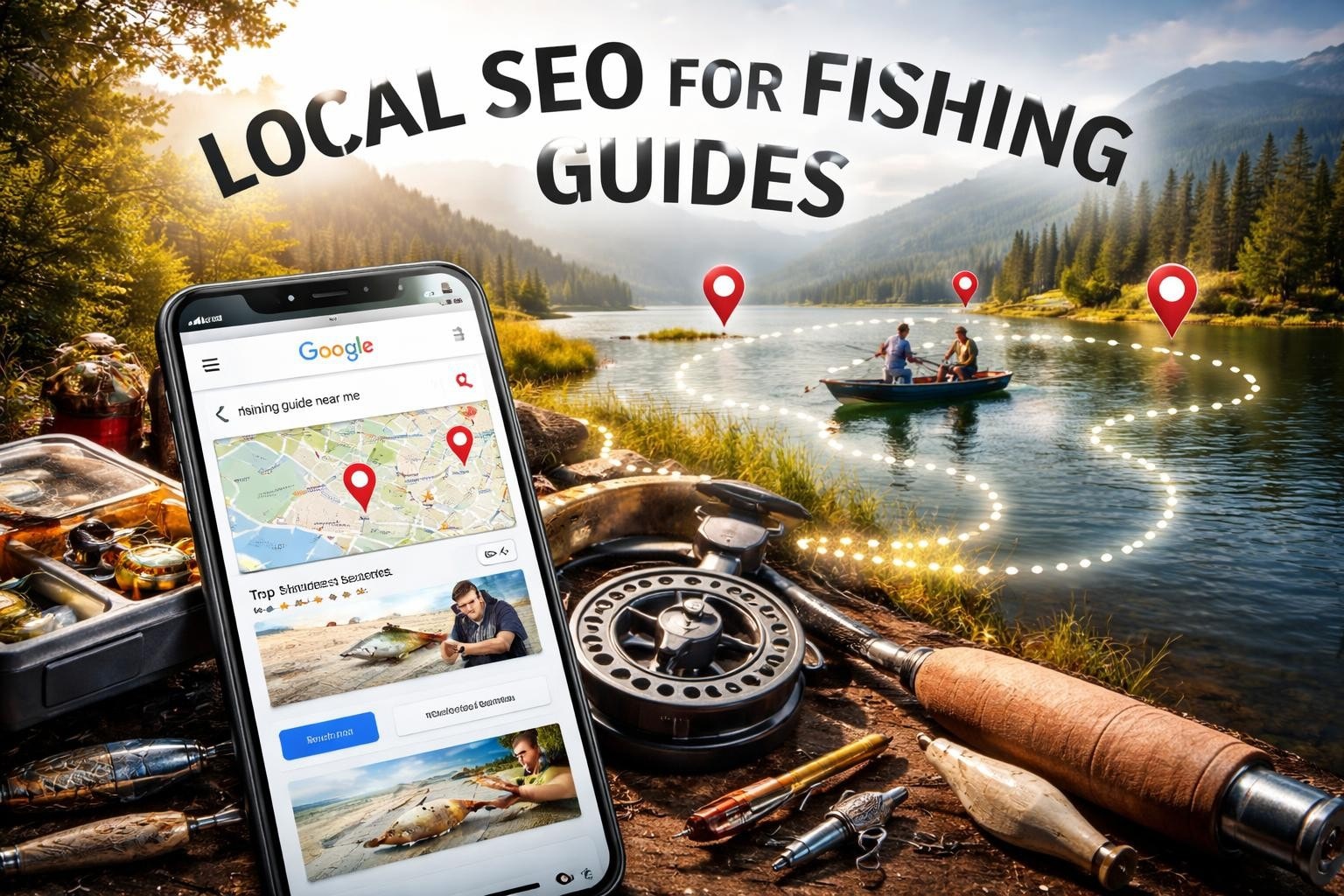
Here's the thing about the fishing guide industry-it's hyper-local by nature. Someone planning a tarpon trip in the Florida Keys isn't going to book a guide in North Carolina, no matter how great your reviews are. This geographic specificity makes local SEO for fishing guides even more critical than traditional SEO. When someone searches "fishing guide near me" or "best bass guide in Lake Norman," Google's job is to show them the most relevant, trustworthy, and nearby options.
And let's be honest, your competition isn't just other guides anymore. You're competing against charter booking platforms, outdated directory sites, and even guides who haven't touched their websites since 2015 but somehow still rank. The difference between showing up first versus fifth can literally mean the difference between a fully booked season and scrambling for clients.
The Search Behavior Shift
Recent data shows that over 76% of people who search for something nearby visit a business within 24 hours. For fishing guides, that number's probably even higher. Anglers are often planning trips on short notice-maybe they've got a free weekend, or they're visiting an area for work. They pull out their phone, search for a local guide, and book within hours.
Plus, mobile searches with "near me" have grown exponentially. If your Google Business Profile isn't optimized and your website isn't showing up for local searches, you're missing out on this massive wave of ready-to-book clients.
Setting Up Your Google Business Profile the Right Way
Your Google Business Profile (GBP) is the foundation of local SEO for fishing guides. Period. This free tool from Google is what shows your business in Google Maps, the local pack (those three businesses that appear at the top of search results), and Knowledge Panel results. If you're not claiming and optimizing this, you're leaving money on the table.
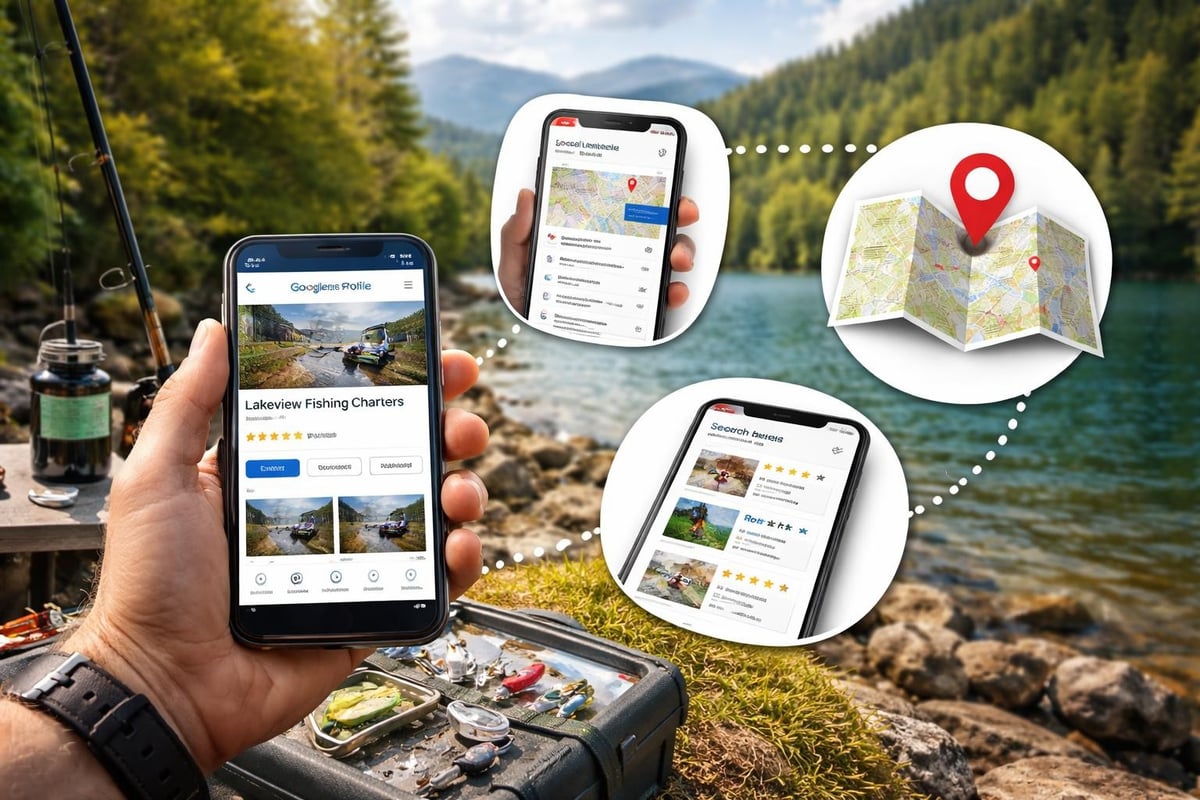
First things first-claim your listing if you haven't already. Then verify it. Google will send you a postcard with a verification code, and once you enter that, you're officially in the game. But here's where most guides stop. They fill out the basics and move on. That's a mistake.
Essential GBP Optimization Steps
- Choose the right primary category: Select "Fishing Guide" or "Fishing Charter" as your primary category. This tells Google exactly what you do.
- Add secondary categories: Include relevant options like "Boat Tour Agency," "Tour Operator," or specific fish species if available.
- Write a compelling business description: Use your 750 characters wisely. Include what species you target, what waters you fish, and what makes your service unique.
- Upload high-quality photos: Minimum 10 photos showing your boat, happy clients with catches, scenic shots of your fishing areas, and action shots.
- Set accurate hours: Nothing frustrates potential clients more than showing up or calling during "posted" hours only to find you're closed.
- Add your service area: Specify all the lakes, rivers, coastal areas, or regions where you operate.
The business description is particularly important for local SEO for marine businesses because it's one of the few places Google reads natural language to understand your services. Don't keyword stuff, but do mention your target species, techniques, and locations naturally.
Building Location-Specific Content That Ranks
Here's where many fishing guides get it wrong. They create one generic "Services" page and call it a day. But if you guide on three different lakes or cover multiple species, you need dedicated pages for each. Why? Because Google wants to match searcher intent as precisely as possible.
Someone searching "Lake Hartwell striper guide" wants different information than someone searching "Santee Cooper catfish guide." Even if you offer both, Google needs separate, detailed pages to understand that you're the expert for both locations and species.
Content Structure That Works
| Content Type | Purpose | Example |
|---|---|---|
| Location Pages | Target specific waters you fish | "Guided Fishing Trips on Lake Norman" |
| Species Pages | Focus on particular fish types | "Trophy Largemouth Bass Fishing Guide" |
| Seasonal Guides | Capture time-specific searches | "Fall Redfish Charters in Charleston" |
| Technique Pages | Target method-specific anglers | "Fly Fishing Guide Services" |
Each page should include 500-800 words minimum. Cover what makes that location or species unique, what techniques you use, best seasons, what to expect, and what's included in your trips. Add photos specific to that page, and include customer testimonials that mention that location or species.
This approach isn't just for fishing guides, either. The same principles apply whether you're running yacht charter operations or any other marine service. Location-specific content wins every time.
Reviews: Your Secret Weapon for Local Rankings
Let's talk about reviews because they're absolutely critical for local SEO for fishing guides. Google considers review quantity, review velocity (how often you get new ones), and review ratings when determining local rankings. But beyond the algorithm, reviews provide social proof that turns searchers into bookings.
Think about your own behavior. When you're looking for a service in an unfamiliar area, don't you automatically trust the business with 47 recent five-star reviews over the one with 3 reviews from 2019? Of course you do. Your potential clients do the same thing.
Getting More Reviews Without Being Pushy
- Ask at the right moment: Right after a successful trip when clients are still excited
- Make it easy: Send a follow-up text or email with a direct link to your GBP review page
- Respond to every review: Thank positive reviewers and professionally address any concerns in negative reviews
- Don't incentivize: Offering discounts for reviews violates Google's policies and can get your listing suspended
According to proven local SEO strategies, guides who consistently gather 3-5 reviews per month see significant ranking improvements within 60-90 days. That's not a huge number-if you're running 20 trips a month, you only need a 15-20% review rate to hit that target.
Technical SEO Basics for Guide Websites
You don't need a computer science degree to get this right, but you do need to cover some technical fundamentals. Your website needs to load fast, work perfectly on mobile devices, and be structured in a way that Google can easily understand.
Site speed matters more than ever in 2026. Google uses Core Web Vitals as a ranking factor, and slow sites get penalized. Most fishing guide websites are image-heavy, which is great for showing off catches but terrible for load times if those images aren't optimized. Compress every photo before uploading it-aim for under 200KB per image without sacrificing too much quality.
Mobile Optimization Is Non-Negotiable
More than 65% of fishing guide searches happen on mobile devices. People are literally standing on the dock, searching for a last-minute guide, or planning tomorrow's trip from their phone. If your website looks broken on mobile or takes 8 seconds to load, they're hitting the back button and booking your competitor.
Use Google's Mobile-Friendly Test to check your site. If it fails, fix it immediately. This usually means using a responsive design that automatically adjusts to different screen sizes.
Schema Markup for Local Businesses
This is slightly technical but incredibly valuable. Schema markup is code you add to your website that helps Google understand specific information about your business. For fishing guides, you want to implement LocalBusiness schema that includes:
- Your business name, address, and phone number
- Service areas
- Operating hours
- Price range
- Accepted payment methods
You can use Google's Schema Markup Generator or have your web developer add this. It takes 30 minutes but can significantly improve how your business appears in search results.
Citation Building and Local Directories
Citations are mentions of your business name, address, and phone number (NAP) across the web. Google uses these to verify that your business is legitimate and to understand where you operate. Consistency is key here-if your GBP says "Smith's Fishing Guide" but half your citations say "Smith Fishing Guides" (no apostrophe), it creates confusion.
Start with the major directories that matter for local SEO for fishing guides:
- Yelp
- Facebook Business Page
- Better Business Bureau
- TripAdvisor
- Fishing-specific directories like FishingBooker and Angling Appointments
Then expand into local tourism sites, chamber of commerce directories, and regional outdoor recreation sites. Quality beats quantity. Ten citations on relevant, high-authority sites are worth more than 100 on spammy directory sites.
Content Marketing That Attracts Anglers
Beyond your core service pages, regular content creation helps you rank for informational searches and builds authority. This is where a blog becomes valuable. You're not just trying to rank for "hire me" keywords-you're also targeting "teach me" and "show me" searches.
Blog Topic Ideas That Drive Traffic
- Seasonal fishing reports for your local waters
- "What to Bring" guides for first-time clients
- Species identification and behavior articles
- Technique tutorials (even basic ones)
- Conservation and regulation updates
- Trip recaps with photos and client stories
Each piece should target a specific keyword or question. Use tools like Google's "People Also Ask" section to find related questions anglers are searching for. These strategies align with broader marine marketing solutions that focus on educational content that converts.
Post at least twice a month. Consistency matters more than volume. Two well-researched, 800-word articles per month will outperform eight rushed 300-word posts every time.
Link Building for Local Authority
Backlinks-other websites linking to yours-remain one of Google's strongest ranking signals. For local SEO for fishing guides, you want links from locally relevant and industry-relevant sources. A link from your regional tourism board carries more weight than a link from a random blog about gardening.
| Link Source Type | Value | How to Get It |
|---|---|---|
| Local Tourism Sites | Very High | Contact visitor bureaus, offer to write guest content |
| Local News/Media | High | Send press releases about conservation efforts, big catches, or events |
| Outdoor Blogs | Medium-High | Offer expert quotes or collaborate on content |
| Tackle Shops/Marine Businesses | Medium | Partner for reciprocal links or sponsorships |
| Local Business Associations | Medium | Join and get listed on member directories |
One effective approach used by successful guides involves creating genuinely useful local fishing resources-like a comprehensive guide to public boat ramps in your area or a seasonal fishing calendar. These resources naturally attract links because they provide value to anglers and other local businesses.
Similar tactics work across the marine industry, as outlined in approaches to web marketing for marine industry businesses that focus on relationship-building and value creation.
Social Media Integration and Local Engagement
While social media signals aren't direct ranking factors, they support your local SEO for fishing guides in several ways. Active social profiles drive traffic to your website, generate brand searches (which Google notices), and create opportunities for engagement that leads to reviews and backlinks.
Facebook remains the dominant platform for fishing guides. The demographic skews perfectly-your target audience (30-65-year-old anglers with disposable income) spends significant time there. Create a business page, post regularly with photos from recent trips, and engage with local fishing groups.
Social Posting Strategy
- Share trip photos with captions that include location tags
- Post fishing reports for your local waters
- Go live on video during trips (when appropriate and safe)
- Share client testimonials and reviews
- Engage with comments and messages quickly
Instagram works well for visual storytelling. YouTube is underutilized by fishing guides but incredibly effective for demonstrating expertise and ranking in video search results. Create short videos showing techniques, trip highlights, or "day in the life" content.
The key is consistency and authenticity. Don't try to be everywhere at once. Pick 2-3 platforms and do them well.
Tracking Results and Adjusting Strategy
You can't improve what you don't measure. Set up Google Analytics and Google Search Console to track your website traffic and search performance. Monitor your Google Business Profile Insights to see how many people find you through search versus maps, what actions they take, and which search terms they use.
Key metrics to watch monthly:
- Organic search traffic to your website
- GBP views and actions (calls, direction requests, website clicks)
- Keyword rankings for your target terms
- Conversion rate (what percentage of website visitors contact you)
- Review count and average rating
Set specific goals. Instead of "get more traffic," aim for "increase organic traffic by 25% in Q2" or "rank in top 3 for 'Lake Norman fishing guide' by June." Specific targets make it easier to evaluate what's working.
If certain location pages aren't performing, analyze why. Is the content thin? Are competitors stronger? Do you need more reviews mentioning that location? The detailed approaches discussed by industry-specific SEO experts emphasize this data-driven approach to continuous improvement.
Seasonal Optimization and Year-Round Visibility
Most fishing guide businesses have natural peaks and valleys. Maybe you're slammed during spring bass spawn but quiet in winter. Smart local SEO for fishing guides involves planning content and optimization around these seasonal patterns.
Three months before your peak season, ramp up content creation focusing on that season. If you're a spring crappie specialist, start publishing crappie content in January. This gives Google time to index and rank your content before searchers start looking.
During your off-season, shift focus to planning trips for next season, maintenance content, or even complementary services. Some guides add ice fishing in winter or partner with other local outdoor businesses to stay visible year-round.
Create content calendars that align with:
- Spawning seasons for target species
- Holiday weekends and vacation periods
- Local fishing tournaments or events
- Regulatory changes (season openings, limit changes)
This strategic timing keeps you relevant in search results even when booking volume naturally dips.
Competitor Analysis and Market Positioning
Take time quarterly to analyze what competing guides in your area are doing. Search for your target keywords and see who's ranking above you. Visit their websites, check their GBP profiles, and note what they're doing well.
You're not copying them-you're identifying gaps and opportunities. Maybe they rank well but have a terrible website. That's your chance to win on user experience. Maybe they have tons of reviews but weak content. You can outrank them with better, more comprehensive pages.
Use this competitive intelligence to differentiate yourself. If everyone else emphasizes trophy catches, maybe you position yourself as the family-friendly guide. If competitors focus on fly fishing, perhaps you're the expert for conventional tackle beginners.
The marine industry as a whole benefits from this type of strategic positioning, whether you're a guide or operating other marine services that need to stand out in crowded markets.
Paid Advertising as a Local SEO Complement
While this article focuses on organic local SEO for fishing guides, it's worth mentioning that paid advertising can accelerate your results. Google Ads with location targeting and PPC campaigns can put you at the top of search results immediately while your organic SEO builds momentum.
The smartest approach combines both. Use PPC services to capture immediate bookings and test which keywords and locations convert best, then double down on those in your organic SEO efforts. As explained by experts in pay-per-click advertising for guides, this integrated approach maximizes visibility and booking potential.
Budget $500-1000 monthly during peak season for Google Ads targeting your highest-value keywords. Track every conversion to ensure positive ROI. If you're getting $200 trips from $30 in ad spend, that's a no-brainer investment.
Local SEO for fishing guides isn't a one-time project-it's an ongoing strategy that builds momentum over time, but the results are worth every effort. When you combine a fully optimized Google Business Profile with location-specific content, consistent review generation, and strategic link building, you create a digital presence that attracts qualified clients month after month. At Aquatic SEO, we've helped marine industry businesses across the country dominate their local markets using our proven Blended Customer Generation Strategy™, delivering measurable growth and year-round bookings through integrated SEO, PPC, and conversion optimization specifically designed for fishing guides, charters, and marine service providers.