Picture yourself stepping onto a vessel in 2025 where the artificial intelligence boat experience is more than just a concept—it's reality. Navigation, docking, and even routine maintenance are automated, letting you focus on the thrill of the open water and meaningful moments with your crew.
This guide dives into the latest breakthroughs in artificial intelligence boat technology. Whether you own a marina, manage a charter fleet, or simply love the boating lifestyle, you'll get a clear look at how these advancements are reshaping both commercial and recreational marine operations.
We'll break down how AI is moving from buzzword to business advantage, making boating safer, smarter, and more accessible. Ready to see what the future holds? Dive in and discover the innovations set to define the marine industry in 2025.
The Evolution of Artificial Intelligence in Boating
Early Adoption: From Commercial to Recreational Vessels
The story of the artificial intelligence boat begins in the world of commercial shipping. Early on, shipping giants used AI and big data to optimize navigation and logistics, collecting massive amounts of data with every voyage. This laid the groundwork for smarter, more connected vessels.
Gradually, these technologies found their way into the recreational boating market. Companies like Avikus started integrating AI navigation into new boat models in 2024, making advanced autonomy more accessible to leisure boaters. Raymarine’s DockSense system was a game-changer, bringing AI-assisted docking to smaller vessels. Volvo Penta followed with Assisted Docking, leveraging GPS and integrated software for precise handling.
As more manufacturers recognized the value of the artificial intelligence boat, the trickle-down effect accelerated. Data-driven insights from commercial shipping kept fueling innovation in the recreational sector, setting the stage for rapid growth.
Key Milestones in Marine AI Development
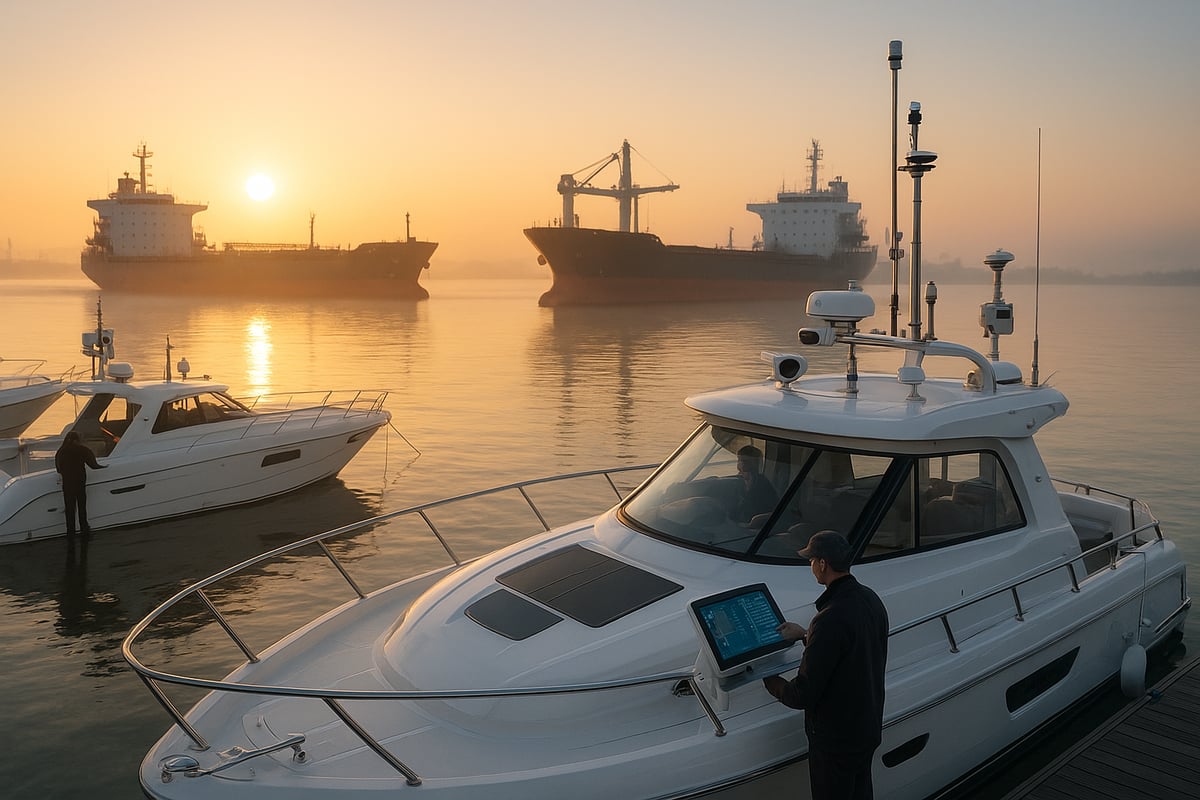
The artificial intelligence boat landscape has evolved quickly over the past decade. In the early 2010s, AI was mainly used in shipping for route optimization and safety alerts. By the late 2010s, the first recreational AI systems began appearing, transforming everyday boating experiences.
A major leap came with the integration of AI platforms by leading manufacturers. In 2024, six brands committed to Avikus AI, marking a shift toward mainstream adoption. Cross-industry innovations, such as Hyundai’s AutoEver platform, brought automotive precision to marine applications.
AI’s role expanded from passive monitoring to active vessel control and decision-making. The rise of digital twins and predictive maintenance in shipyards added another layer of intelligence. Industry leaders, like those behind the Brunswick’s ‘Boating Intelligence’ Initiative, demonstrated a strong commitment to embedding AI into navigation, safety, and onboard systems.
Current State of AI on Boats
Today, the artificial intelligence boat is defined by its focus on navigation, docking, and safety. Most systems use real-time data to compensate for wind, currents, and obstacles, making boating more intuitive and secure. Editors testing AI-assisted docking systems often report they simply can’t crash the boat, even when they try.
These technologies are typically factory-integrated, with retrofitting older boats still uncommon. The market response has been positive, especially among marine professionals who value efficiency and safety. However, adoption rates reflect some hesitation, mainly due to costs and the learning curve associated with new tech.
Overall, the artificial intelligence boat has become a symbol of progress in the marine industry, blending tradition with innovation and shaping the future of how we explore the water.
Top Artificial Intelligence Innovations for Boats in 2025
The artificial intelligence boat revolution is in full swing, and 2025 is shaping up to be a landmark year. We're seeing a wave of new tech that makes boats smarter, safer, and more user-friendly than ever. Whether you're managing a charter fleet or just love time on the water, these innovations are set to transform how you navigate, dock, maintain, and even enjoy your vessel.
AI-Powered Navigation and Autonomous Systems
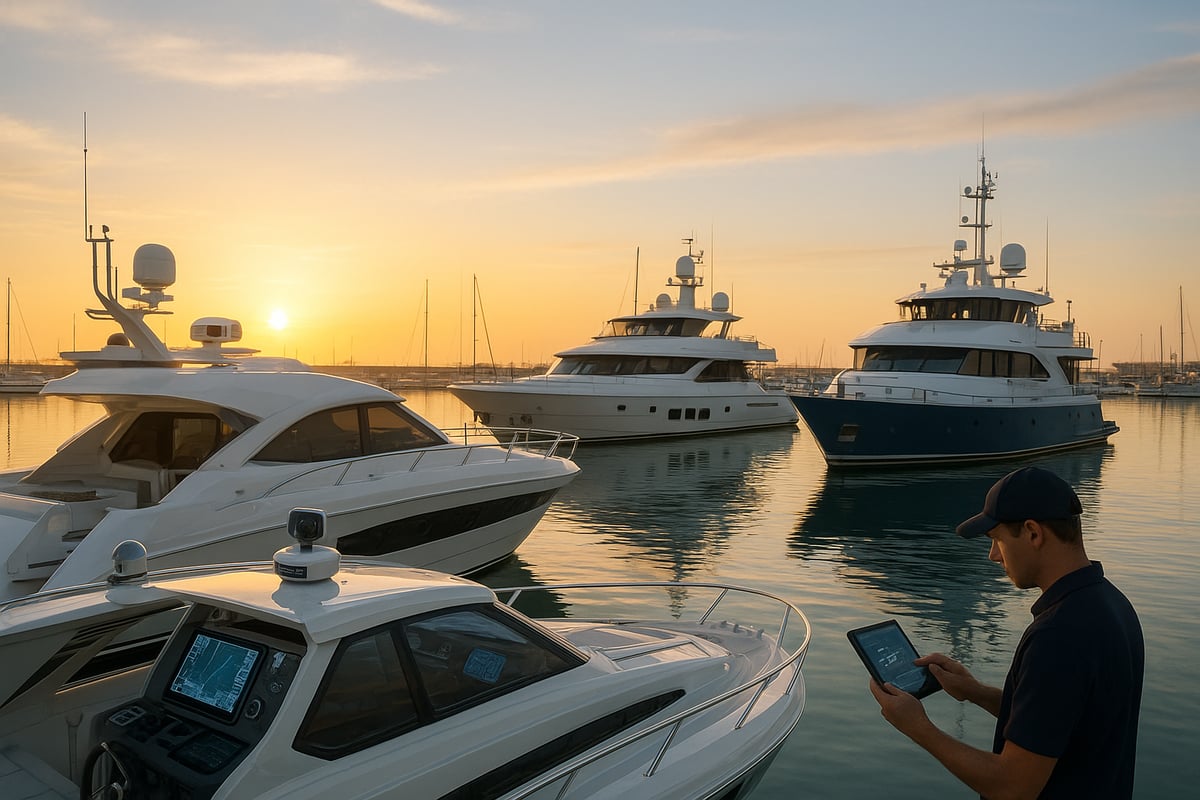
Navigation has always been at the heart of the artificial intelligence boat story. In 2025, next-gen navigation software like Avikus NeuBoat Navi is redefining what’s possible. These systems use real-time data from weather, currents, and traffic to plot the safest, most efficient routes.
Take joystick integration, for example. It allows operators to direct their vessel with intuitive precision, while AI handles complex calculations in the background. At the Fort Lauderdale Boat Show, the Quicksilver 906 Pilothouse wowed crowds with its seamless AI-guided route planning.
On top of that, dynamic positioning and course correction are now standard on many commercial ships. For a look at how this plays out on a massive scale, check out Hyundai Glovis’s AI-Controlled Car Carriers. These vessels showcase how the artificial intelligence boat landscape is pushing toward full autonomy.
Smart Docking and Assisted Maneuvering
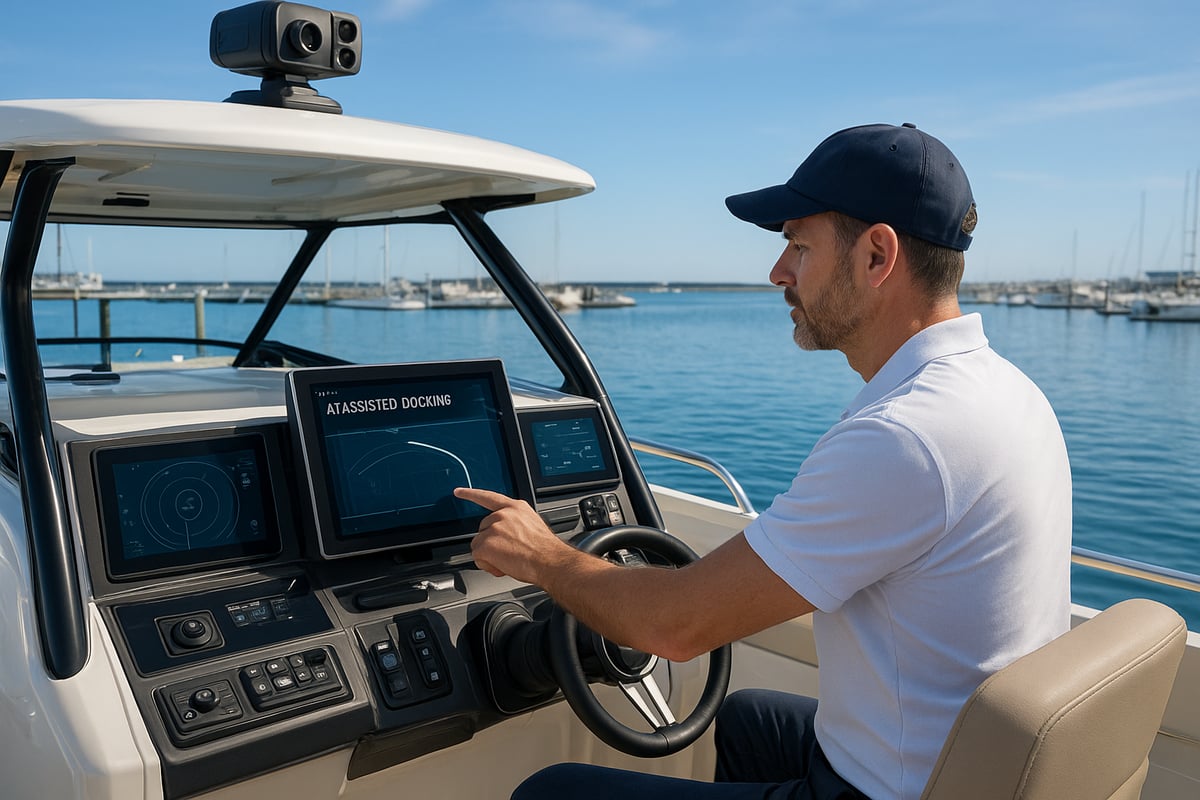
Docking has long been a stress point for operators, but artificial intelligence boat technology is taking the edge off. Raymarine’s DockSense employs camera-based “virtual bumper” zones, actively preventing collisions. Volvo Penta’s Assisted Docking system uses GPS and software to compensate for wind and current, keeping the vessel steady.
New boaters in particular find confidence in joystick integration, which lets them dock in challenging conditions with ease. Data shows that AI-assisted docking improves efficiency, with 10 percent more tasks completed on the first try compared to traditional controls.
Customer testimonials paint a clear picture: AI docking systems are delivering peace of mind, reducing mishaps, and making marinas safer for everyone.
Predictive Maintenance and Digital Twins
Maintenance is moving from reactive to predictive, thanks to artificial intelligence boat advancements. Digital twin technology creates a real-time virtual replica of onboard systems, constantly updated by onboard sensors.
For example, General Dynamics Electric Boat is exploring digital twins to streamline submarine upkeep, a move that’s catching on across the marine sector. These AI-driven systems forecast maintenance needs, issue alerts for potential failures, and minimize manual checks.
The benefits are significant. Owners and operators see less downtime, longer component lifespans, and more predictable operations. With “always-on” monitoring, the artificial intelligence boat is ready for anything before issues arise.
Intelligent Resource Scheduling and Operations
Efficiency isn’t just about navigation—it’s about every aspect of marine operations. Artificial intelligence boat scheduling engines, such as Aurora, are optimizing manufacturing and fleet management. These tools consider assembly, welding, and resource allocation, and allow humans to tweak schedules as things change.
Stottler Henke’s data shows a 10 percent increase in task completion rates with AI-driven planning. For charter fleets, marinas, and maintenance providers, this means smoother workflows and better use of resources.
Model-based planning is catching on fast. The artificial intelligence boat industry is embracing these systems to stay competitive and deliver projects on time.
Enhanced Safety and Risk Mitigation
Safety is front and center for every artificial intelligence boat system in 2025. AI-powered collision avoidance and hazard detection are now integrated with radar, sonar, and onboard cameras. These systems process data instantly, flagging risks and even triggering automated emergency protocols.
Busy marinas benefit most, as AI can prevent accidents before they happen. Regulators are taking notice, with new standards emerging to guide the safe deployment of these technologies.
By providing real-time alerts and actionable insights, artificial intelligence boat solutions are setting a new benchmark for marine safety.
User Experience and Accessibility Enhancements
Perhaps the most exciting part of artificial intelligence boat development is how it’s opening boating to more people. Simplified controls, voice commands, and remote monitoring via mobile apps are making boats more accessible to all experience levels.
AI-driven personalization is another standout, with systems adjusting settings based on user habits. This means older boaters or those less familiar with tech can enjoy seamless experiences.
The market is responding. Demand for smart boats is growing, and buyers increasingly ask for artificial intelligence boat features as standard. The result is a more inclusive, enjoyable, and connected way to explore the water.
Real-World Applications and Case Studies
The artificial intelligence boat revolution is already making waves on the water. From AI-powered navigation systems to streamlined manufacturing, these technologies are transforming how marine professionals and enthusiasts approach every aspect of boating. Let’s explore the standout real-world applications shaping 2025.
Avikus NeuBoat: AI Navigation in Action
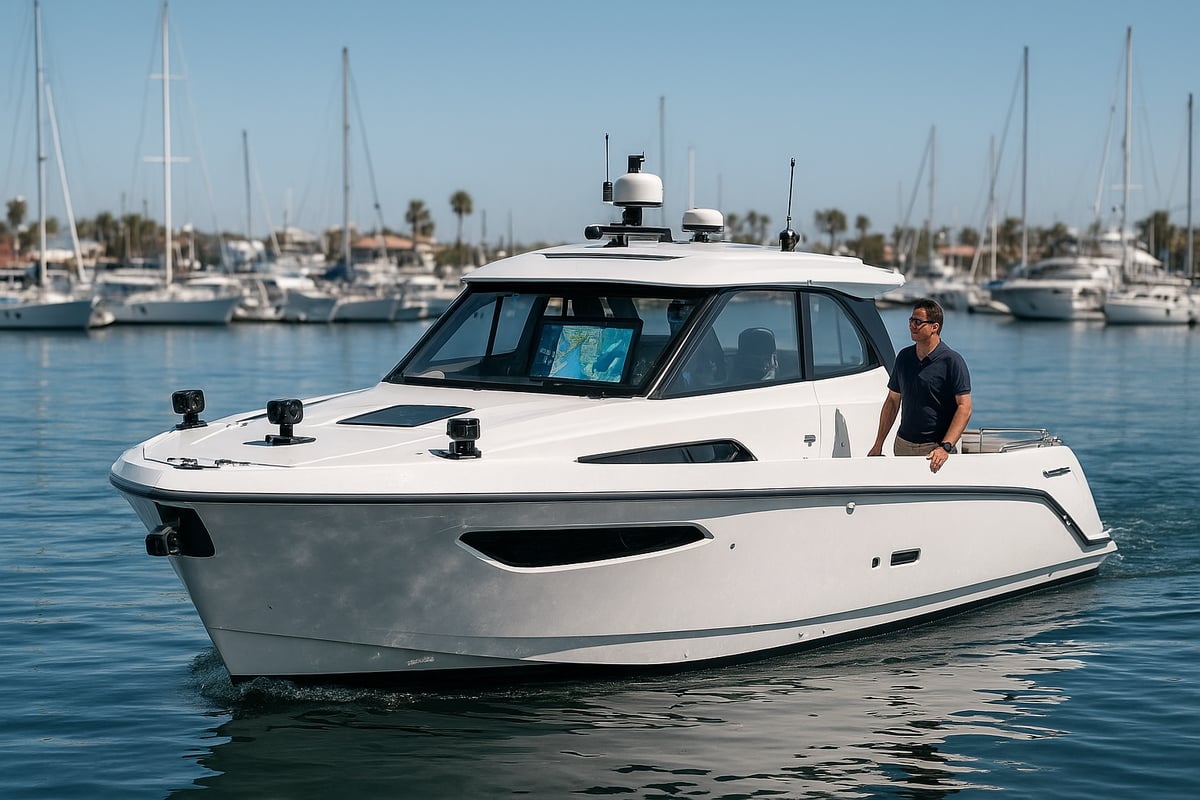
Avikus has quickly become a name to watch in the artificial intelligence boat market. Their NeuBoat Navi and NeuBoat Dock systems showcase what happens when machine learning meets practical navigation. In 2024, six manufacturers committed to integrating Avikus AI into their latest models, marking a significant milestone for the industry.
At the Fort Lauderdale Boat Show, the Quicksilver 906 Pilothouse demonstration turned heads. The boat seamlessly plotted courses, avoided hazards, and navigated tight marina spaces with minimal human input. Early adopters reported that the artificial intelligence boat setup made docking far less stressful, especially during tricky conditions.
Feedback from both professionals and casual boaters has been overwhelmingly positive. Many highlight the ease of operation and the system’s ability to make real-time decisions based on wind, current, and obstacles. These real-world trials show that AI is more than a buzzword—it’s a practical tool that’s redefining the boating experience.
Raymarine DockSense and Volvo Penta Assisted Docking
When it comes to docking, the artificial intelligence boat landscape is evolving fast. Raymarine’s DockSense uses cameras to create virtual bumper zones, actively preventing collisions. Volvo Penta’s Assisted Docking, on the other hand, combines advanced software with GPS input to hold position and adjust for wind or current.
Here’s a quick comparison:
| Feature | Raymarine DockSense | Volvo Penta Assisted Docking |
|---|---|---|
| Collision Prevention | Yes (camera-based) | Yes (software-based) |
| Environmental Compensation | Limited | Advanced |
| Joystick Integration | Yes | Yes |
| Virtual Bumper Zones | Yes | No |
During editor trials, attempts to “crash” the artificial intelligence boat into obstacles were thwarted every time. New boaters, in particular, felt more confident, with data showing a 10% increase in docking efficiency compared to traditional methods. These systems are not just about convenience—they’re about making boating safer for everyone.
General Dynamics Electric Boat: AI in Manufacturing and Maintenance
Artificial intelligence boat technology is not limited to navigation and docking. In the world of shipbuilding, General Dynamics Electric Boat is leveraging AI to streamline submarine construction and maintenance. Their adoption of the Aurora AI scheduling engine has led to tangible results, like completing 10% more tasks within the same project timeline.
This system factors in task order, resource availability, and project constraints, allowing for flexible and efficient workflows. Digital twin technology is another breakthrough, offering real-time, virtual replicas of onboard systems. This enables predictive maintenance, helping crews prevent costly failures before they occur.
For marine businesses, these innovations signal a shift toward proactive operations. The artificial intelligence boat ecosystem now extends from the factory floor to the open ocean, creating a seamless link between production and performance.
Industry Adoption and Market Trends
The artificial intelligence boat movement is gaining momentum across all segments, from superyachts to charter fleets. Early market feedback shows that AI-equipped boats are now among the top selling points for 2024 and 2025 buyers. Operational efficiency, increased bookings, and improved customer satisfaction are driving adoption.
Challenges remain, such as the high costs of integration and the need for specialized training. However, industry data shows a clear trend: boats with AI-driven systems are commanding premium prices and attracting new demographics. For a deeper dive into how AI is transforming luxury boating, check out AI’s Impact on Superyacht Experience.
As regulations evolve and retrofitting options expand, artificial intelligence boat technology is set to become the marine industry’s new standard. Those who invest early are likely to see the greatest returns, both in performance and market appeal.
Benefits and Challenges of AI Integration in Boating
Artificial intelligence boat technology isn’t just a buzzword. For the marine industry, it’s a game-changer, unlocking new opportunities and reshaping what’s possible on the water. Let’s break down the real benefits and challenges, plus hear what industry pros are saying about this next wave of innovation.
Key Benefits for Boat Owners and Marine Businesses
Integrating artificial intelligence boat systems delivers tangible advantages for both individual owners and commercial operators. One of the most significant benefits is enhanced safety. AI-powered collision avoidance, automated alerts, and emergency response features help prevent accidents and give peace of mind to everyone on board.
Efficiency is another major win. With AI handling navigation and docking, boats can complete maneuvers faster and with greater precision. Predictive maintenance tools extend equipment lifespan and minimize unexpected downtime, letting operators focus on service, not repairs.
For businesses, AI simplifies scheduling and resource allocation. Charter fleets and marinas can predict demand more accurately, optimize staffing, and reduce waste. Owners also see higher resale values for vessels equipped with the latest artificial intelligence boat innovations, which are quickly becoming a top selling point.
Early adopters often gain a competitive edge, attracting tech-savvy clients and building a reputation for safety and reliability. For marine businesses looking to capitalize on digital transformation, the SEO Checklist for Marine Industry provides a practical roadmap for leveraging these advances to boost visibility and growth.
Operational and Technical Challenges
Despite the promise, integrating artificial intelligence boat technology isn’t without its hurdles. High upfront costs can deter smaller operators or individuals, especially since most AI systems are factory-integrated and retrofitting older vessels is rarely straightforward. Specialized training is essential, as crews and owners need to adapt to new interfaces and workflows.
Technical issues present another layer of complexity. Data privacy and cybersecurity must be prioritized, as connected systems are vulnerable to breaches. Reliability in harsh marine environments, especially during extreme weather, remains a concern for some operators. There’s also the challenge of keeping up with evolving regulatory standards, which can vary by region and vessel type.
Manufacturers are actively collaborating with regulators and tech providers to ensure safety and compliance. Innovative models like Llamarine: Maritime-Specific AI Model are helping the industry tackle navigation and system reliability challenges unique to marine settings. As artificial intelligence boat systems become more sophisticated, ongoing investment in training and support will be crucial for smooth adoption.
Perspectives from Marine Industry Professionals
Marine professionals are weighing the benefits and challenges with a mix of excitement and caution. At recent boat shows, many operators shared stories about how artificial intelligence boat features made docking less stressful and navigation more intuitive, even for less experienced captains.
Manufacturers emphasize the importance of balancing innovation with user-friendliness. Their feedback highlights the need for clear communication, hands-on support, and regular updates. Service providers also report streamlined maintenance operations and fewer unexpected breakdowns, thanks to predictive analytics.
Market data shows that boats equipped with artificial intelligence boat systems often command premium prices and see higher demand. Still, professionals stress the growing need for training and ongoing customer support as adoption accelerates. The consensus is clear: the marine industry is moving toward a smarter, safer, and more efficient future, but success depends on continued investment in people and technology.
The Future of Artificial Intelligence on Boats: What to Expect Beyond 2025
The pace of change in the marine industry is truly remarkable. As we look beyond 2025, the artificial intelligence boat landscape is set to evolve faster than ever. New technologies, updated safety standards, and shifting market dynamics are all on the horizon. Let’s break down what marine professionals and business owners should expect as AI-powered boats become the new normal.
Emerging Technologies on the Horizon
Imagine a marina where every artificial intelligence boat can navigate, dock, and even self-maintain with minimal human input. Advanced autonomous systems are already in development, promising pleasure and commercial vessels that chart courses and avoid hazards with unprecedented accuracy.
Digital twins are becoming more sophisticated, creating real-time simulations of entire vessels. This means predictive analytics for maintenance and performance are more accessible than ever. AI-driven fleet management is also expanding, allowing charter companies and marinas to optimize scheduling, maintenance, and resource allocation.
On top of that, integration with IoT devices, 5G, and satellite connectivity is making global operations seamless. Eco-friendly navigation is another frontier, with AI continuously optimizing routes for fuel efficiency and reduced emissions. For any marine business, staying ahead with artificial intelligence boat technology is quickly moving from advantage to necessity.
Evolving Regulatory and Safety Standards
As the artificial intelligence boat ecosystem matures, regulations are adapting. International and national authorities are beginning to draft new standards for autonomous and semi-autonomous vessels. Certification processes will become more rigorous, requiring proof that onboard AI can handle complex scenarios.
There’s growing collaboration between manufacturers, regulators, and tech firms to ensure AI systems meet safety benchmarks. For example, Europe and Asia are piloting regulatory frameworks to address collision avoidance, data privacy, and emergency protocols.
Marine businesses will need to stay informed about these changes. Compliance will not only protect customers but also build trust as artificial intelligence boat solutions become more widespread.
Market Impact and Industry Growth
The artificial intelligence boat market is forecast to grow significantly from 2025 to 2030. Buyers are already showing a strong preference for smart, connected vessels, especially in the charter and recreational segments. As more AI-powered features become standard, traditional boats may struggle to compete.
For marine businesses, the shift opens up new opportunities—from premium pricing on AI-equipped boats to expanded services like remote monitoring and predictive maintenance. The adoption of AI also pairs well with digital transformation efforts. If you’re looking to strengthen your online presence alongside technological upgrades, resources like Local SEO for Marine Businesses can help you reach the right audience and stand out in a rapidly changing market.
Consider this quick comparison of market trends:
| Trend | Impact on Marine Industry |
|---|---|
| AI-driven fleet management | Higher operational efficiency |
| Predictive maintenance | Reduced downtime, costs |
| Smart boat demand | Increased sales, new buyers |
Staying informed and agile is key to leveraging the artificial intelligence boat revolution for business growth.
How Marine Professionals Can Prepare
Preparation is everything. Operators and technicians will need training on the latest artificial intelligence boat systems. Certification programs are emerging to help professionals demonstrate their expertise and ensure safe, effective use of AI tools.
Building partnerships with technology providers and boat manufacturers is another smart move. Attend industry events, boat shows, and demonstrations to keep up with the latest advancements. Transparency and open communication with customers about AI safety and reliability will build lasting trust as adoption grows.
Staying proactive ensures your business rides the wave of innovation rather than being swept aside by it.
Expert Insights and Predictions
Industry thought leaders agree: the artificial intelligence boat era is just beginning. Lessons from automotive and aviation show that early adopters set the standards for everyone else. The challenge is balancing automation with human expertise, ensuring that technology enhances rather than replaces skilled operators.
Expect continuous updates and new features as AI evolves. The most successful marine businesses will blend innovation with a human touch, providing both cutting-edge technology and trusted service.
In summary, the future of the artificial intelligence boat is bright, but it will reward those who prepare, adapt, and lead with confidence.
As you look ahead to 2025 and consider how AI is transforming everything from navigation to maintenance in the boating world, it’s clear that staying ahead of these innovations can redefine your business’s success. We understand the unique challenges marine professionals face—from keeping boats booked to adapting to new technology—and we’re here to help you leverage these advancements for real, measurable growth. If you’re ready to discuss how AI-driven strategies can give your marine business a competitive edge and a steady stream of customers, let’s connect for a personalized conversation. Schedule a Free Strategy Call