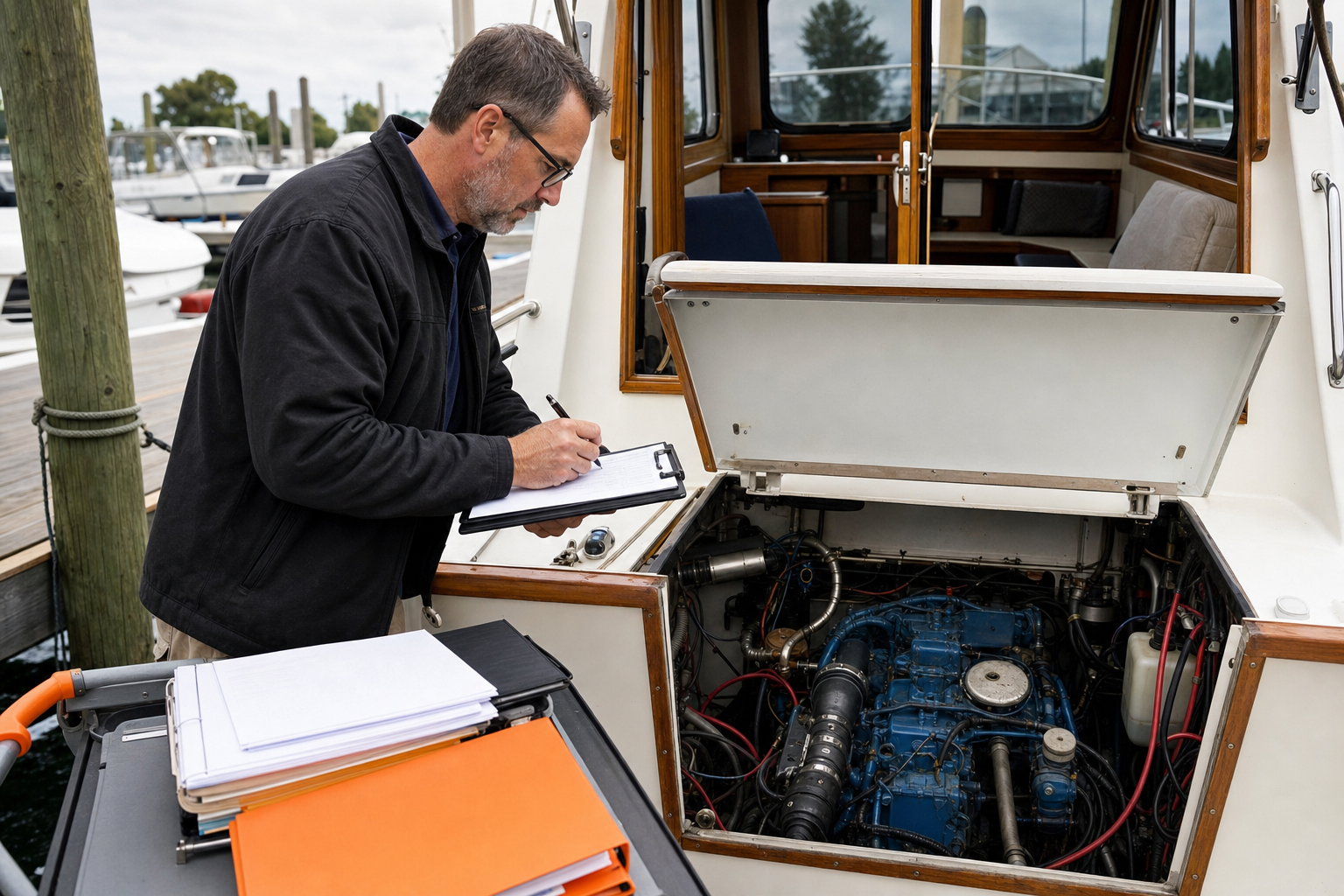
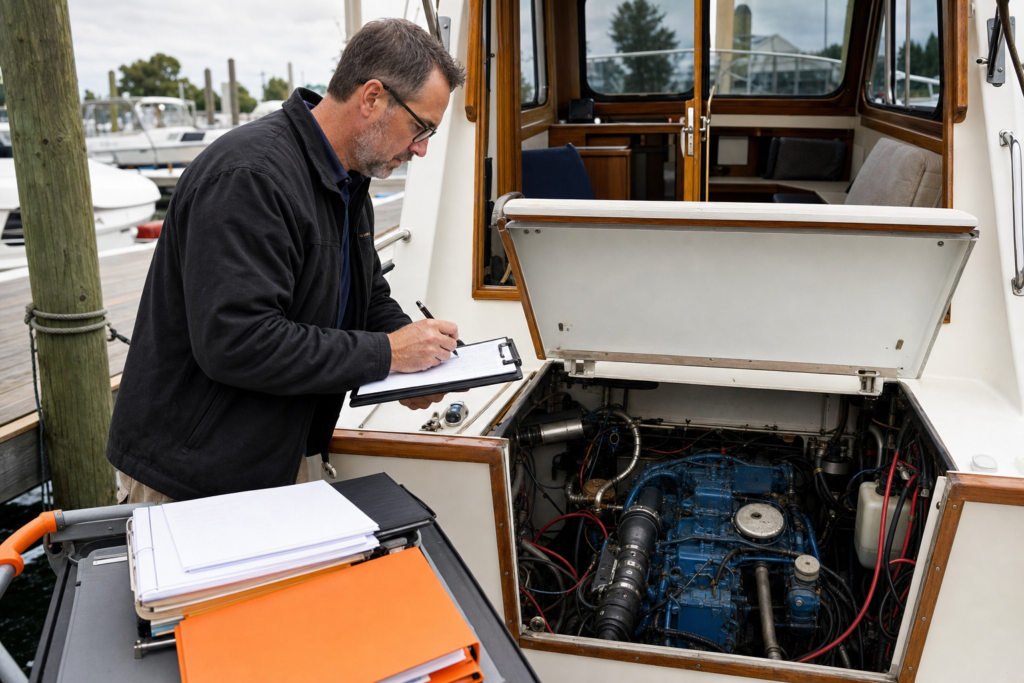
Boat asking prices can fool you. A clean listing may still hide saltwater wear, missing records, or a value gap between retail and trade-in figures. Learning how to value a boat means building a baseline, checking the vessel in person, then testing your number against real market evidence.
We’ll walk through the process in the order we use it: define the value you need, inspect the boat, apply adjustments, study comparable sales, and set a price you can defend.
Step 1: Define the Boat’s Value Type and Gather Its Details
Start by deciding which value you need. A boat can have several credible values, and each one answers a different question.
If you’re selling directly to a buyer, you usually need a private-party value. That is the estimated price for a direct sale between individuals. Retail value reflects what a consumer may pay under retail conditions. Trade-in value is the amount a dealer may offer, and it is usually lower than retail for the same vessel.
Write the purpose at the top of your worksheet. Use one of these labels:
- Private sale: the expected price in a direct owner-to-buyer transaction.
- Retail: the likely consumer price when the boat is presented through a dealer or retail channel.
- Trade-in: the amount a dealer may offer after allowing for resale costs and margin.
- Insurance or financing: a documented opinion that may need a survey or formal appraisal.
- Estate, divorce, or legal use: a valuation with stronger documentation requirements.
That first choice prevents a common error. Owners often compare a private seller’s number with a dealer’s retail listing, then assume one side is dishonest. The figures may simply describe different transactions.
Next, gather the boat’s identity. Record the hull identification number, make, model, model year, length, hull type, propulsion setup, engine count, engine hours, and fuel type. Add the trailer if it is included. A trailer can change the comparison, especially when one listing includes it and another does not.
Pull the title or registration before you search for comps. Check that the identification number matches the boat. Note any lien, salvage history, rebuilt status, or ownership issue. A clean title does not prove perfect condition, but a problem in the paperwork can narrow the buyer pool and reduce the price.
Use a published guide as your first anchor. The NADA Marine Appraisal Guide treats age, condition, manufacturer reputation, equipment, location, and demand as valuation factors. It gives you a starting point, not a final answer.
Keep the guide figure separate from your own adjustments. Put the source, date checked, model description, and included equipment in your notes. Six months later, you’ll know what changed instead of relying on a vague memory.
Step 2: Document Condition, Maintenance, and Equipment
Condition is where a rough estimate becomes a vessel-specific value. For anyone learning how to value a boat, this is the step that deserves the most attention.
Start outside the boat. Walk the hull in good light. Look for blistering, impact marks, repaired cracks, faded gelcoat, uneven paint, and signs of poor bonding. Pay close attention around the transom, stringers, through-hulls, chain plates, and deck hardware. A polished surface can hide a structural repair, so don’t judge the boat by shine alone.
Move inside. Check the sole, bulkheads, cabin tops, lockers, upholstery, bilge, and head compartment. Musty smells can point to leaks or poor ventilation. Soft deck areas need more than cosmetic work. They may signal water intrusion in the core.
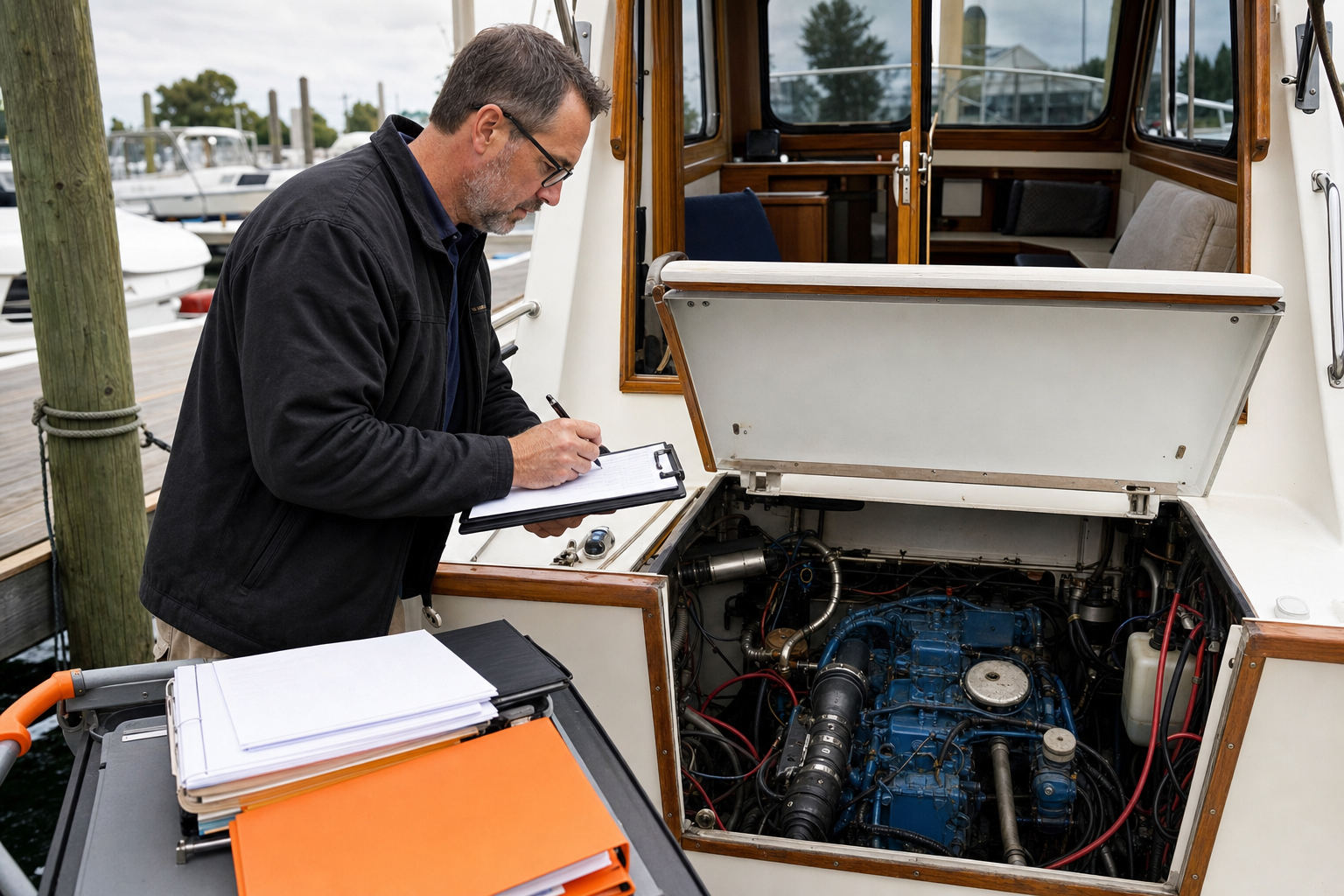
Then inspect the machinery. Record engine hours, start-up behavior, smoke, oil leaks, corrosion, belt condition, hose condition, and cooling flow. On an outboard, inspect the lower unit and propeller. On an inboard, look at the engine beds, mounts, shaft, stuffing box, exhaust system, and bilge. A compression check or oil analysis can reveal issues that photos never show.
Saltwater use needs its own line in the worksheet. Salt accelerates corrosion and can affect engines, wiring, fasteners, steering parts, and trailer hardware. Research material used for this process points to a saltwater reduction of roughly 10% to 15% when that adjustment applies. Don’t apply it blindly, though. The boat’s service record, storage method, freshwater flush routine, and current condition all matter.
Make a second pass for equipment. List electronics by type and age. Note radar, chartplotters, sounders, autopilot systems, radios, audio gear, generators, air conditioning, heating, upgraded engines, custom interiors, safety gear, and dinghies. An expensive add-on rarely returns its full purchase cost. Buyers pay for useful equipment that works and fits the boat.
Maintenance records can support a higher price because they reduce uncertainty. One source in the research places the possible effect of documented service history at 5% to 10%. Treat that as an adjustment range, not a promise. Poor condition can erase the benefit of records or upgrades.
Organize the proof by date. Scan invoices, engine service reports, survey findings, winterization notes, parts receipts, and registration documents. A buyer or surveyor should be able to trace what was done, when it happened, and which system received the work.
A professional survey makes sense for a high-value boat, a complex vessel, or a transaction that involves a lender, insurer, estate, or court. Online valuation resources cannot inspect the specific equipment, condition, maintenance history, or local market. A qualified surveyor or appraiser can produce a documented opinion based on the vessel itself.
For a normal private sale, you may start with your own inspection. Be honest about what you did not test. “Unknown” is better than a made-up clean bill of health.
Step 3: Adjust for Age, Model Reputation, and Configuration
Age gives you the next adjustment, but the calendar alone doesn’t set the price. Two boats from the same year can have very different values because of upkeep, engine hours, layout, and reputation.
Begin with the model year and build a short age note. Newer vessels generally command higher prices, but a newer boat with weak records or hard use may compare poorly with an older boat that has been cared for. The model year should set the comparison group. It should not end the analysis.
Then check the exact configuration. A center console with a single outboard is not a fair match for a twin-engine version. A freshwater boat with low hours is not equal to a saltwater boat with heavy corrosion. A trailerable boat should not be compared with a similar hull sold without a trailer unless you adjust the numbers.
Write down the items that change how the boat will be used:
- Hull design and intended use.
- Length, beam, draft, and weight.
- Outboard, sterndrive, inboard, or pod propulsion.
- Single or multiple engines.
- Engine hours and service age.
- Cabin layout, berth count, and cockpit design.
- Trailer inclusion and condition.
- Freshwater or saltwater history.
Model reputation also affects resale. A brand with strong market presence, reliability, performance, or name recognition may hold value better than a less familiar model. That does not excuse defects. Reputation helps a sound boat find buyers. It cannot fix a wet deck or neglected engine.
Configuration can matter more than a small age gap. Imagine two boats that are three years apart. The newer one has the base engine, no trailer, and weak service records. The older boat has a newer power package, clean records, and a functioning electronics suite. The older boat may deserve the stronger price after inspection.
Separate factory equipment from owner upgrades. Factory options may be easier for buyers to understand. Custom work can add value when it solves a clear need, such as a repower or a well-installed navigation system. It can also limit the market when the work is highly personal or poorly documented.
Research in the supplied material places recent upgrades in a possible 10% to 20% range, but the number depends on the upgrade. A repower is different from new seat covers. A safety upgrade is different from a decorative change. Use the cost of the work as evidence, not as an automatic dollar-for-dollar increase.
For each adjustment, write three things: the reason, the evidence, and the effect on your estimate. This keeps enthusiasm from turning into overpricing. It also gives you a clean explanation when a buyer asks why your figure differs from a guide.
Use the same logic when you publish the listing. A dealer or broker who hides engine hours creates doubt before the first conversation. Our guide to building trust with online boat buyers covers the data points that help serious prospects judge a used boat.
Don’t let an attractive upgrade list distract you from the hull and machinery. Buyers can replace cushions. They cannot easily reverse structural damage.
Step 4: Research Comparable Boats, Location, and Seasonal Demand
Comparable boats test your estimate against the market. This is where you find out whether your number fits the region, season, and buyer pool.
Search for boats with the same make, model family, year range, engine setup, and general condition. Keep the comparison tight. A longer boat, newer engine, included trailer, or major electronics package can shift the price enough to make a broad comparison useless.
Build a worksheet with these columns:
- Asking price.
- Model year and exact configuration.
- Engine type, count, and hours.
- Trailer included or excluded.
- Freshwater or saltwater use.
- Location and distance from your market.
- Visible condition and record quality.
- Days listed, if shown.
- Price changes or repeated listings.
Remember that an asking price is not a sale price. Sellers may start high. They may accept less later. A listing that sits for months can signal a mismatch between the number and the market, but you still need proof before drawing a firm conclusion.
Sale data is stronger when you can get it. Soldboats.com is described in the research as a source for actual sold prices, while online listing tools show asking prices. The two sources answer different questions. If you only have listings, mark every figure as an asking price and apply a discount for uncertainty rather than pretending you know the final deal.
Location changes value. Local demand, access to navigable water, climate, storage costs, and the supply of similar boats can move the number. A boat that fits the local waterways may sell faster than a more expensive model that needs special transport or a deeper slip.
Season also changes buyer behavior. Demand often rises in spring and summer when boating activity peaks. That may support a firmer asking price, but seasonal demand does not erase defects or justify a number far above comparable boats.
Choose at least three close comparisons when possible. Rank them by similarity instead of taking a simple average. Your closest match should carry more weight than a larger boat with a different engine package.
Then adjust each comparison. Subtract for missing equipment, higher hours, poor photos, weak records, or known defects. Add for a recent repower, complete documentation, or a trailer in strong condition. Keep the adjustments modest unless you have clear evidence.

Location can also affect how you market the boat. If you run a dealership, marina, or service yard, a clear valuation page can reduce tire-kickers before they reach your staff. Aquatic SEO helps marine businesses build organic authority around the exact questions buyers ask, while paid ads can capture urgent demand. The two channels should support the same inventory facts.
A useful rule is simple: if your price is far above the closest comparable, explain why in the listing. If you can’t explain it with condition, equipment, records, or a better location, lower the number or prepare for a long wait.
Step 5: Choose the Right Valuation Method and Set a Defensible Price
The final step is choosing how much weight to give each source. There is no single calculator that knows the whole boat.
For a standard private sale, combine three inputs:
- Published guide: use it for a baseline tied to the model and year.
- Inspection adjustments: account for condition, saltwater use, records, engines, trailer, and equipment.
- Comparable market evidence: test the result against nearby listings and actual sale data when available.
Start with the guide figure. Apply the environment and condition adjustments next. Then compare the result with the market. This order matters because a list of asking prices can pull you upward before you have checked the boat itself.
Some valuation guides provide low, average, and high retail figures. Research supplied for this article notes that average retail can sit roughly 15% to 20% above the low figure. That spread is useful, but it does not automatically account for saltwater use. If the guide leaves that adjustment to you, record it separately.
Use a range before you choose a single asking price. For example, you might have a low case based on quick sale and visible defects, a middle case based on fair market condition, and a high case based on strong records and patient timing. Don’t publish all three as if they are equal. Pick one price and keep the range in your private notes.
Set the asking price based on your goal. If you need a quick sale, price near the lower end of your supported range. If the boat is unusual, well documented, and in strong condition, you may test the upper end. If you want a trade-in, expect a lower figure because the dealer must prepare and resell the boat.
Build negotiation room with care. A large cushion can make the listing look unrealistic and attract only bargain hunters. A narrow cushion forces you to defend every detail. We prefer a price that is close to the evidence, with a clear explanation for the main adjustments.
Write a one-page valuation file. Include:
- The boat’s identity and value type.
- The guide source and baseline.
- Condition notes and photos.
- Service records and major upgrades.
- Saltwater or freshwater history.
- Three or more comparable boats.
- Your adjustment notes.
- The final asking price and review date.
For insurance, financing, estate work, or a high-value vessel, use a professional marine surveyor or appraiser. The goal is a defensible opinion, not a number that feels good. A formal report may also help when several parties need to accept the same value.
Review the price after a set period. Watch inquiry quality, showing requests, inspection feedback, and repeated objections. If buyers keep saying the engine hours are high or the trailer is missing, that feedback may point to an adjustment. Don’t change the price after every casual message. Look for a pattern.
If you sell boats as a business, valuation content can also improve demand control. A page that explains engine hours, survey notes, and price logic can filter out tire-kickers before they consume sales time. Aquatic SEO works with marine operators on SEO, local SEO, and paid advertising through lead generation for boat dealerships, so the traffic can match the boats and service areas you actually want to sell.
For dealerships, the next step is aligning inventory pages with buyer intent. Our SEO guide for boat dealers explains how model-specific pages can capture searches tied to exact boats instead of vague browsing traffic.
FAQ: How to Value a Boat
How do I find out what my boat is worth?
Start with a published marine guide, then adjust for age, condition, equipment, engine hours, records, location, and use. Check close local comparisons after that. How to value a boat depends on the transaction type, so label your estimate as private-party, retail, or trade-in before you compare numbers.
Does saltwater use lower a boat’s value?
Saltwater use can lower a boat’s value because corrosion affects engines, wiring, fasteners, steering parts, and trailers. Research for this guide identifies a possible 10% to 15% adjustment, but the final effect depends on maintenance, flushing, storage, and inspection results. Don’t apply a fixed penalty without checking the vessel’s actual condition.
Are boat asking prices the same as market value?
No, asking prices are seller expectations, not confirmed sale prices. Use them to see the market’s price range, then adjust for condition, equipment, hours, and location. Sold data is stronger when available. If you only find listings, mark them as asking prices and keep more uncertainty in your estimate.
How much do maintenance records add to a boat’s value?
Maintenance records can support a higher price by showing that major systems received care. Research supplied for this article places the possible effect around 5% to 10%, but it is not automatic. Records have more weight when they are dated, detailed, and supported by invoices or service reports. Poor condition can cancel that benefit.
When should I hire a marine surveyor?
Hire a marine surveyor when the boat is valuable, complex, financed, insured, part of an estate, or involved in a legal dispute. A surveyor inspects the vessel and can prepare a documented opinion of value. For a modest private sale, an honest self-inspection may be enough, but you should disclose what you did not test.
Conclusion
Use a guide as your starting point, not your answer. Inspect the boat, document its history, adjust for saltwater and equipment, then compare the result with local evidence. If the value will affect financing, insurance, or a major sale, hire a marine surveyor. If you sell boats professionally, Aquatic SEO can help turn clear valuation content into owned visibility and more qualified inquiries. Start by building the one-page valuation file today.