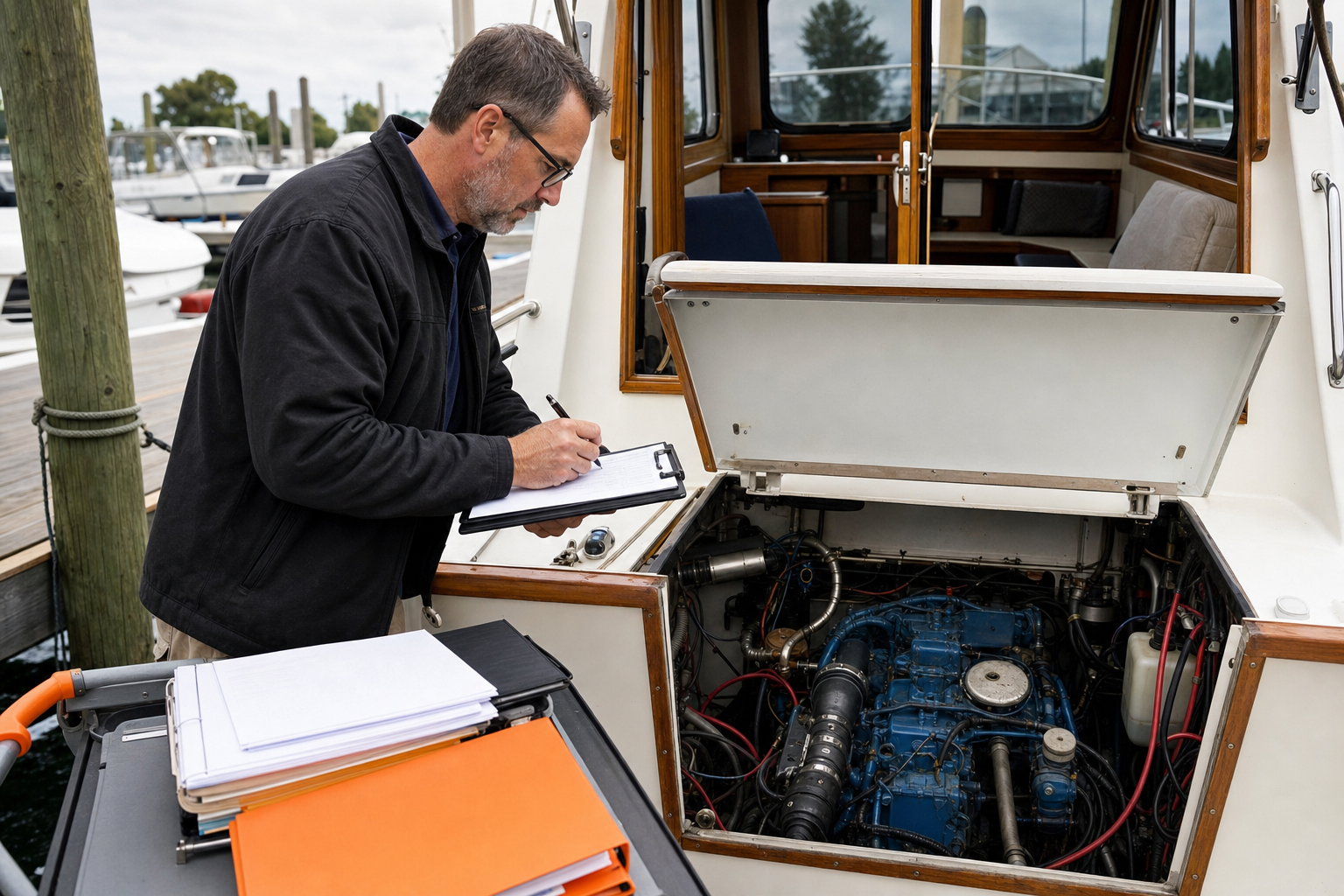

Boat brokerage looks like a sales job until a deal reaches the contract stage. Then title records, tax status, survey findings, insurance, and buyer expectations all land on your desk. Training prices also tell a strange story: the costliest surveyed program costs $9,997, yet it offers no licensing help. Here are seven steps to build the skills, contacts, and sales system this career needs.
Step 1: Learn How to Become a Boat Broker
Start by defining the kind of broker you want to become. Boat sales and yacht charter are close fields, but they aren’t the same job. A sales broker helps a buyer or seller complete a vessel transaction. A charter broker helps a client choose and book a yacht for a set period.
That choice affects your training, daily work, and client base. A sales broker may spend weeks reviewing a listing before a buyer ever views the boat. A charter broker may handle itinerary questions, crew details, contracts, and payment terms at a much faster pace.
The work is a mix of legal knowledge, financial awareness, negotiation, marketing, and customer care. That mix is why a love of boats isn’t enough by itself.
Write down your target before you spend money on a course. Answer these questions:
- Will you focus on used boat sales, new boat sales, or yacht charter?
- Which vessel types do you understand well?
- Which coastal market or inland region can you serve in person?
- Will you work for a brokerage, a dealer, or your own firm?
- What income gap can you handle while your first deals take time?
Next, read several listing agreements and purchase contracts if you can access them through a brokerage. Pay attention to commission terms, acceptance conditions, survey clauses, deposit rules, and closing duties. You don’t need to give legal advice. You do need to know when a question belongs with a maritime lawyer, tax adviser, surveyor, or insurer.
Set a first milestone: you should be able to explain the full path of a sale in plain language. A good answer starts with the listing and ends with title transfer, not with “I found a boat that fits.”
Step 2: Build Marine Sales and Industry Experience
To learn how to become a boat broker, spend time near the work before you ask clients to trust you with a major purchase. Experience at a boat dealer, marina, service yard, yacht charter company, or brokerage can show you how boats are priced and maintained.
Choose a role that puts you close to buyers and vessel records. Sales support can teach follow-up and customer care. A service yard role can sharpen your eye for maintenance issues. Work at a marina can help you understand dockage, storage, fueling, and the local boating community.
Don’t treat technical knowledge as a hobby badge. Learn the terms that change a buyer’s decision. Draft affects where a boat can go. Deadrise affects how a hull handles water. Engine hours need context because maintenance history matters as much as the number itself.

Ask an experienced broker if you can observe the parts of a deal that rarely appear in listing photos. Sit in on a survey review when permitted. Watch how the broker explains a defect without hiding it. Notice how they keep a nervous buyer from making a rushed choice.
Build a small working log. After each boat visit, record the vessel type, asking price, condition notes, likely buyer, and questions that remain open. Then compare your notes with the final listing or sale details. This habit helps you spot margin variance, which is the gap between expected and actual profit after costs.
Sales skill matters just as much. Practice asking questions before recommending a vessel:
- Where will the boat spend most of its time?
- Who will operate it?
- What work must happen before launch?
- When does the buyer want to close?
- Which costs would make the deal stop?
Those questions separate a qualified inquiry from a tire-kicker. A qualified inquiry has a clear vessel need, a workable timeline, and the ability to move forward. You can build that judgment through work beside real marine operators, not through sales scripts alone.
By now, you should have a target market, a basic vessel vocabulary, and proof that you can follow a buyer’s needs through the messy middle of a deal.
Step 3: Choose Boat Broker Training and Credentials
Training can shorten the learning curve, but it won’t replace local legal research or hands-on work. Our review of eight boat broker programs found prices ranging from $895 to $9,997. Cost did not predict course length, formal accreditation, or licensing help.
For example, the CYBA Online New Broker Course costs $895 and ends with a Certificate of Completion after chapter tests and a final exam. The course is aimed more at people with some yachting experience, and CYBA states that it covers yacht charter rather than yacht sales.
Read each course’s terms carefully before enrolling, and do not treat completion as a substitute for checking local requirements.
Use the table below as a fit check, not as a race to the highest tuition.
Three surveyed programs from Maritime Training Academy carry University of Portsmouth accreditation. That formal academic credential may matter when you want to work in high-value yacht sales or show clients a serious study record. It still doesn’t answer the local licensing question.
Ask every school five things before you enroll:
- Is the course for sales, charter, or both?
- What credential do you receive?
- How long should the work take?
- Who teaches the legal and contract topics?
- What help exists after completion?
Our recommendation is simple. Choose the course that matches your intended work and fills a skill gap you can name. Don’t pay more just because the title sounds grander.
Step 4: Check Licensing, Legal, and Professional Requirements
Licensing is the step many new brokers miss. There is no single worldwide rule for boat brokers, so you must check the state, country, and business model where you will work.
Start with the government office that regulates yacht or ship brokers in your area. Search its official site for terms such as “yacht broker license,” “ship broker license,” “dealer license,” and “salesperson license.” Save the page, note the date, and make a checklist from the actual forms.
Requirements may cover more than an exam. They can include a business location, prior employment, a surety bond, fingerprints, proof of identity, fees, and renewal rules. The exact list depends on the jurisdiction, so don’t copy a checklist from another state.
Ask a maritime lawyer or established brokerage to review your plan. This is especially important if you will hold deposits, work under consignment, represent buyers and sellers, or handle cross-border sales. A course can explain common contract terms, but it can’t decide which legal structure fits your business.
Build a compliance folder with:
- Your license application and renewal dates
- Business registration records
- Insurance documents
- Approved listing and purchase forms
- Client identity and due diligence procedures
- Tax and vessel registration references
Learn the difference between a broker’s role and a lawyer’s role. You can collect documents and spot a missing record. You shouldn’t give a legal opinion outside your training. The same rule applies to tax, insurance, and survey findings.
Use a “stop and ask” rule. Pause the deal when title is unclear, a lien appears, VAT status is uncertain, the survey raises a serious defect, or either party wants to skip a required document. A calm delay is cheaper than a rushed closing that damages your name.
Before taking your first independent listing, confirm three points in writing: you can legally operate, you carry suitable insurance, and you know who reviews difficult documents.
Step 5: Join a Brokerage and Learn the Transaction Process
Joining a brokerage gives you a place to learn the transaction process before you carry every risk yourself. Look for a firm that will let you see how listings are accepted, priced, marketed, negotiated, surveyed, and closed.
Ask how new brokers are supervised. You want clear answers about commission splits, lead ownership, CRM use, document storage, legal review, survey referrals, and who handles a dispute. A vague answer here often becomes a painful answer later.
Build your deal workflow around written milestones:
- Confirm the seller’s authority to list the vessel.
- Collect title, registration, tax, service, and lien records.
- Set a price with condition and comparable evidence in mind.
- Publish an accurate listing with clear disclosures.
- Qualify the buyer before arranging a viewing.
- Track the offer, contract, deposit, survey, and acceptance.
- Prepare the closing file and confirm title transfer.
A yacht brokerage practice guide can help you see the document set a professional workflow needs.
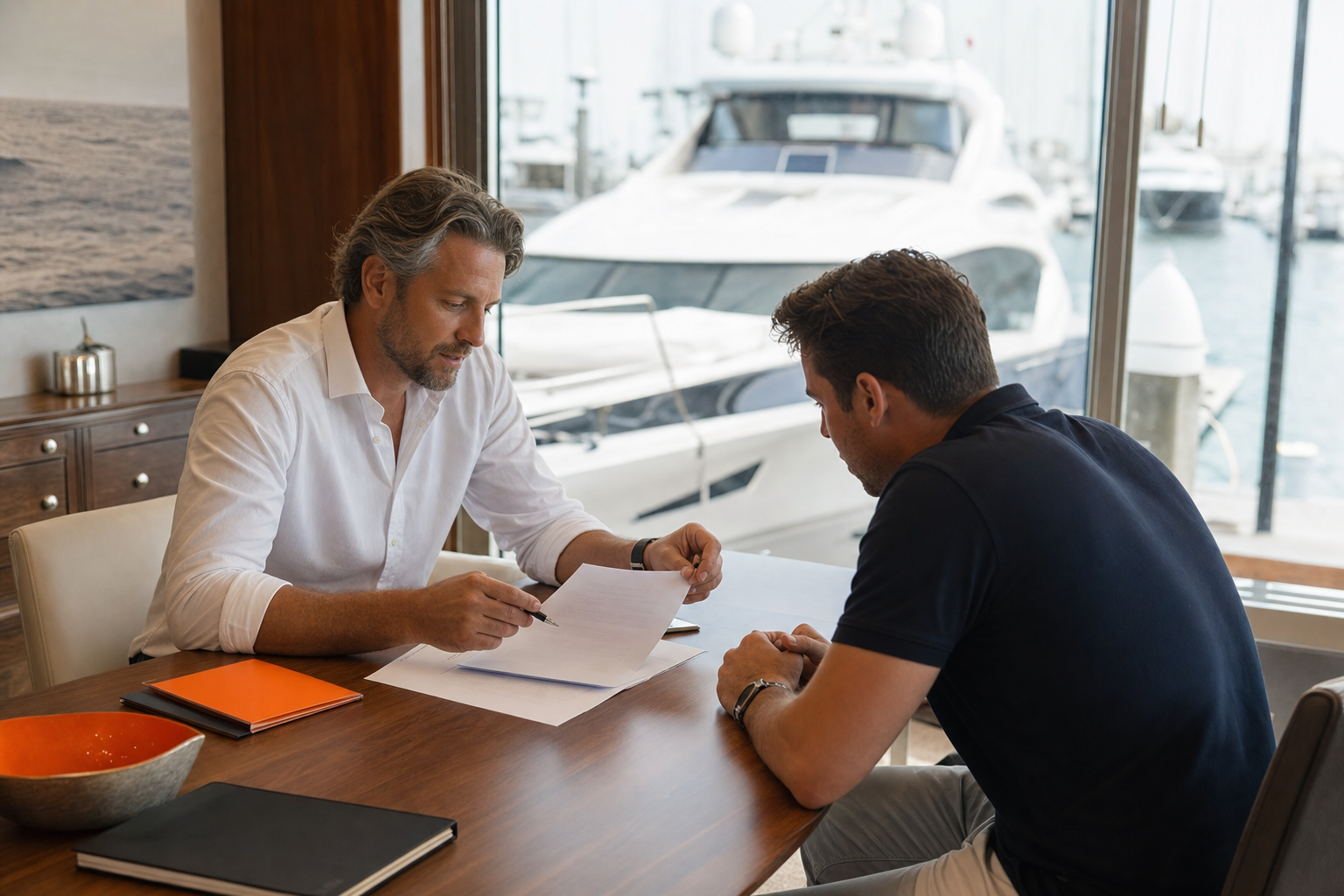
Keep a transaction timeline in your CRM. Record who owes the next action, when it is due, and what could block closing. A buyer may wait days for a survey report. A seller may need time to find a missing title document. Your job is to keep those gaps visible.
Learn to write a clean handoff note. State the vessel, current stage, open issue, owner of the next task, and deadline. That note protects the client when another broker or manager steps in.
Don’t close a deal by memory. Use a checklist every time, even when the boat and parties feel familiar.
Step 6: Build Listings, Relationships, and Qualified Inquiries
Listings are your public proof of judgment. A good listing helps the right buyer understand the boat before they contact you. It also filters out people who want a different vessel, location, or price.
Gather facts before you write. Ask the owner for maintenance records, ownership documents, equipment details, storage history, recent survey material, and known defects. Confirm key claims instead of copying old listing text.
Use photos that answer buyer questions. Show the helm, engine space, cabins, heads, deck, storage, hull, and any visible wear. A polished wide shot can attract attention, but close detail helps a serious buyer decide whether a viewing is worth the trip.
Write for a named buyer. A family cruiser needs different detail than a bluewater sailor or a fishing client. State the vessel’s use case without promising performance you cannot prove.
Every inquiry should enter one system. Track:
- Boat or vessel class requested
- Buyer location and travel range
- Budget and financing position
- Purchase timeline
- Experience level and intended use
- Next agreed action
Use this information to rank work. A person asking for a specific model with a viewing window deserves a faster response than someone sending a broad request with no budget or timing. That isn’t rude. It protects your time and gives serious buyers better service.
Our guide to qualifying boat sales leads uses the same operating idea: define the buyer criteria first, then shape follow-up around readiness. Your criteria may include vessel type, budget, location, timing, and trade-in needs.
Relationships grow through useful follow-up. Send a buyer a clear answer, even when the boat isn’t right. Keep a seller informed when interest is weak. A broker who tells the truth can earn the next referral even after losing the current deal.
Set a weekly review. Look at inquiry source, response time, viewing rate, offer rate, and deals lost by reason. The goal isn’t more names in a database. It’s more of the work you actually want.
Step 7: Market Your Boat Brokerage Without Wasting the Budget
Marketing becomes useful when it produces qualified inquiries, not when it fills a dashboard with clicks. Start with the vessel types, locations, and buyer problems you can serve well.
Build an owned website asset for your brokerage. Each important boat, model group, service area, or buyer need should have a clear page. Give visitors the facts they need before they submit a request. Include location, vessel details, condition notes, buying steps, and a form that asks useful qualifying questions.
Organic authority and paid ads do different jobs. Marketing for yacht brokers that captures high-intent demand can help connect those efforts to the buyers most likely to move forward. SEO can build a lasting asset around searches such as a specific boat model for sale in a defined region. Paid ads can create faster visibility during a listing launch or boat show window. Track them separately so one channel doesn’t hide waste in the other.
The same rule applies to local SEO. Keep your business details consistent. Show the markets you serve. Publish useful answers about buying, selling, surveys, title, and ownership costs. A generic page about “boats” won’t tell a buyer why your brokerage fits their situation.
Aquatic SEO works only with marine businesses, so we understand the difference between a boat dealer, a marina, a service yard, and a yacht charter operator. If you later need help with the demand side, our SEO for boat dealers and yacht brokers service page shows how we frame search work around qualified inquiries rather than raw traffic.
Set a budget by season. Marine demand shifts with weather, holidays, boat shows, launch windows, and local boating habits. Don’t spend the same amount every month if your buyers are active only during a narrow period.
Measure each channel against the sales process:
- Cost per qualified inquiry
- Response time
- Viewing rate
- Offer rate
- Closed revenue by source
- Margin after marketing and deal costs
Keep paid ads narrow when the listing is narrow. A broad campaign may draw people who want a day rental, a cheap runabout, or general boating advice. That traffic can look busy while your sales team handles none of the work that pays.
Use SEO to answer questions before the buyer is ready to contact you. Use ads when you have a clear offer and a defined response plan. If your team can’t answer or route inquiries quickly, more traffic will only create a longer queue.
When you add software or automation, judge it by the time it saves and the qualified work it helps recover. A practical review can use adoption data, total cost, cohort analysis, and financial models. Those same questions can help a brokerage judge whether a new CRM or lead system earns its place.
Aquatic SEO can help you compare organic authority with paid ads, then connect rankings and campaign spend to the inquiries your team can actually handle. Start with one market and one buyer type. Prove the workflow before you widen it.
FAQ
How long does it take to become a boat broker?
Becoming a boat broker can take a few months to several years, depending on your training, experience, and local rules. Some courses last two days, while a University of Portsmouth-accredited yacht brokerage diploma can run 12 to 18 months. Licensing or work-experience requirements may add more time, so check your jurisdiction before setting a start date.
Do you need a license to become a boat broker?
You may need a license to work as a boat broker, but the answer depends on where you operate and what transactions you handle. Some areas regulate yacht and ship brokers through exams, bonds, business-location rules, or experience requirements. Training certificates don’t replace a government license. Confirm the current rules with your local licensing office.
How much does boat broker training cost?
Boat broker training costs vary widely. The surveyed programs ranged from $895 for the CYBA Online New Broker Course to $9,997 for the costliest program in the review. Price alone doesn’t show value. Compare the course audience, credential, subject matter, length, and whether the program helps with the work you want to do.
Can I become a boat broker with no experience?
You can start without direct brokerage experience, but marine exposure will make the work safer and easier. Begin with a dealer, marina, service yard, charter company, or brokerage role. Learn vessel systems and transaction documents while a more experienced person reviews your work. A beginner course can help, but it won’t replace supervised practice.
What skills does a boat broker need?
A boat broker needs sales judgment plus working knowledge of contracts, title, taxes, surveys, insurance, and customer care. You also need calm negotiation skills because deals can become tense near closing. Digital skills matter too. Accurate listings, local SEO, email follow-up, and lead qualification help you reach buyers without filling your day with tire-kickers.
Conclusion
Start with one clear market, get supervised marine experience, and verify local licensing before you take an independent listing. Then build your website and follow-up system around qualified inquiries instead of empty traffic. If marketing is the part you want to plan next, explore Aquatic SEO’s marine-focused resources and choose one buyer segment to work on first.