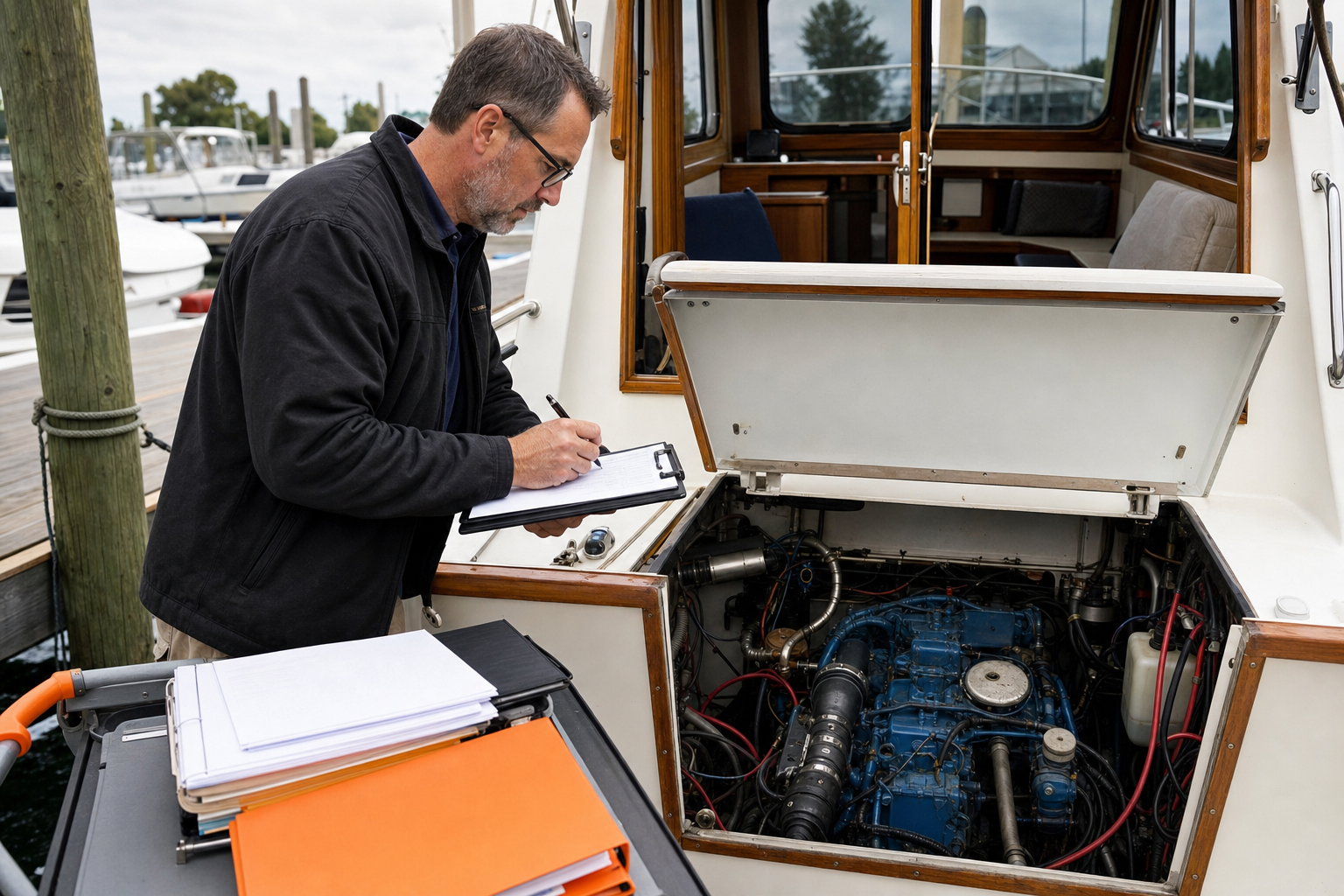
Most marine e-commerce owners are essentially subsidizing Google and Meta while their profit margins sink under a wave of low-value parts inquiries. You don’t need more traffic; you need a system that filters out the “tire-kickers” looking for a fifteen dollar gasket and prioritizes the high-intent buyers ready to drop ten thousand dollars on a propulsion refit or a full electronics suite. Generic digital marketing for marine e-commerce is failing because it treats a boat owner like a casual Amazon shopper. It ignores the reality that your operational capacity is finite and every minute spent on a low-margin lead is a minute stolen from a high-value sale.
You’ve likely felt the frustration of a “busy” day that results in zero meaningful growth because your team is clogged with unqualified noise. I’ll show you how to stop the bleed and build a demand-filtering system that captures high-value marine buyers. We will break down the 2026 shifts in buyer behavior and the exact framework needed to stabilize your revenue and increase your average order value.
Key Takeaways
- Understand why generic retail strategies fail and how they exhaust your budget on low-margin parts inquiries.
- Discover how the Marine Demand Control System identifies and captures high-intent buyers ready for major equipment purchases.
- Learn technical SEO and paid search tactics designed specifically for managing massive marine catalogs without sacrificing site performance.
- Implement automated demand-filtering systems to ensure your staff only spends time on high-value Qualified Inquiries.
- Shift your digital marketing for marine e-commerce strategy from chasing volume to securing predictable, high-margin revenue growth.
The Failure of Generic E-Commerce Strategies in the Marine Sector
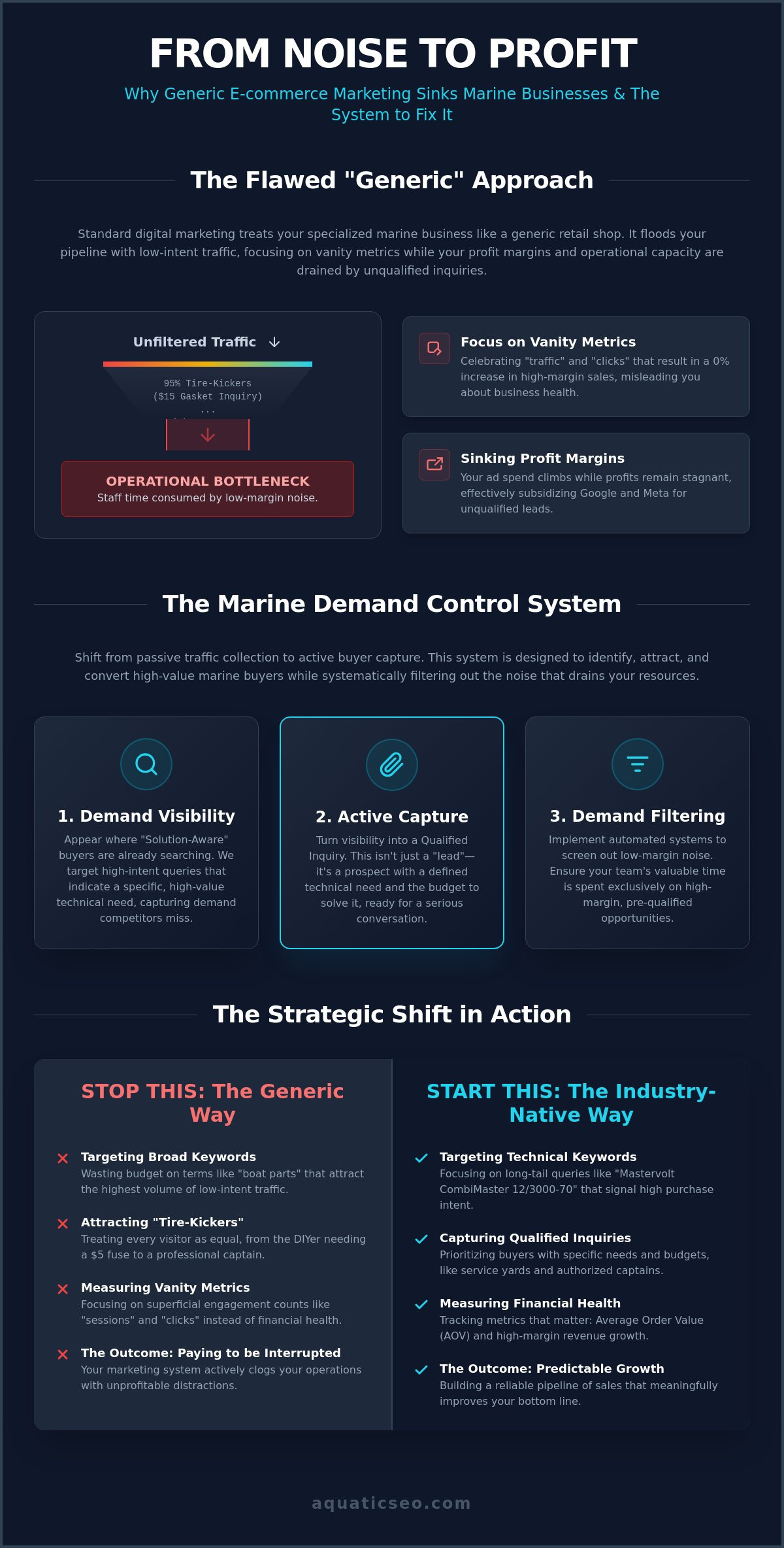
If you’re still running your online store like it’s 2009, you’re essentially begging for low margins. The old “digital brochure” model, where you simply list parts and hope for the best, doesn’t work in a market where massive wholesalers and Amazon dominate the commodity space. Digital marketing for marine e-commerce in 2026 requires a fundamental shift from passive listing to active demand filtering. Generic agencies often treat your business like a standard retail shop, applying a one size fits all template that ignores the technical complexity of marine systems. They’ll show you reports filled with “traffic” and “clicks” while your staff spends half their day answering questions about a five dollar fuse for a DIYer who will never buy a high-ticket item.
Most digital marketing providers focus on volume because it’s easy to report. They bid on broad keywords like “boat accessories” or “marine parts,” which inevitably attracts the highest volume of low-intent traffic. For a marine e-commerce operator, this is a disaster. You aren’t looking for more “leads”; you’re looking for a Qualified Inquiry. A Qualified Inquiry is a prospect with a specific technical need and the budget to solve it, not a tire-kicker clogging up your phone lines with basic questions. If your marketing doesn’t distinguish between these two groups, you’re just paying to be interrupted.
Why Marine Business Owners Are Skeptical of Standard SEO
You’ve likely sat through a meeting with an account manager who didn’t know the difference between a transom and a tiller. It’s frustrating to watch your ad spend climb while your actual profit remains stagnant. These generic agencies fall into the “vanity metric” trap, celebrating a 20% increase in sessions that results in a 0% increase in high-margin sales. They don’t understand that a Boat Dealer needs a completely different strategy than a local marina or a service yard. We prioritize financial health over superficial engagement counts.
Context Framing: The Nuance of the Marine Buyer Journey
Marine buyers don’t make impulse purchases. They spend weeks researching on platforms like YachtWorld or technical forums before they ever land on your site. If your content doesn’t provide the precise technical specs they need, they’ll bounce immediately. Using generic terms like “boat rental” when you actually provide a crewed Yacht Charter is a fast way to burn through your budget on the wrong audience. Precision in terminology isn’t just about semantics; it’s about protecting your organizational stability and ensuring your marketing system works for the marine industry specifically.
Capturing High-Value Demand with the Marine Demand Control System
Success in the 2026 market requires more than a functional website; it requires a mechanism to dictate exactly what kind of business enters your pipeline. We use the Marine Demand Control System to move your operation from passive traffic collection to active buyer capture. Most digital marketing for marine e-commerce fails because it treats every visitor as equal. It doesn’t distinguish between a weekend warrior looking for a ten dollar gasket and a professional captain authorized to spend five thousand dollars on a sonar upgrade. Our system is built to prioritize the latter while systematically filtering out the noise that drains your staff’s time.
This methodology relies on three distinct pillars: demand visibility, active capture, and demand filtering. Visibility ensures you appear where high-intent buyers are already looking. Capture turns that visibility into a Qualified Inquiry. Filtering ensures that only the high-margin opportunities reach your sales team. Unlike generic digital marketing strategies that chase volume, this framework focuses on the financial health and organizational stability of your business. It’s about building a predictable flow of sales that actually move the needle on your bottom line.
Targeting High-Intent Search Queries
We focus your budget on “Solution-Aware” buyers who have moved past general research and are ready to execute a purchase. Instead of bidding on generic terms like “boat parts,” we target long-tail technical keywords that indicate a specific, high-value need. A buyer searching for a “Mastervolt CombiMaster 12/3000-70” is significantly more valuable than one searching for “battery chargers.” By speaking directly to the technical requirements of serious owners and marine mechanics, we capture demand that competitors overlook. This precision reduces wasted ad spend and increases your average order value (AOV).
Building Control Over Your Job and Sales Mix
Your e-commerce platform should serve as a strategic filter for your entire operation. By promoting products that require professional installation, you can use your online store to feed high-margin work to your service yard. We integrate the same principles found in our framework for digital marketing for marine contractors to ensure your sales mix aligns with your operational capacity. This approach allows you to select the jobs and sales that drive the best margins rather than accepting whatever happens to come through the door. If you want to see how this system applies to your specific inventory, you can view our specialized e-commerce services to learn more.
Technical SEO and Paid Search for Complex Marine Catalogs
Managing a catalog with thousands of SKUs presents a unique set of challenges that generic agencies simply aren’t equipped to handle. If your digital marketing for marine e-commerce strategy doesn’t account for faceted navigation and technical crawl budgets, your site authority will bleed out through thousands of thin, duplicate pages. A marine electrician searching for a specific NMEA 2000 backbone cable needs to find that exact part in two clicks, not scroll through a disorganized list of general wiring. We structure your technical SEO to prioritize high-margin components while ensuring search engines can index your most profitable inventory without getting lost in the noise of low-value hardware.
This requirement for technical precision in catalog management is mirrored in other specialized retail sectors; for example, Socom Tactical Airsoft manages a vast inventory of complex gear where technical accuracy is paramount for maintaining authority and driving conversions.
In the world of paid search, your Google Ads “Quality Score” is often a deceptive metric. Google’s algorithms frequently reward generic relevance over technical precision, leading you to bid on broad terms that attract low-intent traffic. We ignore the vanity of high scores on broad keywords in favor of a robust e-commerce strategy that targets specific part numbers and technical specifications. This approach captures buyers at the exact moment they need a solution, bypassing the expensive “research phase” traffic that inflates your costs without increasing your revenue. We also integrate demand capture across marketplaces like Boat Trader to ensure your inventory is visible wherever your target audience is already browsing.
Optimizing Product Pages for Qualified Inquiries
High-intent buyers require more than just a price tag; they need technical certainty. Your product pages must include rich technical data, high-resolution schematics, and detailed compatibility charts to convert professional buyers and serious owners. If a customer can’t verify that a part fits their specific engine model, they will leave your site and buy from a competitor who provides that data. Implementing marine e-commerce specific UX means designing for the way captains and mechanics actually shop. We replace vague descriptions with precise specs, ensuring your site functions as a technical resource that naturally drives conversions.
Paid Media: Bypassing the Noise
Your ad budget is a finite resource that must be protected from “DIY” hobbyists and bargain hunters. We implement aggressive negative keyword lists that filter out terms like “used,” “cheap,” or “how to,” ensuring your spend is reserved for buyers ready to execute a transaction. For boat dealers, we structure campaigns to maximize ROI by focusing on high-ticket inventory and service-heavy packages. We also use sophisticated retargeting to stay in front of high-value prospects who have engaged with your technical content, keeping your brand top-of-mind during their long decision-making cycles. This methodical approach to paid media ensures every dollar spent is an investment in capturing a Qualified Inquiry.
Demand Filtering: Stopping the Low-Margin Noise
Every inquiry is not a win. If your team spends twenty minutes on the phone helping a customer find a ten dollar gasket, you’ve lost money on that transaction. Effective digital marketing for marine e-commerce isn’t just about attracting buyers; it’s about repelling the ones who drain your resources. We implement automated Demand Filtering Systems that qualify buyers before they ever reach your inbox. This ensures your staff focuses on high-ticket refits and electronics installations that actually stabilize your revenue and protect your profit margins. By treating your website as a defensive barrier rather than a wide-open door, you regain control over your daily operations.
Refining your Marine Demand Control involves using content to dictate the terms of engagement. You can use technical guides and specific product descriptions to signal that you are a specialist provider, not a discount warehouse. This naturally attracts high-intent buyers who value expertise over the lowest possible price. When your marketing system works correctly, it acts as a relentless filter that discards low-margin noise while surfacing the jobs that keep your yard profitable and stable. Stop chasing volume and start prioritizing the financial health of your business through precise audience targeting.
The Qualified Inquiry Framework
We use a specific framework to distinguish between generic traffic and high-value opportunities. For specialized roles like Marine Surveyors or technical contractors, the “Fit Call” is the ultimate filtering tool. It sets clear expectations regarding your expertise and availability before any billable time is spent. A Qualified Inquiry is a prospect with both the specific intent to purchase and the budget to support high-margin outcomes. By enforcing these standards, you protect your yard’s operational capacity and ensure your team only handles inquiries that move the needle.
Common Mistakes in Marine E-Commerce Marketing
Many owners make the mistake of competing on price, which is a race to the bottom against global wholesalers. Your value lies in your specialized expertise and immediate parts availability, not your ability to shave two dollars off a spark plug. Generic agencies often fail to recognize the distinction between a Service Yard and a marina in their ad copy; this leads to a flood of dockage inquiries when you actually need engine maintenance jobs. You must also link e-commerce sales to long-term service contracts. A one-time parts sale is a missed opportunity if it doesn’t lead to a recurring service relationship that compounds your revenue over time.
If you’re ready to stop the noise and start capturing high-value demand, book a fit call to discuss our Demand Filtering Systems.
Scaling Your Marine Revenue with an Industry-Native Partner
Scaling your business in 2026 isn’t a matter of simply increasing your ad spend; it’s about increasing the precision of your operation. The Marine Demand Control System is the only logical choice for owners who are tired of generic agencies that don’t know a prop from a pylon. We prioritize the financial health of your yard by focusing on high-margin sales and predictable job flow. Digital marketing for marine e-commerce should be an auditable system that produces stability and higher average order values, not a black box of vague promises. By moving away from the traditional vendor-client relationship, you gain a partner that understands the seasonal pressures and technical requirements of the marine sector.
The path to dominance in the online marine market requires a relentless focus on the Qualified Inquiry. We’ve shown you how to capture high-intent demand, optimize complex technical catalogs, and implement automated filters to stop the low-margin noise. This synthesis of strategy and industry-native execution ensures that your e-commerce platform becomes a business development asset. You’ll stop chasing every click and start securing the high-value equipment sales and service contracts that define market leaders. Predictability in your revenue stream allows you to make better capital investments and staff your yard with confidence.
The Aquatic SEO Difference
We reject vanity metrics and the “filler” marketing reports that most agencies use to hide a lack of results. If your current provider is celebrating “impressions” while your profit stays flat, they don’t understand your business. Our success with marine mechanics and electricians is built on a foundation of operational oversight and precision. We only work with businesses that value quality over volume because our system is designed to attract high-intent buyers, not bargain hunters. We provide auditable tracking and performance-based assurances that keep us accountable for your growth.
Next Steps for Your Marine Business
Preparing your catalog for the 2026 boating season requires more than just updating prices. You must ensure your inventory reflects the latest regulatory shifts, such as the new safety requirements for lifting appliances and the mandatory reporting of lost containers. An industry-native partner helps you navigate these changes by positioning your products as the necessary solutions for vessel owners. If you’re ready to stop the waste and start scaling with precision, you should request a “No-BS” Marine Marketing Analysis. This diagnosis of your current operational symptoms is the first step toward stabilizing your revenue. Book a Fit Call with Aquatic SEO today to see if your business is an ideal fit for our Demand Filtering Systems.
Securing Your 2026 Profit Margins
Your e-commerce platform should be a high-performance engine that generates predictable revenue, not a source of operational friction. We’ve established that success in the 2026 market depends on your ability to move beyond generic traffic and implement a system that prioritizes Qualified Inquiries. By using the Marine Demand Control System, you stop subsidizing low-margin inquiries and start capturing the high-intent buyers who drive your yard’s growth. Precision in technical SEO and aggressive demand filtering are no longer optional for businesses that value organizational stability. It’s time to reject vanity metrics and focus on the financial health of your operation.
Transitioning your digital marketing for marine e-commerce to an industry-native partner ensures that every dollar of your ad spend is protected from waste. We understand the nuances of the marine sector because we operate in the trenches with you. If you’re ready to stop the noise and start scaling with a specialist who understands your catalog, take the next step toward a more predictable business model. Request Your No-BS Marine E-commerce Analysis to see exactly how we can stabilize your revenue. Your business deserves a marketing system that works as hard as your service team does.
Frequently Asked Questions
Is digital marketing for marine e-commerce worth it for small boat dealers?
Yes, but only if you focus on high-margin inventory rather than commodity parts. Small boat dealers often waste budget competing with global wholesalers on low-cost items. By targeting specific boat models and high-ticket accessories, you capture buyers who value your technical expertise and immediate availability. Success depends on moving away from volume-based traffic toward a system that prioritizes your yard’s profitability and financial health.
How does a Marine Demand Control System differ from standard SEO?
Standard SEO focuses on generic traffic volume and vanity metrics like keyword rankings. The Marine Demand Control System is a proprietary methodology that prioritizes job flow control and organizational stability. It uses demand filtering to ensure your staff only handles high-value inquiries. While standard SEO might bring you a thousand visitors looking for a five dollar fuse, our system targets the one buyer ready for a full electronics refit.
What is the difference between a lead and a qualified inquiry?
A lead is anyone who fills out a form, regardless of their intent or budget. A Qualified Inquiry is a specific type of prospect who has been filtered for high-intent and has the financial capacity to execute a high-margin purchase. Leads often include tire-kickers who clog up your operations. We focus on Qualified Inquiries because they represent actual revenue potential rather than just superficial engagement counts or clicks.
Can I sell high-ticket marine electronics and engines online effectively?
Yes, provided you offer the technical certainty and rich data that professional buyers require. High-ticket sales in digital marketing for marine e-commerce depend on compatibility charts, technical schematics, and clear availability. Professional captains and mechanics don’t make impulse purchases. They buy from sources that demonstrate deep industry expertise. Your site must build this technical trust to convert five thousand dollar transactions consistently.
How do I stop getting inquiries for parts I do not stock?
You must implement aggressive negative keyword lists and automated demand filters. Generic agencies often bid on broad terms that attract inquiries for every part under the sun. We refine your digital marketing for marine e-commerce to target only the high-margin SKUs that align with your actual inventory and service capacity. This stops the noise and ensures your team isn’t wasting time explaining what you don’t have in stock.
What technical SEO factors are unique to the marine industry?
Marine e-commerce requires specialized faceted navigation and technical crawl budget management for complex catalogs. Your site must distinguish between specific engine models, NMEA 2000 compatibility, and hull-specific fittings. Generic SEO fails here because it doesn’t understand the technical relationship between marine components. We structure your site to act as a technical resource, ensuring search engines index your most profitable parts without getting lost in thin content.
How long does it take to see results from a specialized marine marketing strategy?
You should see a shift in inquiry quality within the first 90 days. While full market dominance takes longer, the implementation of demand filtering provides immediate relief from low-margin noise. Our methodical approach focuses on stabilizing your revenue patterns and increasing your average order value quickly. This is a system-driven strategy designed for long-term organizational stability and predictable growth rather than a superficial spike in traffic.