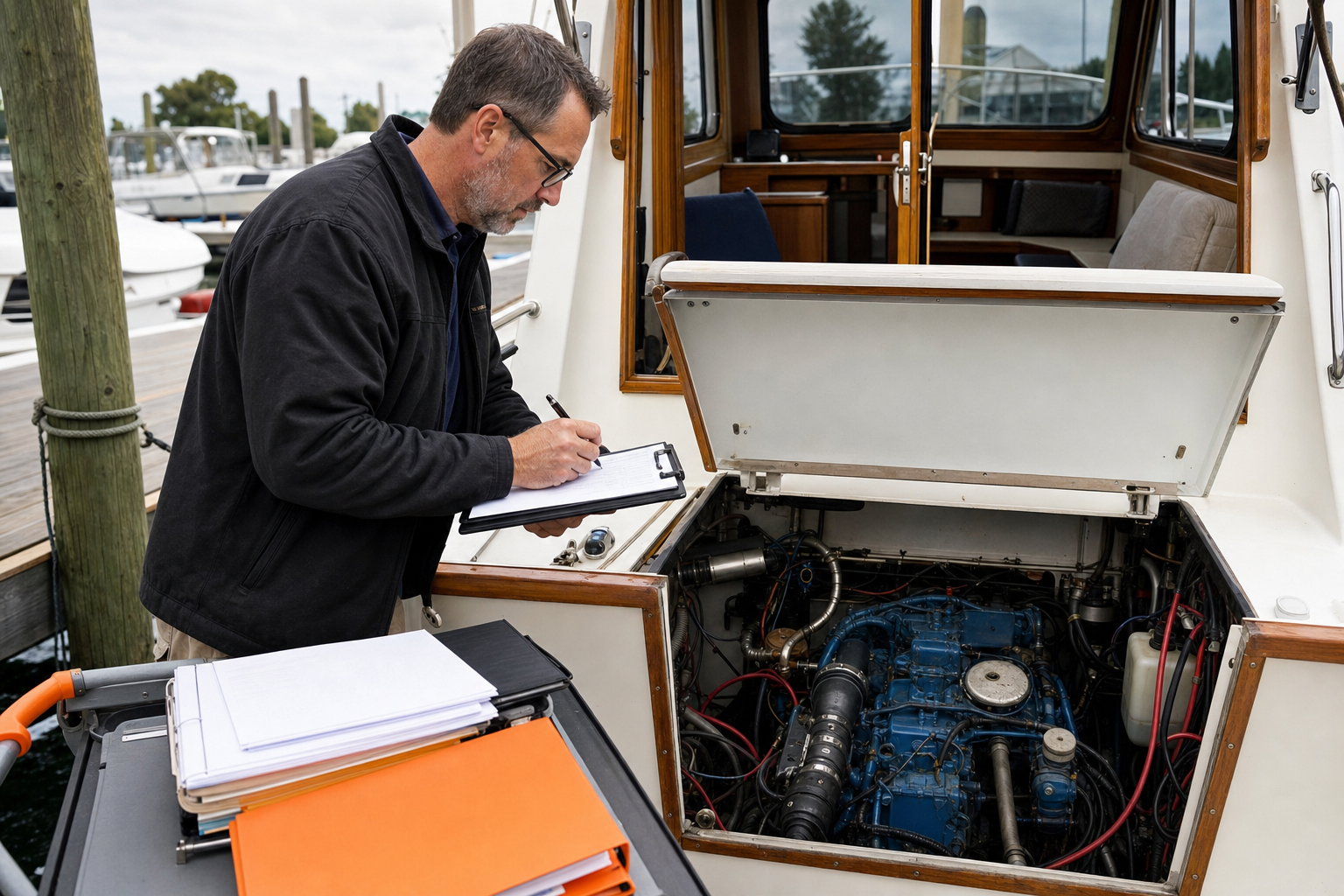

Most marine service businesses treat marketing like throwing chum in the water and hoping a prize marlin bites, but they usually just end up with a swarm of baitfish that waste valuable shop time. You’ve likely spent thousands on generic agencies that promised “visibility” while your mechanics were stuck on low-margin repair jobs that barely covered your overhead. A real marketing plan for a marine service business isn’t about getting more eyes on your website or chasing vanity metrics. It’s about building a rigid filtration system that rejects the tire-kickers and captures only high-intent, high-margin work orders that keep your bays profitable.
You already know that being “busy” isn’t the same as being profitable, and the “shotgun” approach to advertising is a fast way to burn through your cash reserves. This guide will show you how to install a precision demand control system that stabilizes your revenue cycles and secures the specific job mix your service yard needs to thrive through 2026.
We’ll break down the mechanics of demand filtering, the shift toward digital-first buyer trust, and the exact steps to stop wasting money on unqualified inquiries. It’s time to move past the cycle of inconsistent revenue and take complete control of your shop’s demand.
Key Takeaways
- Learn how to transform your marketing plan for a marine service business from an unpredictable expense into a precision-engineered operational asset.
- Identify the specific search triggers used by high-intent buyers to ensure your shop is visible only to those ready to book high-margin work.
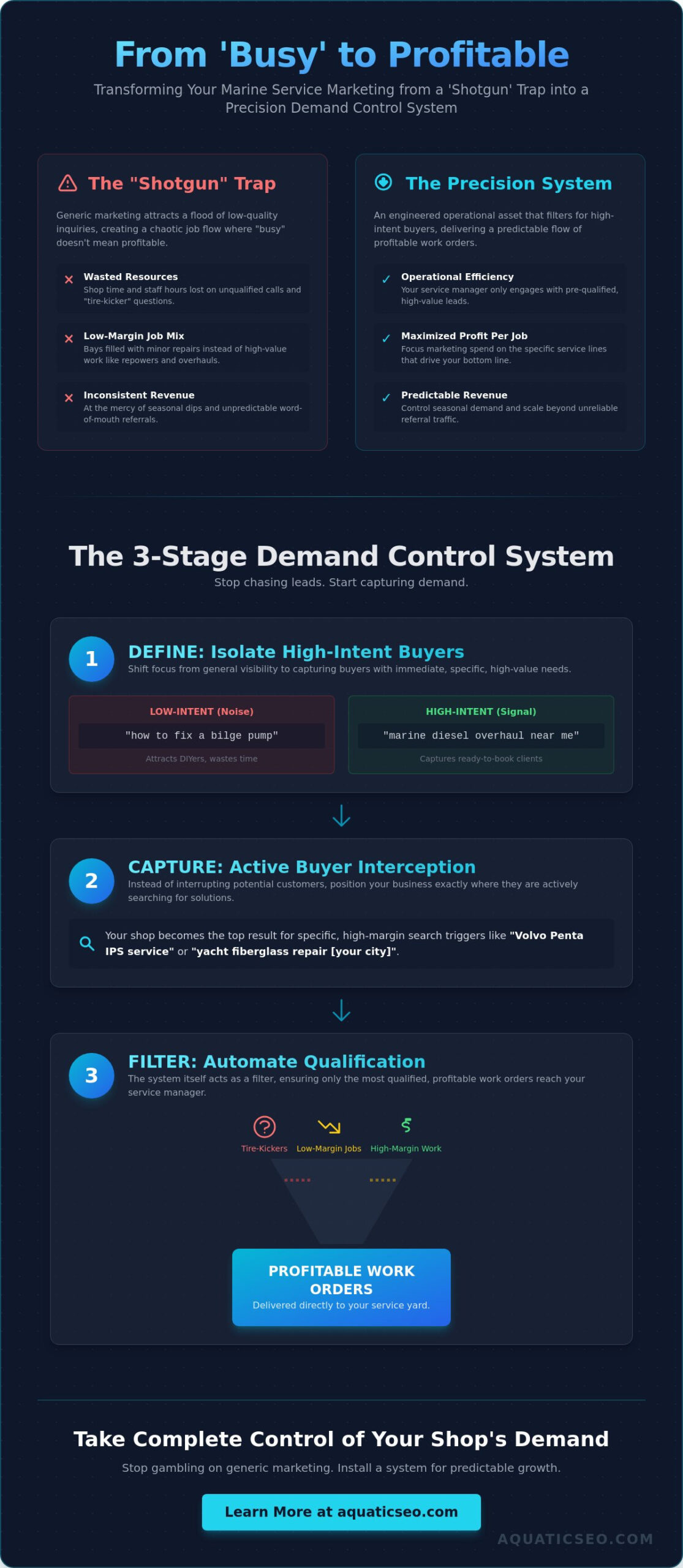
- Implement a three-stage Demand Control System that systematically filters out low-value inquiries before they ever reach your service manager.
- Audit your current job mix to pinpoint which specific service lines deserve your marketing focus to maximize profit per work order.
- Master the mechanics of scaling beyond word-of-mouth to achieve predictable revenue and complete control over your seasonal demand.
The “Shotgun” Trap: Why Your Current Marketing Plan for a Marine Service Business Fails
You know the feeling of a packed schedule that yields zero profit. Your shop is full, your mechanics are working overtime, but the bank account doesn’t reflect the effort. This happens because most owners view a marketing plan for a marine service business as a way to get “more” leads rather than “better” ones. You’ve likely been burned by agencies that promised traffic but delivered tire-kickers looking for cheap fiberglass patches instead of high-margin repowers. This “shotgun” approach creates a chaotic job flow that forces you to take whatever comes through the door just to keep the lights on.
Stop thinking of marketing as an expense. It’s an operational asset. A foundational marketing plan should function like a precision tool, not a billboard. We replace the “hope and pray” method with Active Buyer Capture. This means we don’t wait for people to see an ad. We position your business exactly where high-intent buyers are already looking for specific technical solutions.
More website traffic is often a curse. If your site attracts 1,000 people looking for “how to fix a bilge pump,” you’ll spend all day answering questions for free. We want 10 people looking for “marine diesel overhaul near me.” High volume without filtration leads to low-margin headaches and burnout. You need a system that captures demand while simultaneously filtering out the noise.
Why Generic Agencies Sink Marine Service Brands
Generalist agencies don’t know the difference between a Yacht Charter and a boat rental. They treat your specialized service yard like a local dry cleaner. This lack of industry-native knowledge means they bid on broad keywords that attract “unqualified inquiries.” Every time your office staff handles a call for a service you don’t even provide, you lose money. You need a partner who understands the difference between a marina and a service yard before they ever write a single line of copy.
The Symptoms of a Broken Plan
Most owners tell us they have “enough work,” but they don’t have the right work. If your revenue crashes every winter or your bays are filled with low-margin repairs, your marketing plan for a marine service business is failing you. Tire-kicker inquiries are a symptom of poor demand visibility. You shouldn’t be at the mercy of the seasons or referral luck. You need a Demand Control mindset to stabilize your revenue and pick the jobs that actually move the needle for your bottom line.
Defining Your High-Intent Market: Precision Targeting for Service Yards and Contractors
Marketing to everyone with a boat is the fastest way to dilute your margins and overwhelm your service manager with low-value noise. A professional marketing plan for a marine service business requires you to draw a hard line between high-value technical work and general retail inquiries. You aren’t just looking for visibility. You are looking for specific vessel profiles that match your shop’s capabilities and tooling. Whether you operate as a marine surveyor or a heavy-lift service yard, your targeting must reflect the complexity of the work you actually perform.
Generic geofencing and social media ads often miss the mark because they target location or general interest rather than immediate intent. A yacht owner scrolling through social media isn’t necessarily looking for a repower, but an owner searching for “Volvo Penta IPS service” on a search engine is a high-intent buyer. By following a step-by-step process for putting your plan in place, you can shift from interrupting people to capturing those already deep in a buying cycle. This precision ensures you aren’t paying for clicks from people who just want to know where the closest boat ramp is located.
Service Yard vs. Marina: Why Your Marketing Must Be Different
Many agencies treat these as the same, but a Service Yard or Boatyard sells technical expertise, not just dockage and fuel. If your marketing plan for a marine service business focuses on “marinas near me,” you will get calls for overnight slips instead of the major refit work you want. High-value owners of crewed vessels or professional Yacht Charters look for specific certifications and yard capabilities. Your messaging must speak to the oversight and precision required for their specific class of vessel, highlighting your ability to handle complex systems rather than just providing a place to tie up.
Capturing the “I Need It Now” Demand
For Marine Mechanics and Electricians, the marketing priority is local search visibility during critical failures. When a generator dies or an electrical fault occurs, the owner isn’t browsing. They are searching for an immediate, professional solution. Your plan needs to prioritize Qualified Inquiries that come from these high-urgency searches. If you’re struggling to separate high-margin work from low-value noise, you can schedule a strategy audit to refine your targeting and capture the demand that actually pays.
The 2026 Marine Demand Control System: A Framework for Stability
A marketing plan for a marine service business shouldn’t be a disorganized list of social media posts or expensive ad campaigns. It must function as a rigid operational system. We call this the Marine Demand Control System. It’s designed to replace the erratic cycles of the marine industry with a predictable flow of high-margin work orders. Unlike the bloated strategies offered by generalist firms, this framework focuses on three distinct stages: Visibility, Capture, and Filtering. This isn’t about getting lucky with a viral post. It’s about installing a mechanical process that works regardless of the season.
Demand Visibility: Being Found Where High-Intent Buyers Search
Visibility is worthless if it reaches the wrong audience. Effective Digital Marketing for Marine Contractors prioritizes long-term organizational stability over the temporary sugar high of paid ads. You need to be visible when a yacht owner or captain is actively searching for technical solutions. To maintain an efficient and cost-effective plan, we utilize SEO Rich Text. This involves using highly specific industry terminology that signals your expertise to search engines and professional buyers alike. This ensures your shop appears as the logical choice for complex service work before a competitor even gets a look. We focus on organic positioning because it builds an asset you own, rather than renting space from an ad platform that can hike prices at any time.
Demand Filtering: Rejecting the Noise
Most agencies brag about engagement counts and impressions. We don’t care about those metrics. Demand Filtering is the process of using your website to actively discourage low-margin tire-kickers. By using technical language and clearly defining your ideal vessel class, you signal to professional yacht captains and serious owners that you’re the specialist they need. This process filters for Qualified Outcomes rather than generic leads. It saves your office staff from fielding calls for small-bore repairs that don’t fit your shop’s profit model. When your website speaks the language of a seasoned engineer, the people looking for a “quick fix” on a budget will look elsewhere. This leaves your calendar open for the high-margin refits that actually drive growth.
The final component of this framework is Demand Compounding. This is the mechanism that turns a single successful refit or engine overhaul into a predictable stream of recurring service work. By capturing the data from high-value jobs, you can build a system that anticipates the needs of similar vessel owners. You stop chasing new customers every month and start building a stable book of business that grows on its own momentum. This isn’t a vague promotional promise. It’s a methodical approach to market effectiveness that secures your shop’s financial health for the long haul.
Implementation: Turning Your Marketing Plan into a High-Margin Job Flow
Execution is where most owners stumble. You can have a solid strategy on paper, but if your daily operations don’t align with your marketing plan for a marine service business, you will continue to chase low-value work. Implementation is not a one-time event; it is a sequence of operational adjustments designed to prioritize profit over volume. You must move from a reactive “take what comes” stance to a proactive “demand control” position.
Follow these five steps to install your system:
- Step 1: Audit your job mix. Review your last 12 months of work orders. Identify which services, such as major refits or specialized electrical overhauls, yielded the highest margins and which were time-wasters.
- Step 2: Deploy niche-specific SEO. Target technical search terms that only high-intent buyers use. For Marine Surveyors or contractors, this means focusing on specific vessel classes and certification requirements.
- Step 3: Build a filtration machine. Your website must do more than look pretty. It should use technical language and specific project requirements to scare away tire-kickers while welcoming professional captains.
- Step 4: Track CPQI. Stop looking at “cost per lead.” Measure your Cost Per Qualified Inquiry (CPQI). This metric tells you exactly what it costs to get a high-margin prospect on the phone.
- Step 5: Review Demand Compounding. Use your data to see which high-value jobs led to recurring service contracts. Adjust your visibility tactics to find more of those specific vessel profiles.
The Role of Niche-Specific Marine Marketing
A specialized Marine Marketing Agency understands that vessel logistics dictate buying behavior. You cannot market a haul-out service to a boat owner if the local bridge clearances don’t allow their mast to pass. Your implementation must include “in the trenches” case studies. Use high-resolution photos of complex engine pulls or intricate wiring harnesses. Skeptical owners need visual proof of your technical expertise before they trust you with a six-figure refit.
Avoiding Common Implementation Mistakes
Amateurs focus on “likes” and “shares.” These are vanity metrics that don’t pay the mortgage. Your marketing plan for a marine service business should only care about signed work orders and shop floor efficiency. Another common pitfall is buying generic “boat owner” lists. Research shows these lists are often 90% outdated or filled with owners of vessels that don’t fit your service profile. Finally, don’t let your tactics go stale. Your Active Buyer Capture strategy must shift with the seasons to ensure you are filling the bays during the slow months with the right kind of work. If you are ready to stop guessing and start growing, schedule your high-margin job audit today.
Predictive Revenue: Scaling Your Marine Service Business Beyond Word-of-Mouth
Relying on word-of-mouth works until it doesn’t. Scaling a service yard or contracting operation toward the $5M mark requires more than just a good reputation; it requires a predictable source of new business. You cannot hire master mechanics or invest in specialized tooling based on a hope that the phone rings next week. A professional marketing plan for a marine service business provides the auditable data required to make these expansion decisions with certainty. It transforms your shop from a reactive operation into a controlled business that dictates its own schedule and profit margins.
The relief of having a performance-based demand system cannot be overstated. Instead of wondering where the next big refit will come from, you have a dashboard that shows exactly how many Qualified Inquiries are in your pipeline. This oversight allows you to “turn the tap” on demand during slow seasons. If your winter schedule looks thin, you adjust your visibility tactics to capture the specific service work needed to keep your bays full. You stop being a victim of the calendar and start being the commander of your shop’s capacity.
The Financial Impact of Demand Control
High demand provides a distinct market advantage. When your business is the recognized authority for complex technical work, you stop being a “price-taker” and become a “price-maker.” You no longer have to lower your rates to compete with uncertified freelancers. This organizational stability is essential for retaining top technicians who value working in a structured, profitable environment. Your marketing plan is not a line-item expense. It is a business development asset that allows you to focus on the high-margin projects that actually move the needle for your financial health.
Your Next Step toward Market Command
You understand the mechanics of your business. We understand the mechanics of capturing demand. If you are ready for a No-BS Analysis of your current job flow, let’s look at the data. Stop accepting every inquiry and start commanding your market. The shift from “Shotgun Marketing” to “Marine Demand Control” is the final step in securing your shop’s future. It is time to move past the cycle of inconsistent revenue and build a precision system that filters for the high-margin, qualified work you deserve.
A marketing plan for a marine service business is the only way to move from “Shotgun Marketing” to “Marine Demand Control.” By following this framework, you replace the “hope and pray” method with a mechanical system that captures, filters, and compounds demand. You gain the stability needed to scale without the stress of an empty calendar.
Request a fit call to deploy your Demand Control System.
Take Command of Your Market Visibility
You possess the technical mastery to handle complex refits and repairs. Now you need a system that ensures those high-margin jobs find you first. Our proprietary Marine Demand Control System replaces the “hope and pray” method with a mechanical filtration process designed specifically for owners scaling from $300K to $5M. We are industry-native experts who understand that a Yacht Charter requires a different strategy than a simple boat rental.
Successfully deploying a marketing plan for a marine service business means your shop floor stays busy with the right work, not just any work. This shift moves your marketing from a cost center to a performance-based asset that you can audit and adjust. You deserve the organizational stability that comes with a predictable, high-intent inquiry pipeline. Stop letting your revenue be dictated by the seasons or the luck of referrals.
Stop wasting money and start controlling your demand—book your fit call today.
Your shop is ready for the next level of growth. It’s time to build the demand system that matches your technical reputation.
Frequently Asked Questions
How is a marine marketing plan different from a general business plan?
A marine marketing plan focuses on high-intent demand capture and filtration rather than general brand awareness. Unlike a general business plan that covers broad growth, this is an operational asset designed to stabilize your job mix and reject low-margin work. It accounts for the technical nuances of service yards and the specific logistical constraints of vessel maintenance cycles.
Why should a marine mechanic focus on SEO instead of just word-of-mouth?
Relying on word-of-mouth limits your growth to the size of your current network and makes you a price-taker. SEO for the marine industry allows you to capture buyers at the exact moment of a critical system failure. This positioning ensures your shop is the first professional option they find when searching for technical expertise, providing the predictability needed to hire more techs.
What is the difference between a lead and a Qualified Inquiry in the marine industry?
A lead is any contact that enters your system, while a Qualified Inquiry is a prospect with a vessel and service need that fits your specific profit model. Most agencies will sell you a high volume of leads that turn out to be boat rentals looking for cheap fixes. We prioritize Qualified Inquiries to ensure your service manager only spends time on work orders that yield high margins.
How much should a marine service business spend on a marketing plan?
Your investment should be viewed as an operational cost required to secure a predictable job flow rather than a discretionary expense. Successful service yards typically allocate a percentage of their gross revenue to maintain their demand visibility and filtering systems. The goal of a marketing plan for a marine service business is to ensure every dollar spent returns a high-margin work order, not just a generic click.
Can I target yacht captains specifically with my digital marketing?
You target yacht captains by using the technical language and certification details they look for when vetting a service yard. Captains and professional owners don’t browse; they search for specific solutions like stabilizer service or engine overhauls. By highlighting your specific yard capabilities and project history, your marketing plan for a marine service business signals that you are a qualified specialist rather than a general mechanic.
How long does it take to see results from a Marine Demand Control System?
Initial visibility shifts can happen within weeks, but a stable Marine Demand Control System typically reaches full operational efficiency within three to six months. This timeline allows for the compounding effects of SEO and demand filtering to take hold. You will see a cleaner job mix and fewer tire-kicker inquiries long before the system reaches its peak predictive revenue stage.