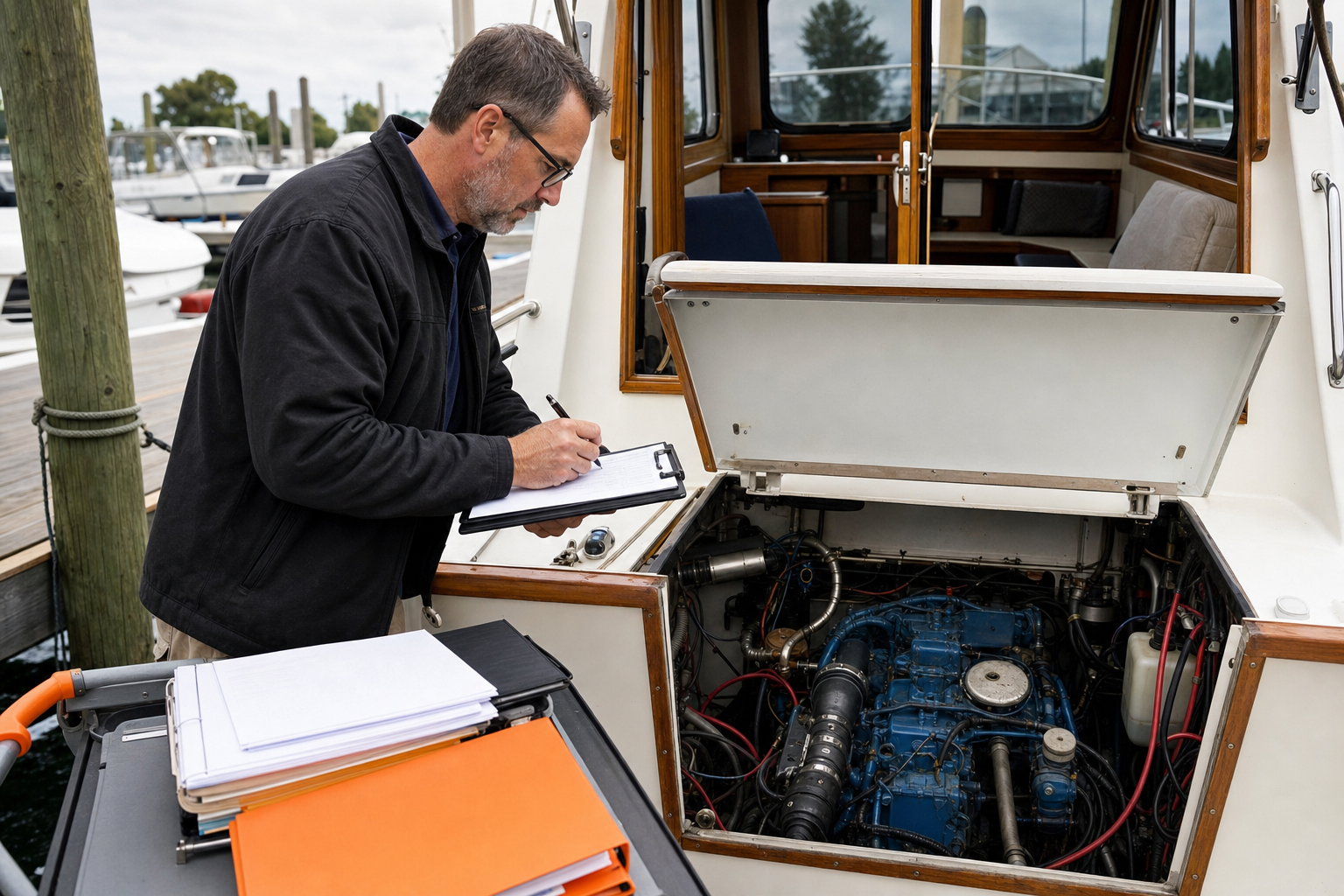

You’re likely paying for your competitor’s market research every time a user clicks your ad, verifies a part number for compatibility, and then buys it elsewhere for a few dollars less. It’s a frustrating, cyclical problem that many boatyards and parts dealers face. You see traffic climb in your analytics, yet your service desk remains buried under basic questions about engine fitment. High traffic doesn’t pay the bills when it’s the wrong kind of traffic. Effective SEO for marine parts e-commerce isn’t about being seen by every casual boater; it’s about being found by the professional or owner who needs a specific manifold or electronic inclinometer right now.
You know that generic marketing “experts” rarely understand the difference between a Yacht Charter and a simple boat rental. This lack of industry knowledge leads to messy product data and high ad spend with low ROI. I promise to show you how to stop subsidizing the market and start capturing qualified inquiries through a precision-engineered strategy. We will examine how to fix your search architecture to filter out the noise and dominate your specific engine or vessel part niches.
Key Takeaways
- Identify why high traffic often masks a lack of qualified inquiries and learn to stop subsidizing your competitor’s market research.
- Align your technical architecture with the specific compatibility signals that search engines use to rank complex marine parts catalogs.
- Master the search patterns that distinguish recreational boat owners from commercial dealers to capture the highest-margin orders.
- Use precision-engineered SEO for marine parts e-commerce to filter demand and reduce customer service overhead through better search clarity.
- Shift your operations to the Marine Demand Control System to stabilize revenue and maintain dominance in your specific engine or vessel niches.
Table of Contents
Why Generic SEO Fails Your Marine Parts Business
General marketing agencies see a keyword like “boat parts” and think they’ve found a goldmine for your brand. They haven’t. They’re driving traffic that spends twenty minutes on your site verifying if a 2014 impeller fits a 2022 housing, only to take that confirmation and buy it from a massive wholesaler for five dollars less. Your high ad spend and generic search engine optimization (SEO) are effectively subsidizing your competitor’s market research. This is the structural failure of volume-based marketing.
You need a strategy for SEO for marine parts e-commerce that prioritizes precision over raw volume. Most agencies cannot distinguish between a “boat rental” seeker and a high-value “Yacht Charter” buyer. This lack of industry-native knowledge results in messy product data that causes compatibility errors and frustrates your best customers. If your current provider treats a marine technical catalog like a standard consumer goods shop, they’re leaving your revenue to chance. Precision in search is the only way to stabilize inconsistent revenue patterns.
The High Cost of Unfiltered Traffic
Unfiltered traffic is an operational drain on your business health. When your inbox is full of “tire-kickers” asking basic questions about part dimensions, your team wastes hours that should be spent on high-margin orders. These low-intent visitors inflate your vanity metrics while actively damaging your ROI. General agencies celebrate these engagement counts, but they ignore the customer service overhead they create for your staff.
The goal is capturing high-intent demand that leads to immediate, auditable transactions. You don’t need more people browsing; you need professionals and owners who have a broken vessel and a credit card in hand. Our approach focuses on SEO for marine parts e-commerce that filters out the noise before it reaches your checkout page. This ensures your team spends their time processing orders rather than providing free technical support for people who won’t buy.
Why ‘SEO for Marine Parts E-Commerce’ Requires Niche Expertise
Selling a spec-heavy marine part is fundamentally different from selling a consumer commodity. Marine buyers search with extreme specificity, often using part numbers, engine series, or vessel-specific fitment data. A general agency lacks the “in the trenches” experience to understand these nuances. They focus on broad terms that attract the wrong crowd because they don’t understand the technical requirements of a Service Yard or Boatyard operator.
We define a Qualified Inquiry as a prospect ready to purchase based on specific fitment data and technical certainty. This requires an industry-native approach that understands the difference between a marina’s dockage needs and a mechanic’s electrical specs. You’ve likely been burned by agencies that promise a “holistic” approach but deliver nothing but vague promises. We reject these superficial trends in favor of a methodical system that builds buyer confidence through data precision.
Mapping Intent: Boat Owners vs. Commercial Dealers
Stop treating every website visitor like they have the same budget or requirements. A retail boat owner troubleshooting a leak at a marina has fundamentally different search behaviors than a wholesale dealer restocking for a busy season. Our Active Buyer Capture pillar identifies these distinct search signatures to ensure your SEO for marine parts e-commerce targets the right profit margins. You don’t want generic volume; you want high-intent buyers who value precision-engineered parts over the lowest possible price.
Intent mapping allows you to prioritize specific vessel classes to increase your average order value. A user searching for a “Yamaha outboard prop” is often a recreational boater, while someone searching for “marine parts distributor” is likely a professional operator. By aligning your search strategy with SEO for Niche Markets, you can attract the professional accounts that provide long-term organizational stability. This methodical focus on commercial intent prevents your marketing budget from being wasted on low-margin retail noise.
The global marine engine market is projected to reach USD 14.82 billion in 2026. This growth is split between casual recreational users and heavy-duty commercial sectors. New SOLAS regulations effective in 2026 now require electronic inclinometers on large bulk carriers and container ships. Targeting these high-spec commercial electronics represents a massive opportunity for high-margin sales that standard retail-focused SEO will completely miss. You must align your catalog with these regulatory shifts to capture the most profitable segments of the market.
Targeting the DIY Boat Owner
The DIY owner usually searches using problem-language. They type queries like “steering cable replacement” or “overheating symptoms” while standing on their deck. Because these users are often searching on-site at boatyards, your mobile experience must be flawless. They rely on specific part numbers once they’ve diagnosed their issue, so your technical data must provide the certainty they need to click “buy” without calling your service desk first. Providing this clarity through search results reduces your customer service overhead significantly.
Capturing the Professional Service Yard and Dealer
Service Yards and Boatyards are distinct commercial entities that require reliable, bulk supply chains. They don’t search for “how-to” guides; they search for “wholesale marine engine components” or “regional marine parts suppliers.” These professionals value location modifiers because they need parts delivered to their facility with predictable lead times. Capturing these accounts requires a methodical approach to location-based keywords and distribution-focused content that proves you can handle their scale and technical requirements.
If you’re tired of answering basic questions from unqualified leads, it’s time to refine your Digital Marketing for Marine E-Commerce to focus on high-value commercial demand.
Technical Architecture for Complex Marine Catalogs
Messy product data is the silent killer of your conversion rates. Technical SEO for marine parts e-commerce acts as the bridge between raw SKU lists and buyer confidence. If a search engine cannot crawl your compatibility signals, it will never rank your products for the specific, high-intent queries that drive sales. Managing thousands of SKUs across multiple engine families requires a precision-engineered architecture that general agencies simply don’t understand. Our marine e-commerce services resolve this technical debt by structuring your catalog for maximum search engine clarity.
Search engine crawlers need to see clear relationships between parts and the vessels they serve. When your site architecture reflects these technical realities, you build immediate trust with both the algorithm and the end user. This technical foundation ensures that when a mechanic needs a specific gasket for a 2018 Yanmar, your site is the one providing the definitive answer. Without this level of oversight, your catalog is just a digital pile of parts that no one can find.
Organizing by Engine Family and Vessel Class
A flat category structure fails in this industry because it ignores how marine professionals actually shop. You must organize your catalog by engine family and vessel class to establish topical authority. Use breadcrumbs and strategic internal linking to show search engines the hierarchy of your data. Fitment data is the primary driver of e-commerce trust, providing the technical certainty required for a buyer to click the purchase button without hesitation. This methodical organization allows you to dominate specific engine niches where your competitors are struggling with disorganized data.
Optimizing for Part Numbers and SKU-Style Queries
Every part number in your inventory must be indexable and paired with clear brand identifiers. Buyers often search for exact SKUs, and if your technical setup hides these numbers, you’re invisible during the most critical part of the buyer’s journey. This approach captures shared intent keywords that bridge the gap between retail boat owners and professional dealers. Clean product data is essential to prevent mismatched search results or out-of-stock errors that destroy your credibility. By providing precise SKU-level information, you capture the high-intent demand that your competitors are currently ignoring.
Content Strategy That Filters for Qualified Inquiries
Stop chasing vanity metrics that do nothing but clutter your analytics. Most agencies tell you to blog for traffic, but in the marine sector, generic traffic is often a liability. Effective SEO for marine parts e-commerce focuses on demand control. You need content that actively disqualifies buyers who don’t need your high-margin components while educating the ones who do. This shift in perspective ensures your resources aren’t wasted on tire-kickers who will never convert into a Qualified Inquiry.
With an average cart abandonment rate of 70.22% across e-commerce, you cannot afford to leave your buyers feeling uncertain. Content that proves durability in saltwater or UV environments through video demonstrations provides the technical certainty needed to close the deal. This is especially critical for vessel operators who must comply with incoming 2026 regulations regarding ship stability and electronic inclinometers. For a deeper look at how these elements work together, read our marine e-commerce and digital marketing pillar.
Diagnostic Content That Drives Conversions
Diagnostic guides are the backbone of a high-performance catalog. When you provide “How-to” content that identifies specific mechanical failures, you lead the buyer directly to the solution you sell. This approach builds immediate authority with professional mechanics and Service Yard operators who value technical accuracy over marketing fluff. Use FAQs to address non-negotiable compatibility edge cases. This prevents the frustrating “buy and return” cycle that erodes your profit margins and stabilizes your inconsistent revenue patterns.
Building Authority with Social Proof and Technical Specs
Authority in the marine world is built through technical specs and proof of durability. Generic product descriptions fail because they don’t address the harsh reality of the marine environment. Integrate reviews that mention specific boat models and engine types to provide the social proof professionals demand. Detailed spec sheets outperform generic sales copy every time. Professional buyers look for dimensions, material grades, and fitment data before they trust a new supplier.
By focusing on Demand Visibility, you show your parts in real-world applications that resonate with “in the trenches” operators. This methodical approach ensures your brand is seen as a specialized partner rather than a general vendor. If you’re ready to stop guessing and start capturing high-intent demand, refine your marine e-commerce strategy today.
Implementing the Marine Demand Control System for E-Commerce
Most agencies sell you a black box of “traffic” and hope for the best. We offer a system of control. The Marine Demand Control System replaces vague promotional promises with auditable business outcomes. It provides total oversight over your job flow, ensuring your team only handles inquiries that move the needle for your bottom line. Precision in SEO for marine parts e-commerce means knowing exactly which part numbers and engine families drive your highest margins.
A million visitors are useless if they’re just price-checking a low-margin gasket. Quality of inquiry always beats volume of traffic. We use technical architecture to prove fitment, intent mapping to identify professional buyers, and content filtering to remove the noise. This synthesis creates a predictable environment where your marketing budget works as a high-performance asset rather than a sunk cost. It’s about building a fortress around your specific niche through methodical, data-driven execution.
Moving Toward Demand Compounding
Consistent SEO efforts aren’t just about today’s sales; they build a long-term business development asset. As your site gains authority, you transition from active capture to automated demand filtering. This shift stabilizes your revenue patterns and improves your organizational financial health. You stop reacting to market fluctuations and start commanding your niche through a methodical, system-driven approach. This is how you move from surviving to dominating a specific engine or vessel part category.
Your Next Steps for Demand Control
It’s time to stop wasting ad spend on low-intent keywords that only benefit your competitors. You need a specialist partner who understands the difference between a Boat Dealer and a marina. Aquatic SEO focuses on the “in the trenches” challenges of the marine industry to deliver tangible results. We reject superficial digital metrics in favor of high-value, qualified outcomes. If you value quality over generic volume, take the next step toward operational stability.
Book a call to analyze your marine e-commerce demand.
Dominate Your Marine Parts Niche with Precision
Stop letting generic traffic drain your operational resources and inflate your customer service costs. Success in 2026 requires moving beyond vanity metrics and focusing on the technical compatibility signals that drive professional buyer confidence. You’ve seen how intent mapping and diagnostic content turn your catalog into a demand-filtering engine that actively reduces service desk overhead. By implementing our proprietary Marine Demand Control System, you stabilize your revenue patterns and stop subsidizing your competitor’s market research with your own ad spend.
Aquatic SEO is a specialized partner for marine e-commerce, offering a no-nonsense, results-oriented approach that prioritizes your financial health over superficial engagement counts. We understand the specific challenges of managing complex SKU lists and high-spec fitment data. A methodical strategy for SEO for marine parts e-commerce ensures your team spends their time processing high-margin orders rather than answering basic fitment questions for tire-kickers. It’s time to stop guessing and start capturing the high-intent demand your business deserves.
Take control of your marine e-commerce demand today.
Frequently Asked Questions
What is the difference between a lead and a Qualified Inquiry in marine e-commerce?
A lead is a generic contact point with unknown intent, whereas a Qualified Inquiry is a prospect who has already verified part compatibility and is ready to purchase. In the marine sector, a lead might just be someone looking for a boat rental, but a Qualified Inquiry is a Service Yard operator needing a specific manifold. We focus on the latter to ensure your team processes orders rather than providing free technical support for people who won’t buy.
How do I handle SEO for a marine parts catalog with thousands of SKUs?
Managing thousands of SKUs requires a technical architecture built around engine families and vessel classes rather than flat, generic categories. Every part number must be indexable and paired with brand identifiers to capture exact-match searches from professional mechanics. This methodical approach ensures that search engines can crawl your compatibility signals, which is the foundation of effective SEO for marine parts e-commerce. Clean data prevents the mismatched results that destroy buyer trust.
Why is my marine e-commerce site getting traffic but no sales?
Your site is likely attracting “tire-kickers” who use your technical data for research before buying from a cheaper wholesaler. This happens when your search strategy lacks demand filtering and doesn’t prioritize high-intent commercial keywords. Without clear fitment data and technical certainty on the product page, visitors will leave your site to find a vendor they trust more. You’re effectively subsidizing your competitor’s market research instead of capturing the transaction.
Does SEO for marine parts e-commerce work for B2B dealer sales?
Yes, this strategy is highly effective for capturing B2B demand from Boat Dealers and regional distributors. By targeting commercial keywords like “marine parts distributor” and using location modifiers, you attract professional accounts looking for reliable supply chains. These buyers prioritize organizational stability and predictable lead times over a retail “one-off” purchase. This methodical focus on commercial intent allows you to dominate specific niches and increase your average order value.
How long does it take to see results from a Marine Demand Control System?
You will typically see technical improvements and better demand filtering within the first 90 days, though full market dominance takes longer. The Marine Demand Control System is designed to stabilize inconsistent revenue patterns by first fixing your technical debt and then compounding your authority. This isn’t a “quick fix” promotional promise; it’s a methodical transition from active buyer capture to a long-term business development asset that provides auditable tracking.
Can I target both boat owners and service yards with the same SEO strategy?
You can target both, but you must use distinct intent mapping for each segment to avoid wasting your budget. DIY boat owners search for problem-language like “overheating symptoms,” whereas Service Yard professionals search for specific part numbers and bulk availability. A successful SEO for marine parts e-commerce strategy uses diagnostic content to filter the retail noise while providing the spec-heavy data that commercial buyers require for their daily operations.
Why should I choose a marine-specific agency over a generic SEO firm?
Generic agencies don’t understand the technical nuances of the marine industry, often confusing a Yacht Charter with a boat rental. This lack of “in the trenches” experience leads to messy product data and wasted ad spend on unqualified leads. A marine-specific partner like Aquatic SEO uses industry-native terminology to build buyer confidence. We prioritize tangible business outcomes and functional efficiency over superficial marketing trends and vague engagement counts.